History
History
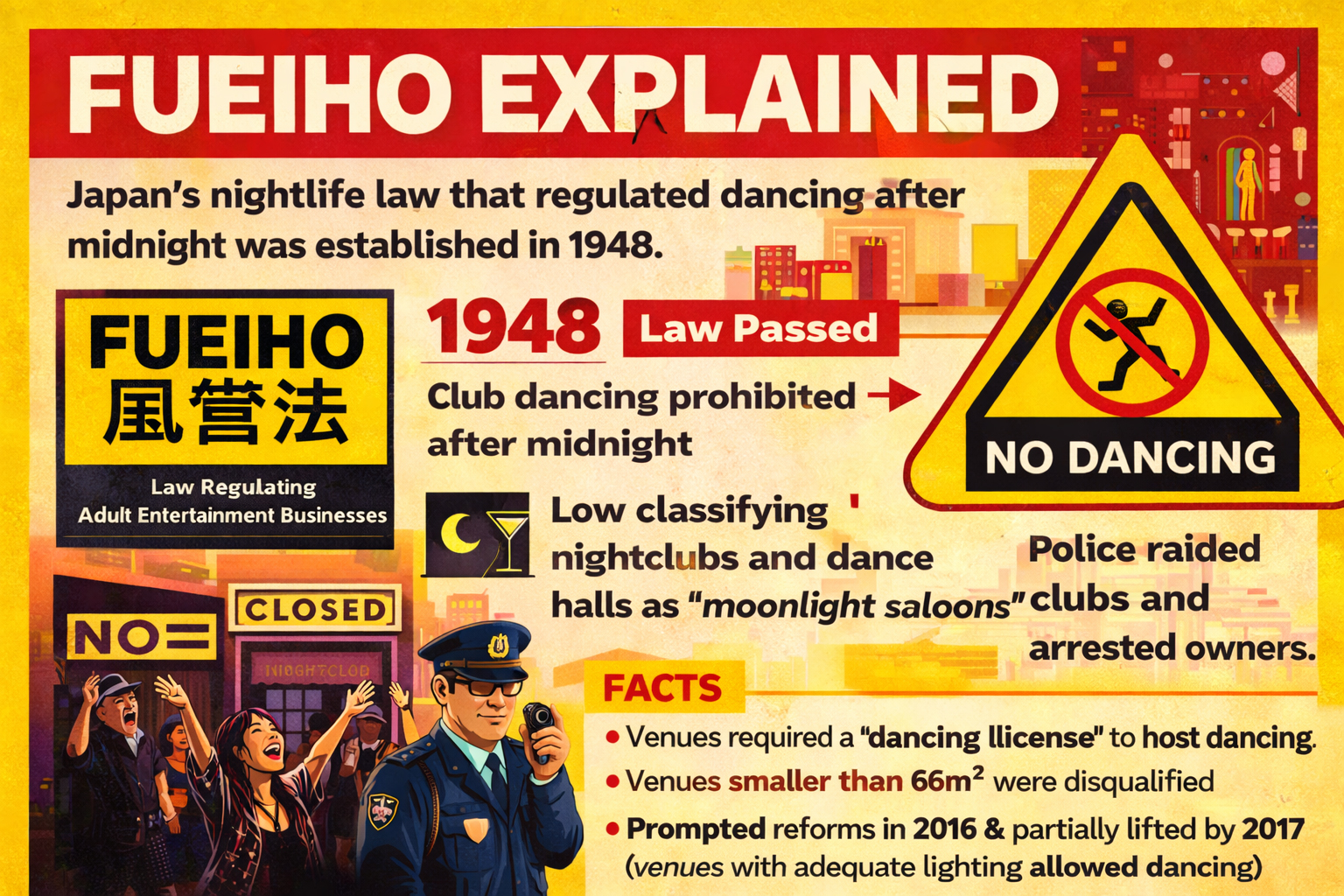
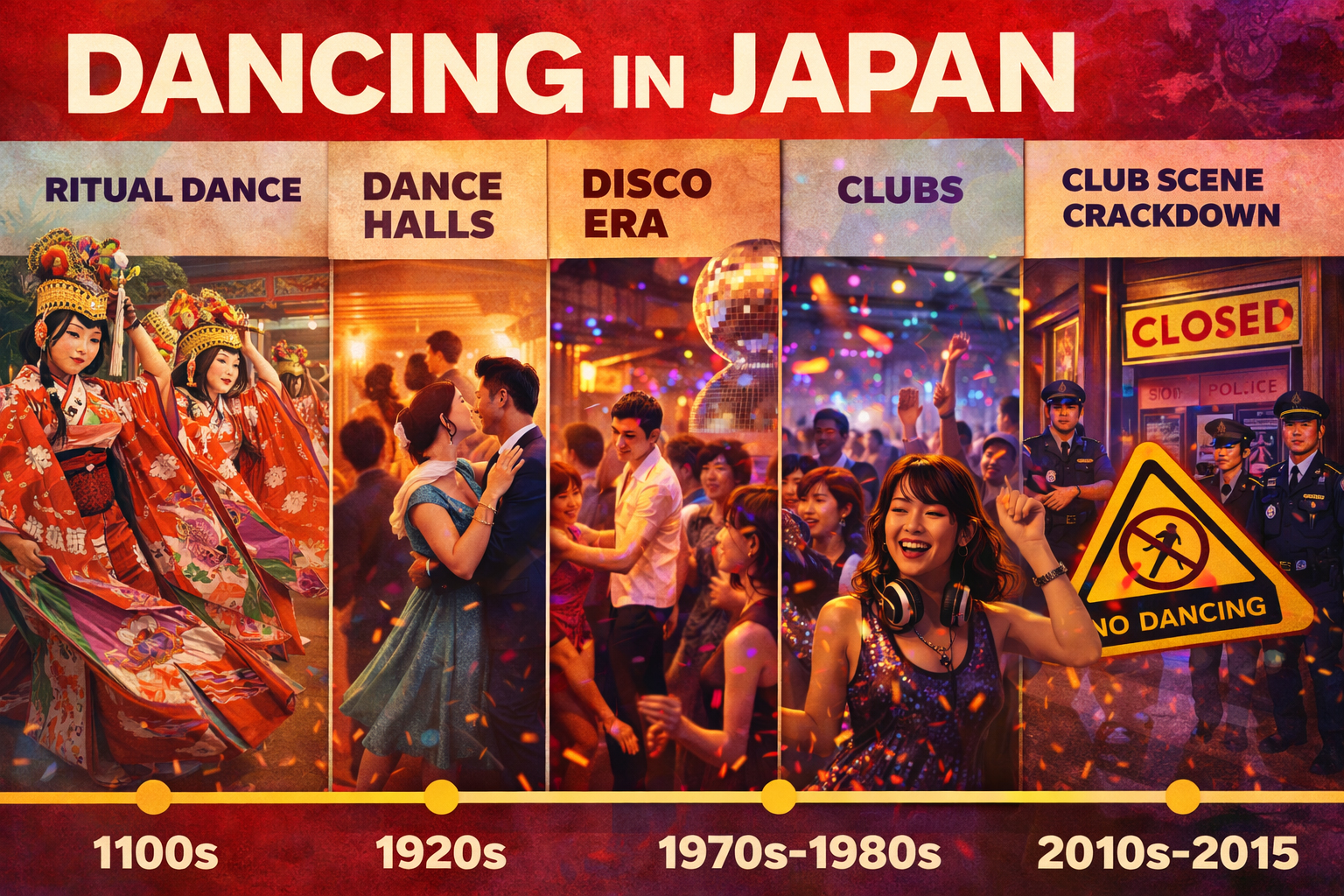
From ancient sacred dance and court ritual to discos, bubble nightlife, clubs, and reform.

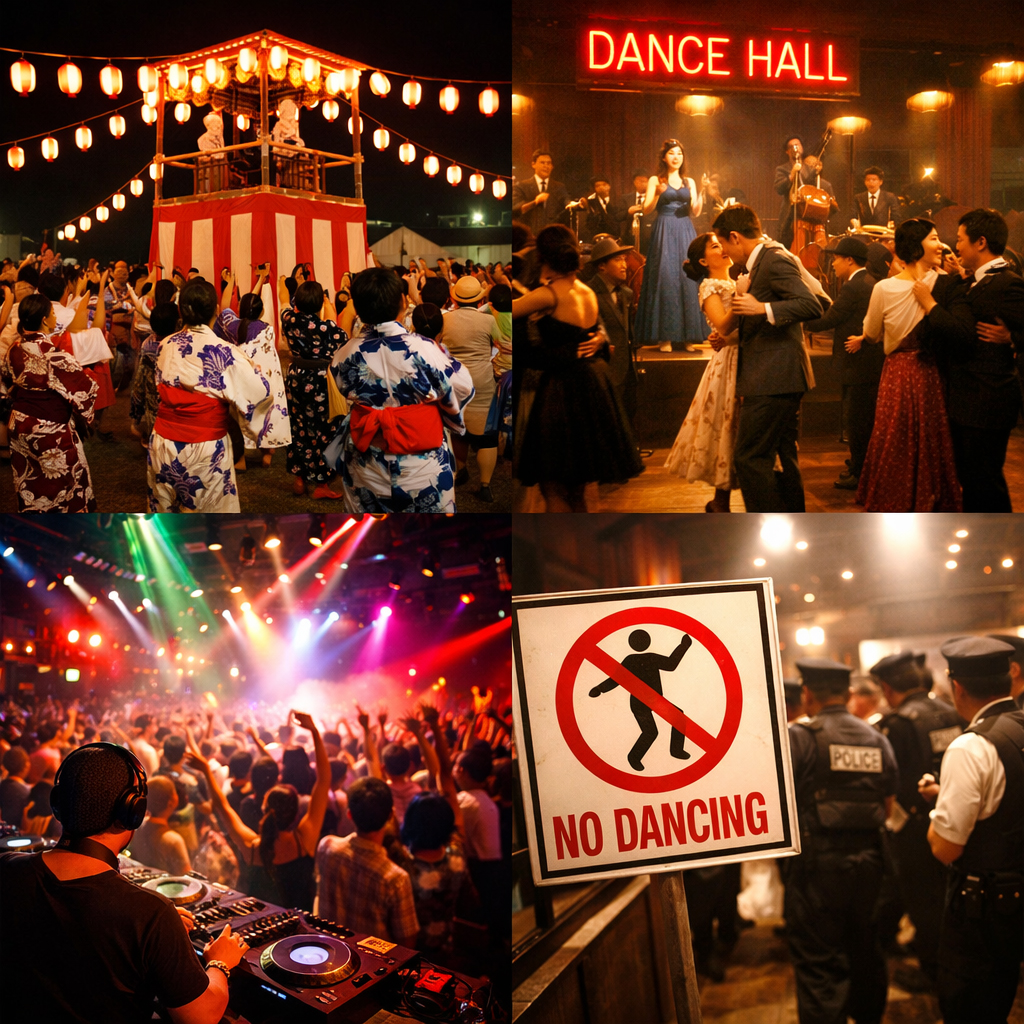
clubs.co.jp is not only a site about clubs. It is a site about how Japan learned to dance at night: through sacred movement, court ritual, communal circles, jazz cafés, postwar dance halls, disco spectacle, bubble-era glamour, Roppongi memory, nightlife law, and the modern return of public dance culture.
Not just music. Not just fashion. Not just law. The Japanese night is made of community, cities, desire, regulation, chance encounters, and bodily freedom.
clubs.co.jp is built around a simple idea: a dance floor never appears from nowhere. Behind every room are older forms of movement, older ways of gathering, older tensions about freedom and control.
That is why this site can move from Kagura to discos, from Bon Odori to Roppongi, from Tokyo memoir to nightlife law, without breaking its theme.
From ancient sacred dance and court ritual to discos, bubble nightlife, clubs, and reform.

District memory: Java Jive, Gas Panic, Motown, bubble nights, and the feel of arrival.

DJs, live houses, yukata dancing, nightlife fashion, and the city beyond the club itself.

The cleanest doorway from Saturday Night Fever energy into Japanese nightlife history.

The period when the Japanese night looked richest, brightest, and most unstoppable.

A golden era balancing large-room glamour and underground seriousness.
A personal doorway into the district at the edge of a changing era.

The kind of chance encounter that makes Tokyo feel enormous and tiny at once.

The turning point when dance became a public cultural argument, not just a club issue.
This front page borrows the pulse of Saturday Night Fever, but the site’s real ambition is larger: to place that fever inside the much longer Japanese history of dancing at night.
So this is not a white-suit nostalgia site. It is a site where sacred dance, Bon Odori, postwar sociability, disco mirrors, Roppongi neon, and reform-era club culture all belong to the same bigger story.