Roppongi
Roppongi in the 1980s
A closer look at the district that most visibly staged bubble-era nightlife.
Bubble-era nightlife in Japan was more than rich people going out. It was a moment when cities felt confident, money moved easily, display mattered, and the night itself became a stage for prosperity. :contentReference[oaicite:21]{index=21}
What people call Japan’s “bubble era” is generally located in the late 1980s and the turn into the early 1990s, when asset prices and economic confidence rose to extraordinary levels. :contentReference[oaicite:22]{index=22}
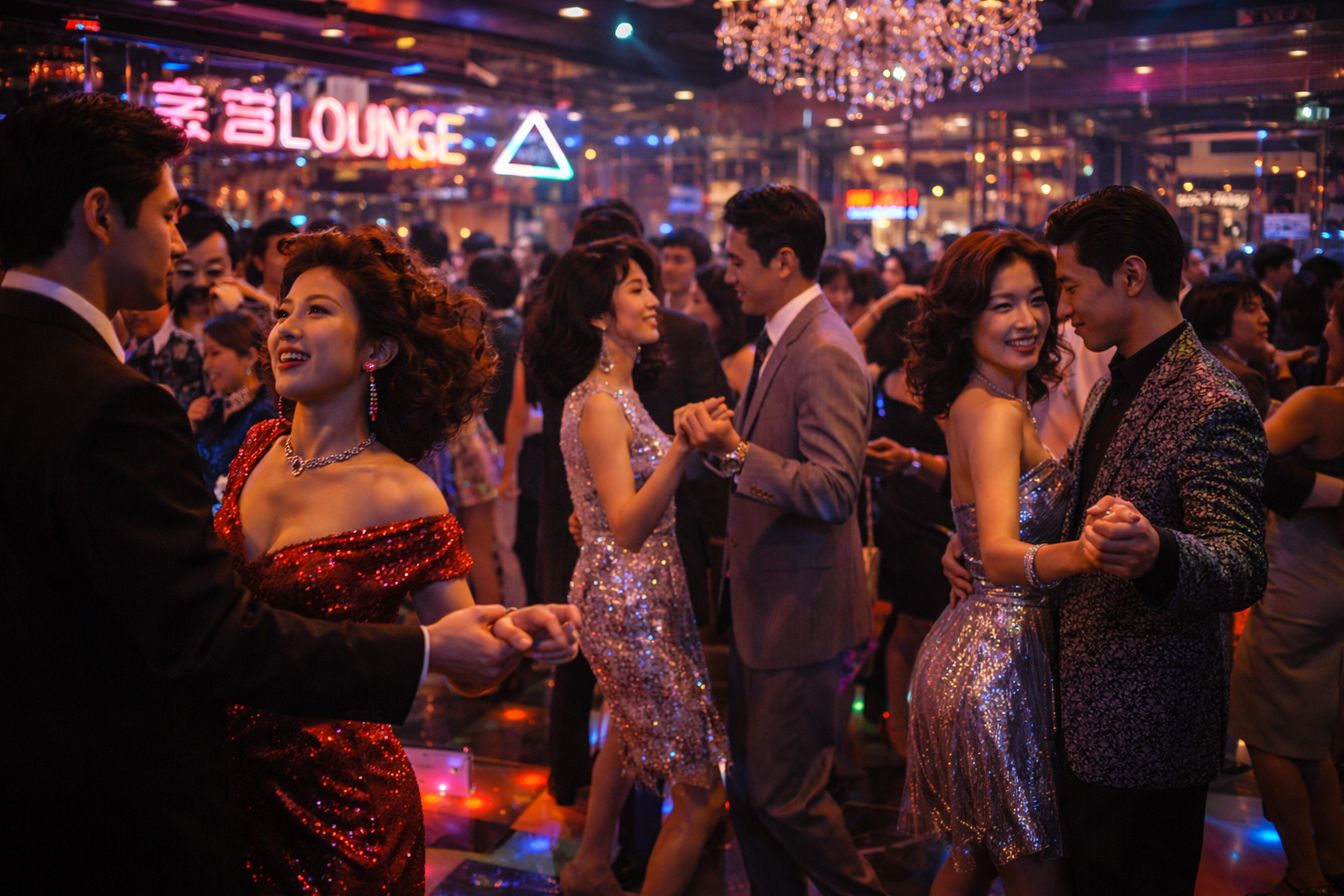
That confidence showed itself at night with unusual clarity. In Tokyo especially, districts like Roppongi turned economic heat into visible nightlife atmosphere. :contentReference[oaicite:23]{index=23}
Bubble-era nightlife was not only about spending money.
It was also about how the city wanted to see itself.
The most distinctive thing about bubble-era nightlife was not simply that people went out more. It was that nightlife space itself became a theater for displaying prosperity. :contentReference[oaicite:24]{index=24}
Flashy clothing, lines outside venues, VIP treatment, champagne, mirrored interiors, and the pleasure of being seen all became part of the emotional language of the era. :contentReference[oaicite:25]{index=25}
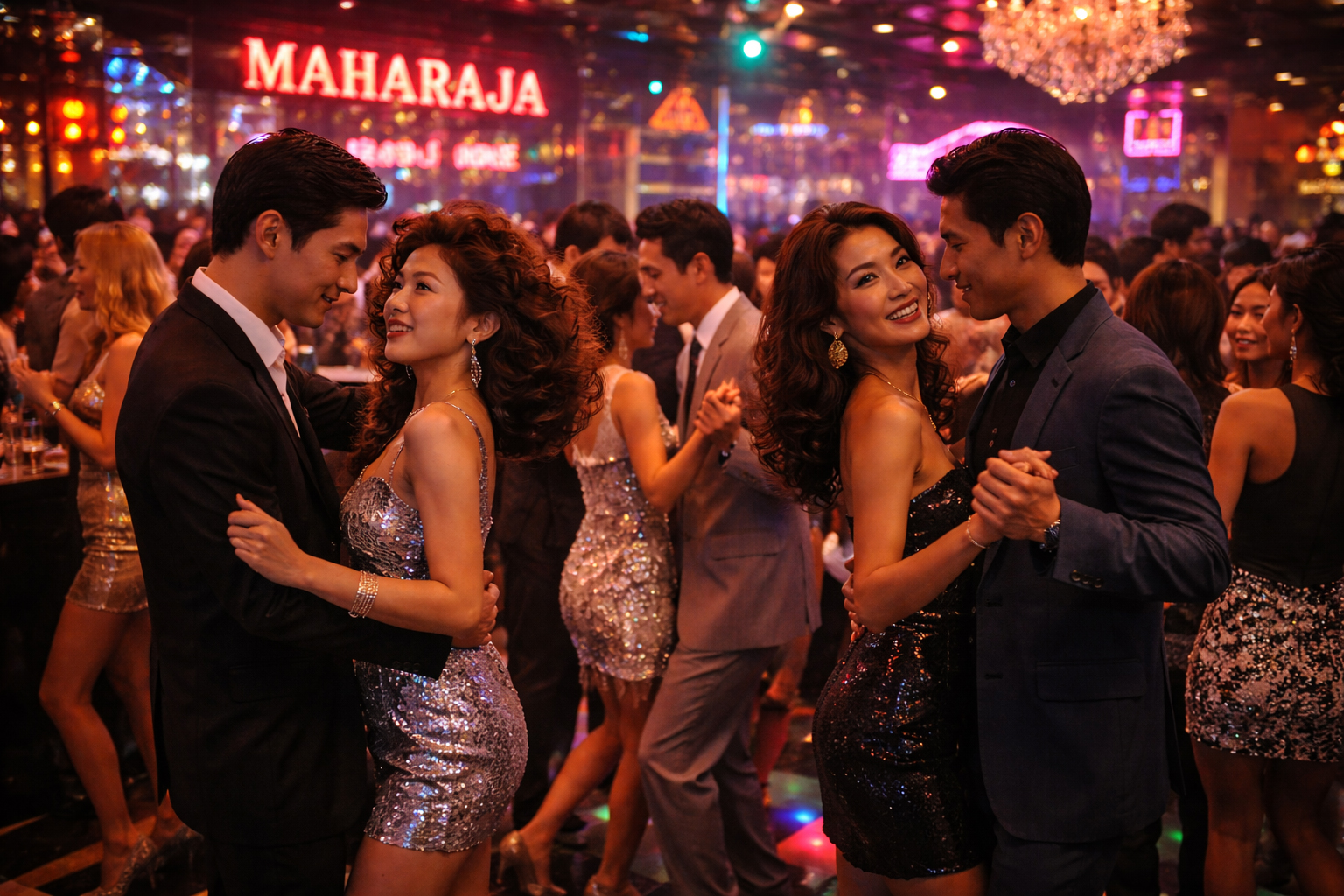
Among the best-known symbols of bubble-era nightlife, Maharaja stands out. Later retrospectives repeatedly use it as shorthand for the glamour and excess of the period. :contentReference[oaicite:26]{index=26}
In venues like Maharaja, dancing mattered, but so did being there. Presence itself became a social performance. Bubble nightlife turned the room into a visible statement of belonging to the era. :contentReference[oaicite:27]{index=27}
Dancing and self-presentation were tightly linked in the nightlife culture of the period. :contentReference[oaicite:28]{index=28}
The venue itself could function as a sign of status and urban belonging. :contentReference[oaicite:29]{index=29}
Later recollections often describe the time as unusually fun, bright, and glamorous. :contentReference[oaicite:30]{index=30}
In Tokyo, Roppongi is central to the story. The district’s stronger foreign presence, multilingual atmosphere, and mix of business, nightlife, and outward-facing ambition made it one of the most visible stages for the era’s self-image. :contentReference[oaicite:31]{index=31}
Because of that, Roppongi nightlife often seemed to point beyond Japan even while remaining deeply local. It held Tokyo’s desire to appear international in especially visible form. :contentReference[oaicite:32]{index=32}
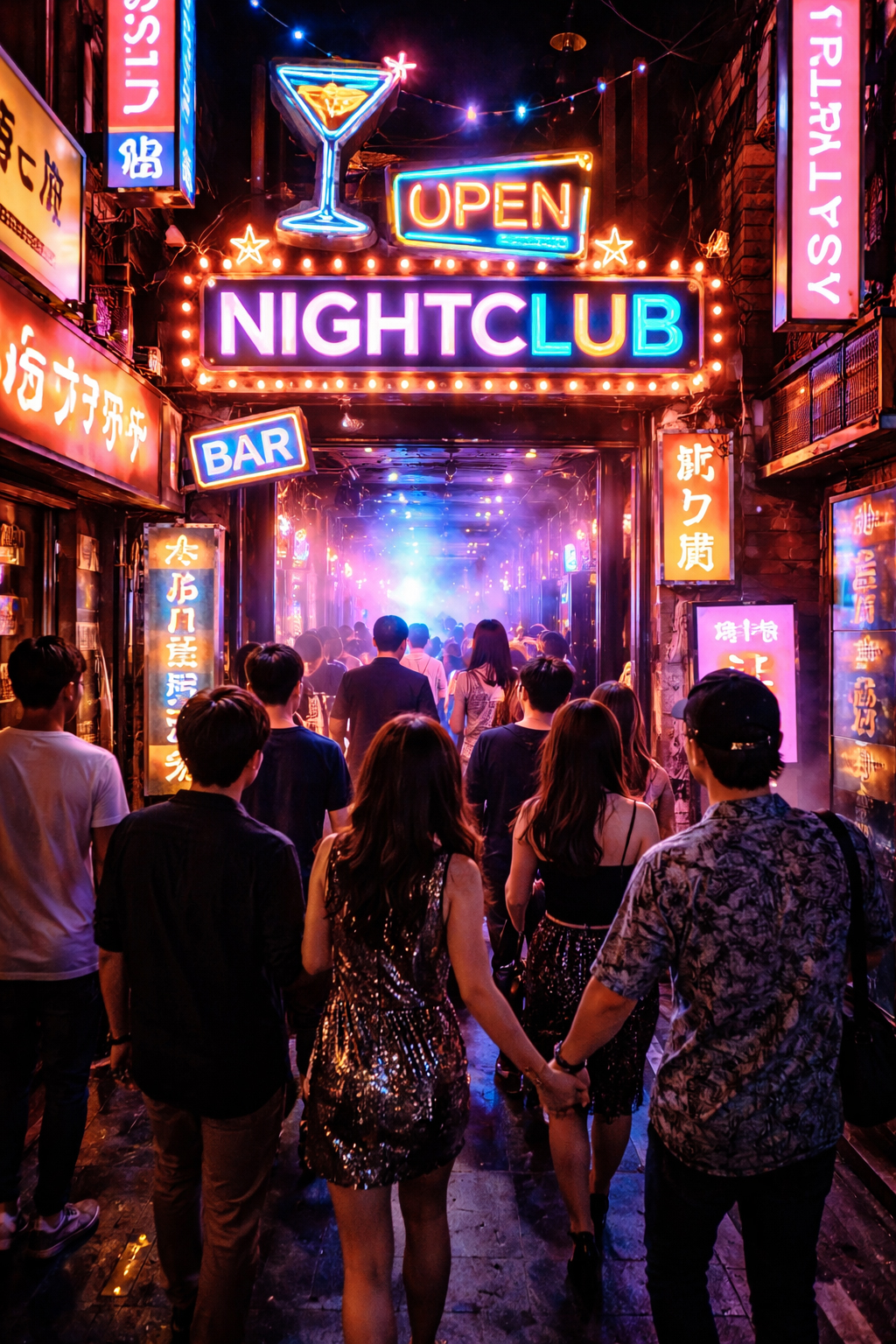
Economic excess changes how people use the night. Bubble-era Japan showed that in concentrated form. It was not only that there was more money to spend. The night became a way of confirming that one belonged to a time of momentum. :contentReference[oaicite:33]{index=33}
That is why the brightness of the era was psychological as much as financial. People were not only consuming nightlife. They were participating in a larger belief that the good times would continue. :contentReference[oaicite:34]{index=34}
Bubble-era nightlife felt bright not only because money moved,
but because people believed the era itself was moving upward.
Of course, the mood did not last forever. After the bubble burst, the excess quickly started to look outdated, and many of the iconic venues associated with that moment eventually closed. :contentReference[oaicite:35]{index=35}
But bubble-era nightlife should not be remembered only as embarrassment or excess. It also helped prepare the bodily and social grammar through which later Tokyo club culture would move from disco spectacle toward more music-centered forms. :contentReference[oaicite:36]{index=36}
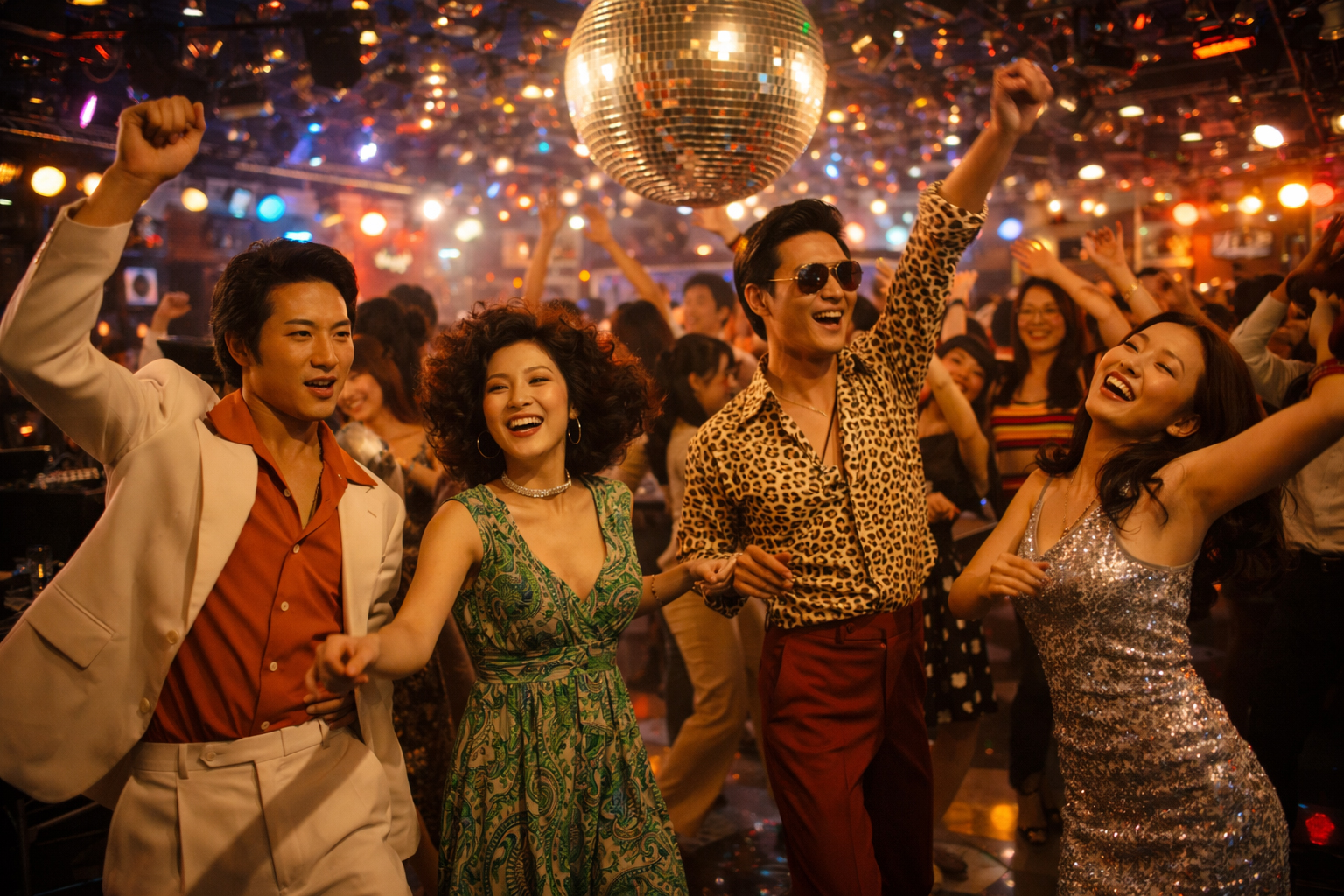
The flashy nights of the bubble era left behind habits of gathering, display, and movement that later club culture inherited. :contentReference[oaicite:37]{index=37}
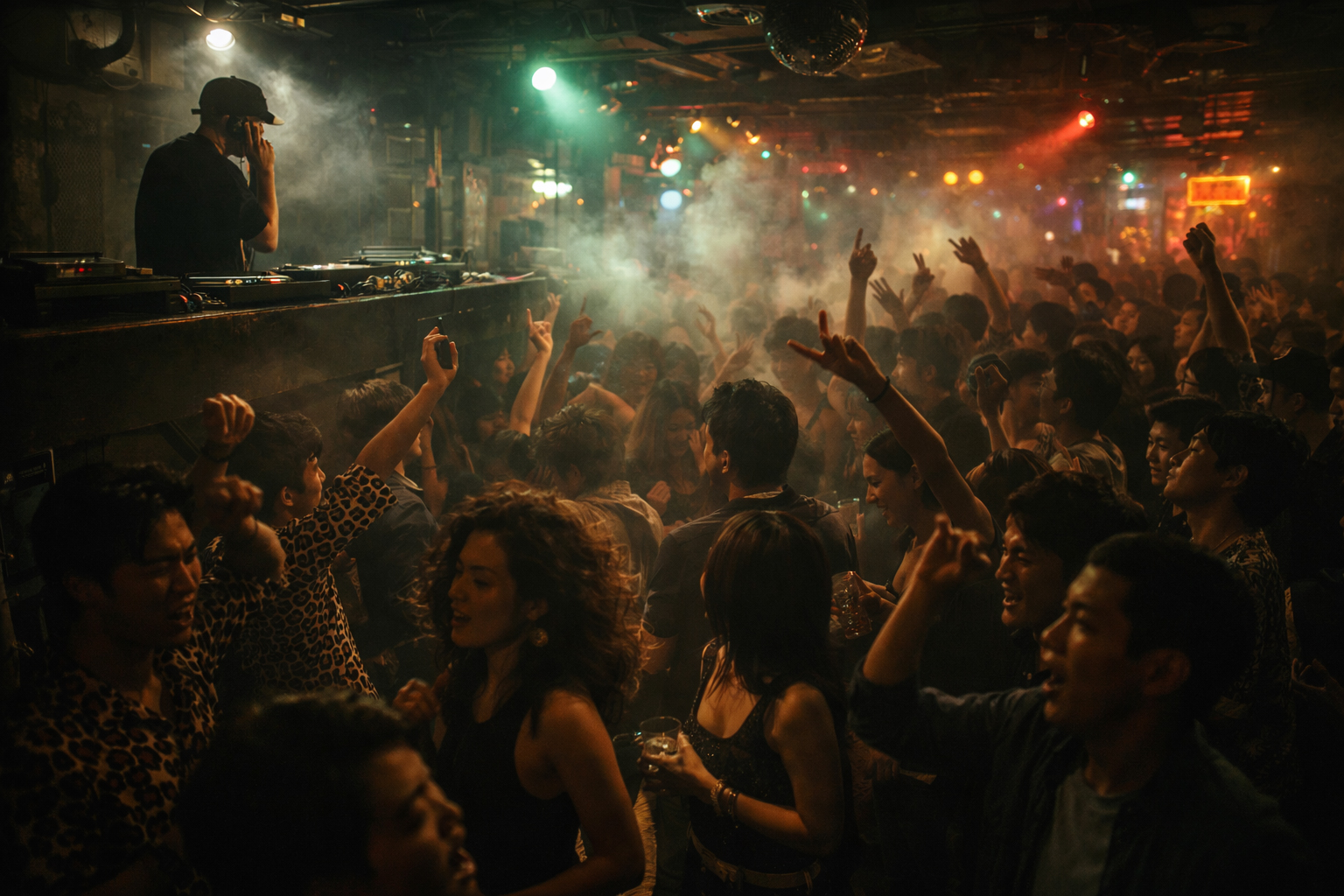
The city’s later shift toward more musically focused nightlife grew partly out of this earlier spectacular phase. :contentReference[oaicite:38]{index=38}
Bubble-era nightlife was not just a side effect of prosperity. It was also a history of how Japanese cities staged wealth, confidence, and outward-facing identity at night. :contentReference[oaicite:39]{index=39}
clubs.co.jp wants to preserve that era not only as “excess,” but as a cultural phase where display, dancing, district branding, and urban self-consciousness all fused together. :contentReference[oaicite:40]{index=40}
A closer look at the district that most visibly staged bubble-era nightlife.
How Tokyo nightlife evolved after the bubble into more layered club culture.
A more lived, memory-driven look at how the district felt from inside the night.