Roppongi
Bubble Nights in Roppongi
A more memoir-driven look at the heat and confidence of the district as the bubble peaked.
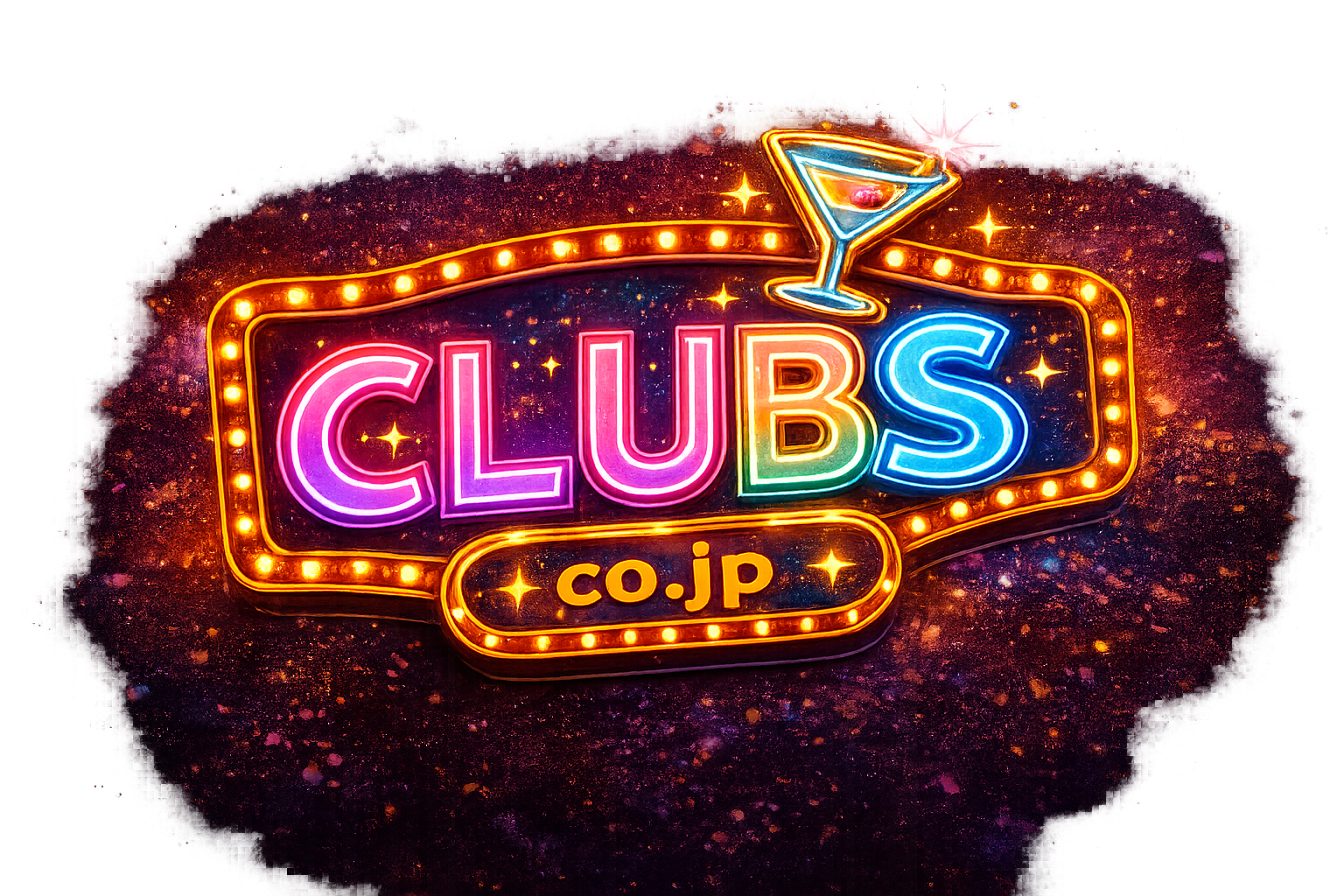
Roppongi in the 1980s was more than a nightlife district. It was one of the places where Tokyo staged its nighttime confidence most dramatically. From the pre-bubble years into the bubble itself, Roppongi became a theater of the night.
When I think of Roppongi in the 1980s, the first thing that appears is density of energy. English was common, foreigners were visible, military and business worlds crossed, creatives and show-offs and ambitious young people all mixed in one district. It was different from Shinjuku and different from Shibuya. It felt more international and closer to Tokyo’s front stage.
That is why Roppongi was never just a drinking district. At a moment when Tokyo wanted to feel connected to the outside world, Roppongi was one of the clearest places where that desire could be performed at night.
In the 1980s, Roppongi was where Tokyo used nightlife
to perform its own internationalism.
As Japan’s cities gained economic and cultural momentum through the 1980s, that momentum became especially visible at night. Roppongi was one of the places where you could feel it most directly. This was not yet the more musically sorted club culture of the 1990s. It was still more disco-shaped, more visible, more built around display.
But that matters. Later club culture needed this prehistory. The habits of gathering, dancing, watching, being watched, and using nightlife as self-presentation were already becoming strong in 1980s Roppongi.
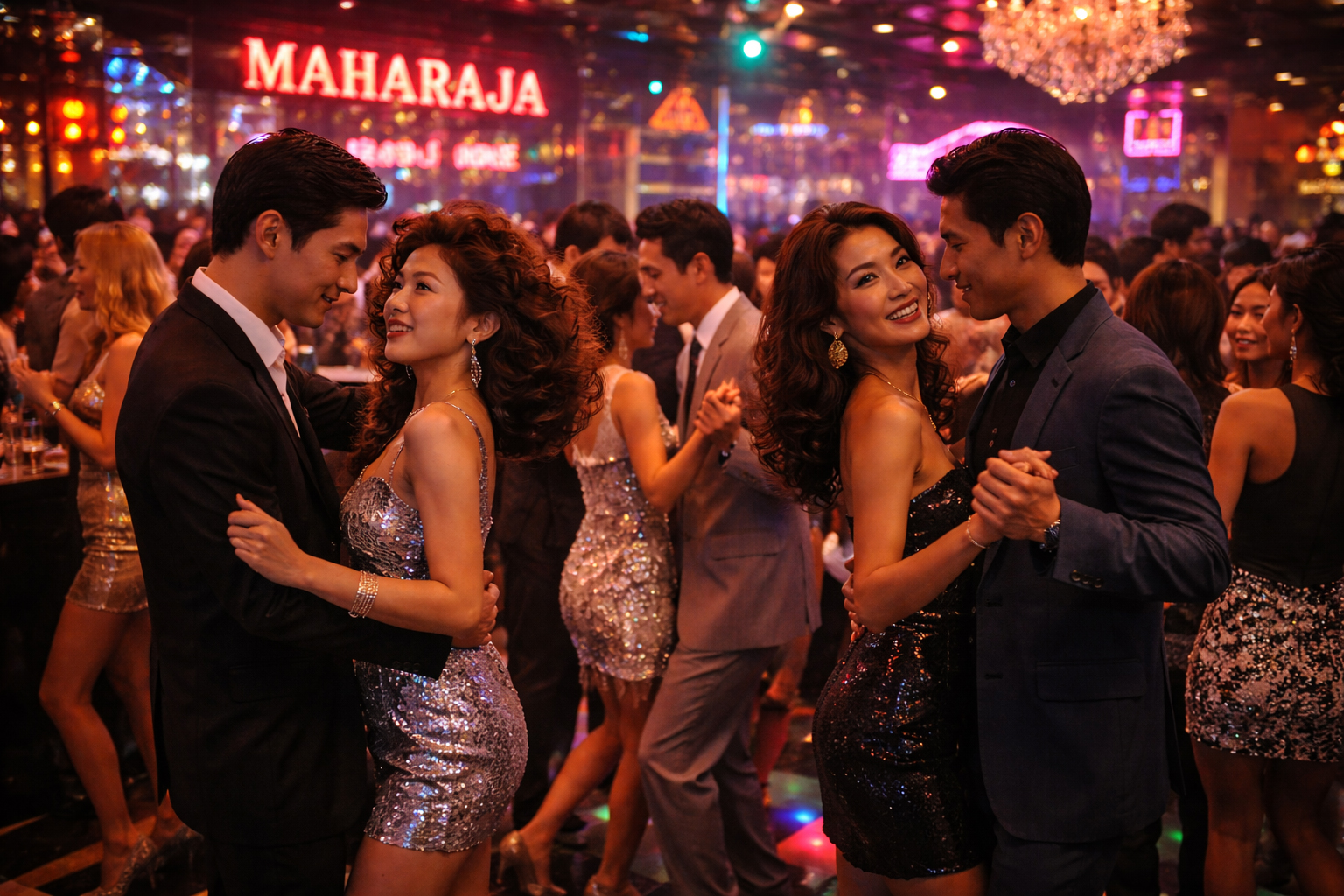
Any serious account of late-1980s Roppongi has to include Maharaja. It mattered not simply as a successful venue, but as one of the clearest spatial expressions of what bubble-era Tokyo considered glamorous.
The décor, the lines outside, the attention to clothing, the pleasure of being seen: Maharaja turned the night into a show. It was a room where music and dancing mattered, but presence itself also became a status performance.
In Roppongi, dancing and being seen could feel almost like the same act.
Where you went at night could express what kind of Tokyo you belonged to.
Before later club seriousness, Roppongi had already perfected a nightlife of spectacle.
What made 1980s Roppongi special was not only its glamour. It also carried a stronger sense of external connection than much of Tokyo. Foreign languages, foreign bodies, foreign music, and foreign-facing desire all felt concentrated there.
Because of that, Roppongi nightlife often seemed not fully sealed inside Japan. It held Tokyo’s wish to be outward-facing. Roppongi was one of the district-sized containers for that wish.
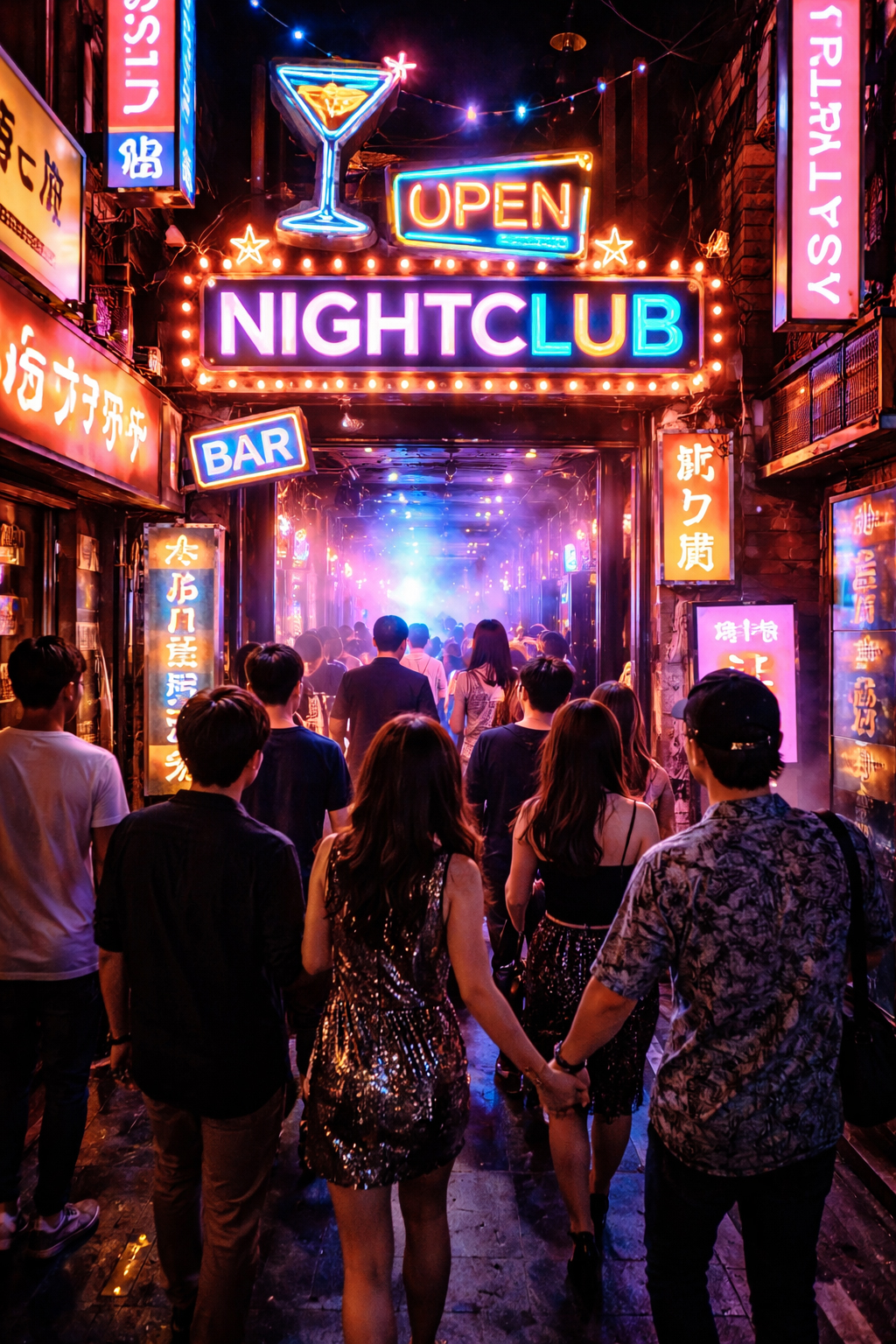
Roppongi in the 1980s was not yet 1990s club culture proper. But it already held something that would lead there. It stood at the moment where disco’s theatricality and the future club’s music-sense began to overlap.
That is why this decade matters. The bodily habits and nightlife instincts that later let Tokyo absorb house and techno more seriously were already being trained in places like 1980s Roppongi.
1980s Roppongi was the point where disco brightness
began slowly turning into the future of club culture.
1989 marked the end of Showa and the beginning of Heisei. It also feels like a threshold in nightlife atmosphere. Roppongi by then had reached a kind of completion: bright, confident, a little excessive, a little innocent, and highly performative.
In the 1990s, club culture would become more musically selective, more segmented, and more refined. But before that happened, Roppongi in the 1980s had already done the work of making the night into part of Tokyo’s face.
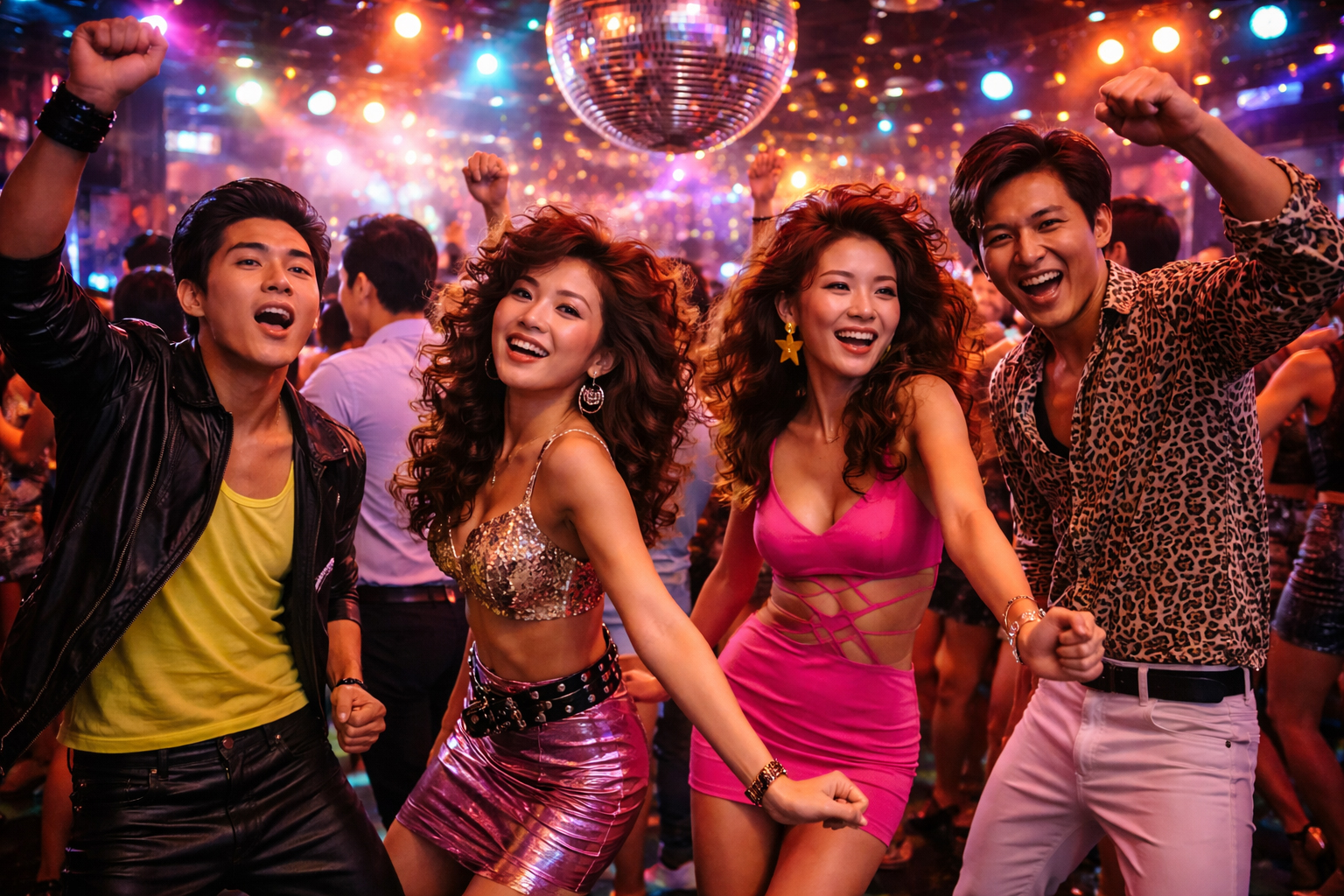
Late-1980s Roppongi was one of the clearest visible peaks of Tokyo nightlife energy.
The body-language of later Tokyo nightlife was already being trained in 1980s Roppongi.
The decade matters because this is when nightlife in Japan became more than a late-hours leisure zone. It became a place where a city could perform identity.
Internationalism, economic optimism, display culture, the tie between music and the body, and the branding of the district itself all came together there. Roppongi carried all of that.
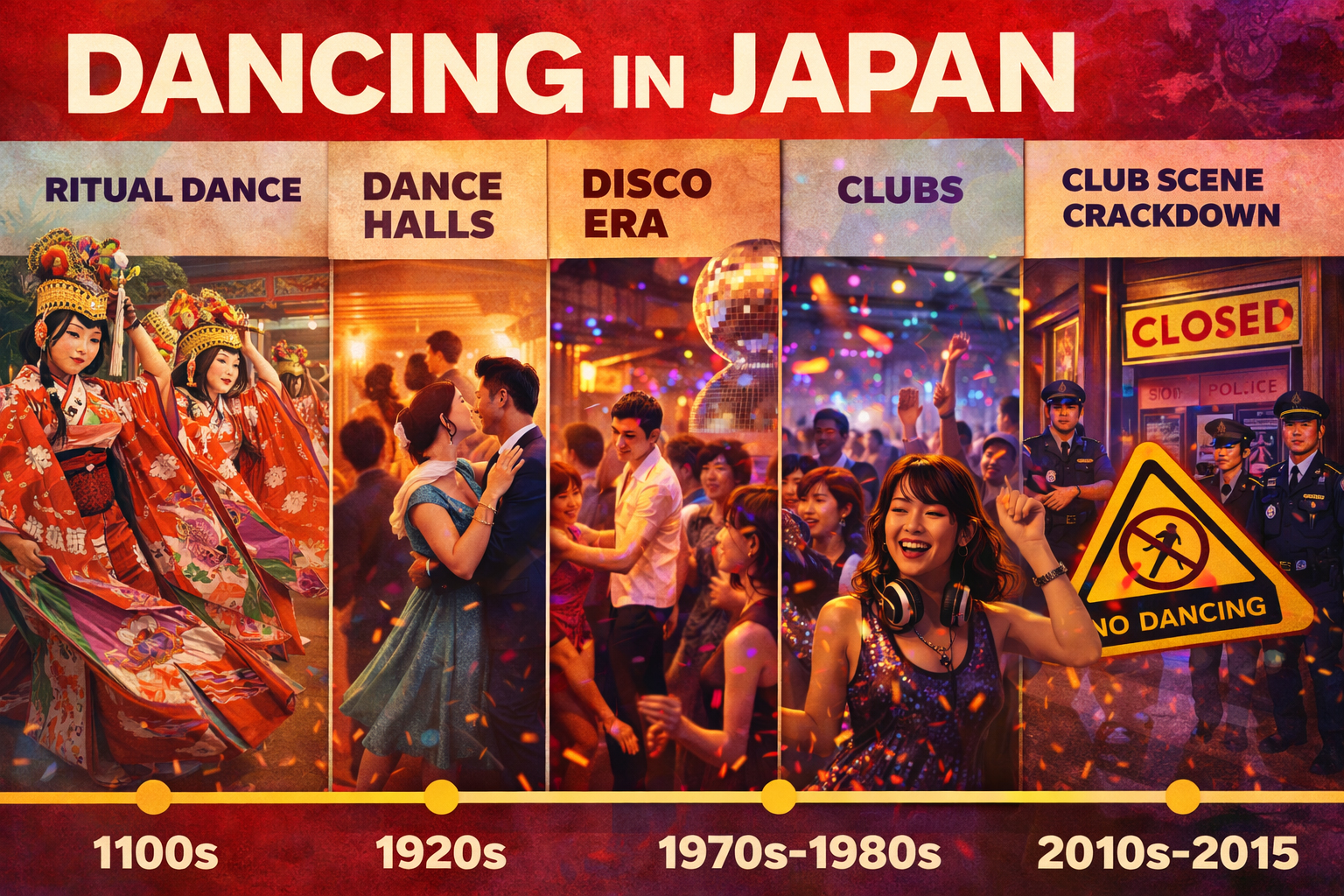
Roppongi in the 1980s should not be remembered only as a symbol of bubble excess. It should also be remembered as one of the places where Tokyo learned how to stage itself at night.
clubs.co.jp wants to preserve that decade as the meeting point of disco glamour, international aspiration, the pleasure of display, and the prehistory of later club culture. In it, you can still see a Tokyo that was slightly innocent, slightly dangerous, and already unmistakably metropolitan.
A more memoir-driven look at the heat and confidence of the district as the bubble peaked.
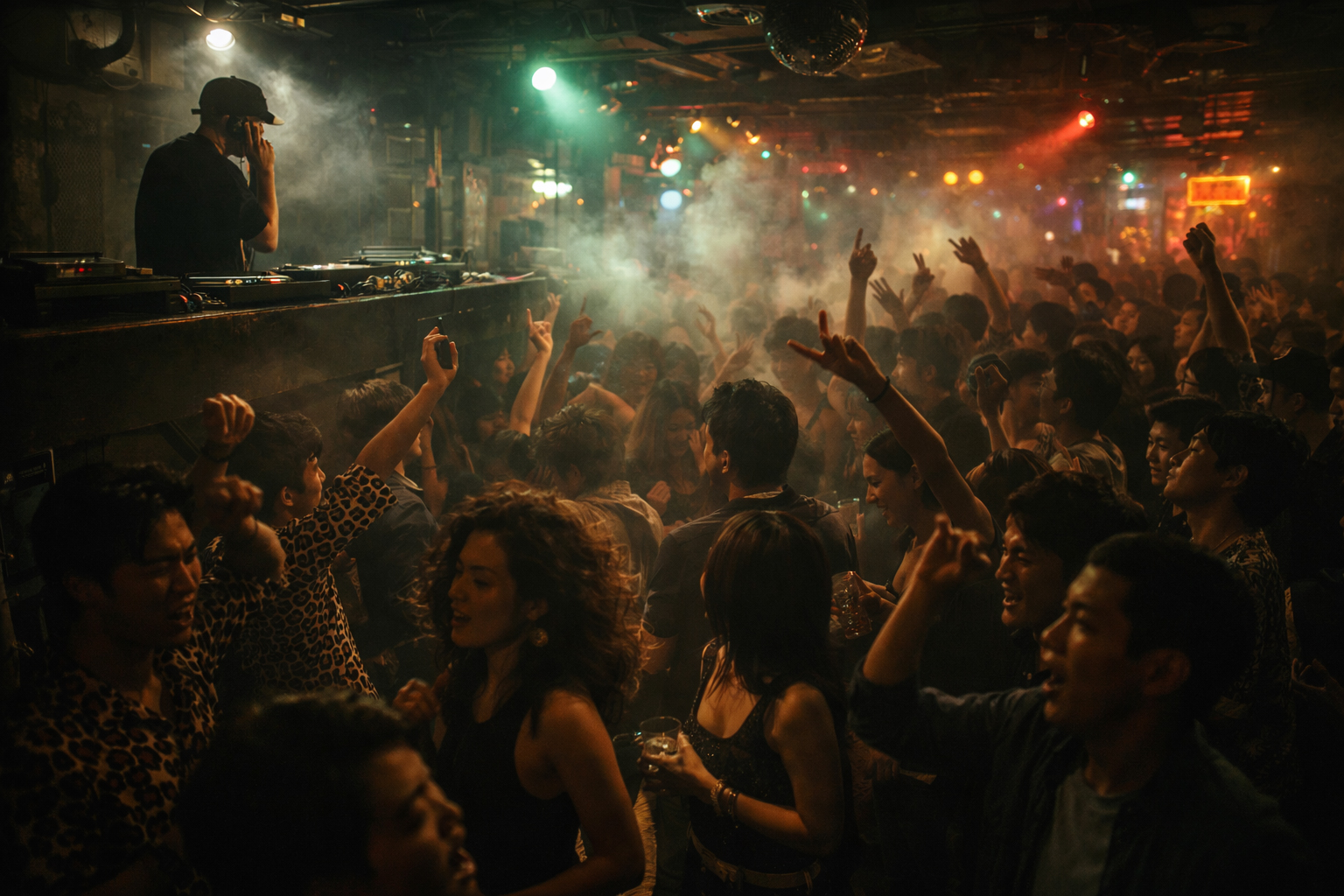
How the theatrical energy of 1980s Roppongi evolved into a more layered citywide club culture.
A personal entry point into the district at the edge of the decade’s transition.