Venues
The Clubs That Defined the Era
A closer look at the venues that captured the emotional shape of Roppongi through different decades.
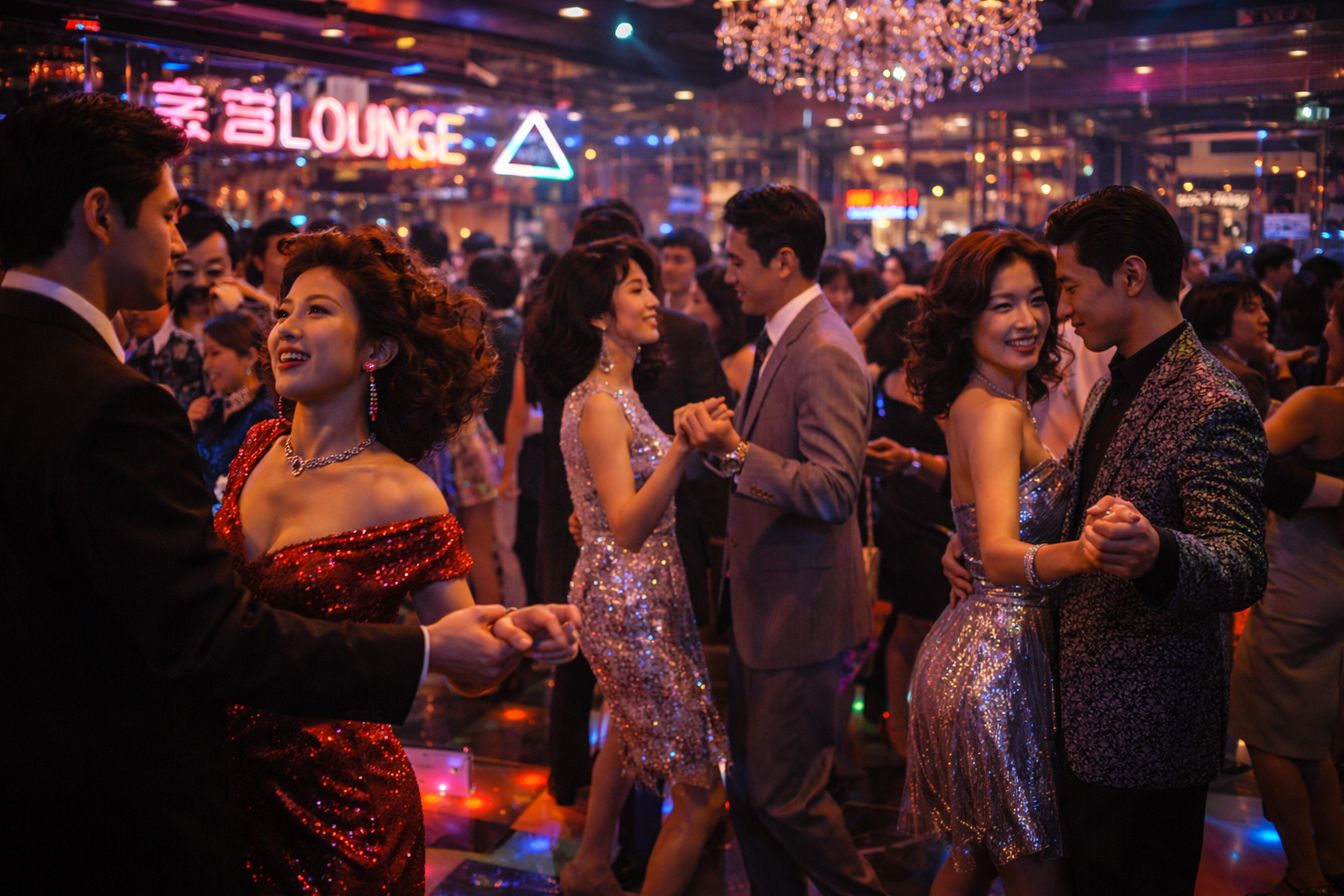
In the late 1980s and early 1990s, Roppongi became one of the clearest nighttime stages for Japan’s bubble confidence: neon, champagne, discos, hostess clubs, imported music, international energy, and a city that seemed to believe it could only rise.
When I think back to bubble-era Roppongi, the first quality that returns is brightness. Not only in the sense of lighting, but in the sense of belief. The city believed in its own momentum. People, companies, and even the national mood seemed convinced that everything was still moving upward. At night, that confidence became visible.
Roppongi was one of the places where that confidence was most concentrated. It was international, visible, fast, theatrical, and socially charged. That is why bubble-era Roppongi matters not only as nightlife memory, but as a record of how Japan imagined itself during one of its most self-assured moments.
Roppongi at night felt like the economy itself had turned into light and sound.
Tokyo has many faces, but Roppongi had a particularly performative one. People there were not only going out. They were displaying how they went out. Clothing, companions, venue choices, bottle service, entrances, exits, timing, taxis — all of it became part of the theater of the night.
In bubble-era Roppongi, urban self-staging and nightlife culture overlapped at unusually high intensity. That is why discos and clubs functioned not only as music spaces, but as theatrical machines for the era itself.
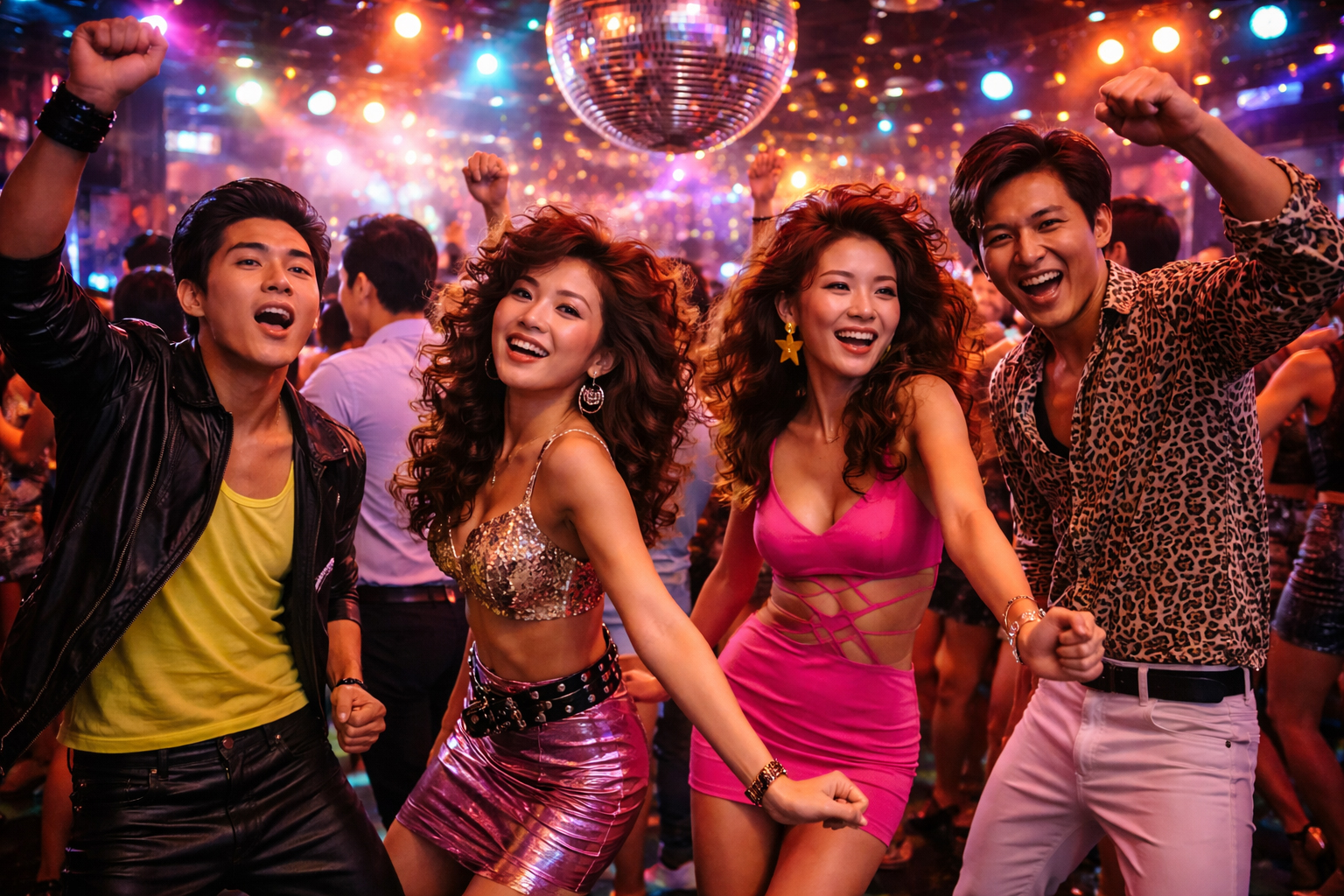
International nightlife styles and sounds arrived in Roppongi and emerged even hotter, louder, and more theatrical.
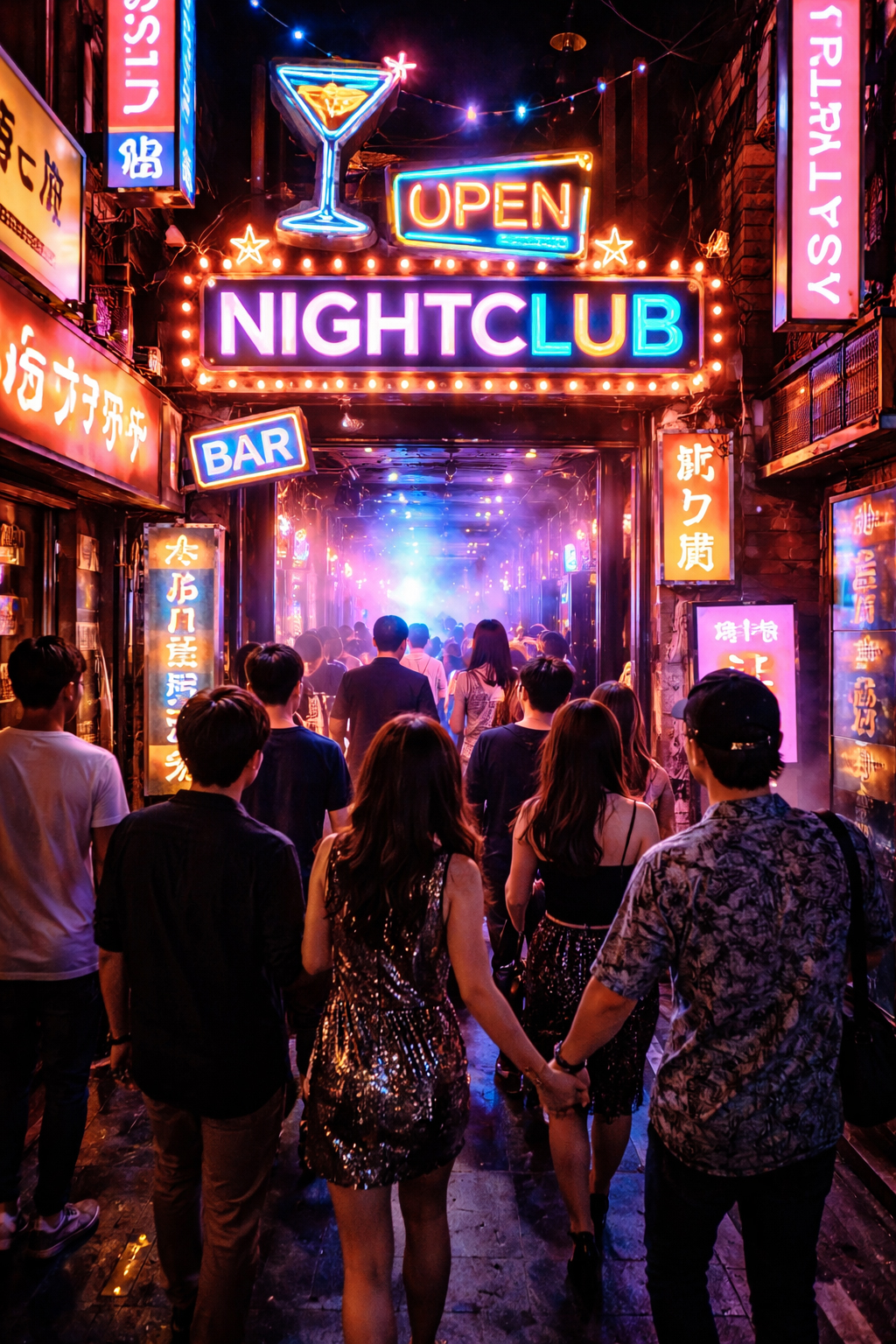
In Roppongi, the street, the threshold, and the arrival were already part of the nightlife performance.
If you want shorthand for bubble-era Roppongi, champagne, discos, and hostess clubs belong near the center. Not because they reduce the city, but because they capture its atmosphere. Nights were not short. They did not end in one room. Movement itself had value.
Champagne was the sound of upward motion. The disco made economic confidence physical. Hostess clubs formed part of the district’s social circuitry — its blend of display, hospitality, networking, and urban ego. Together they made up a nightlife circuit unique to that period.
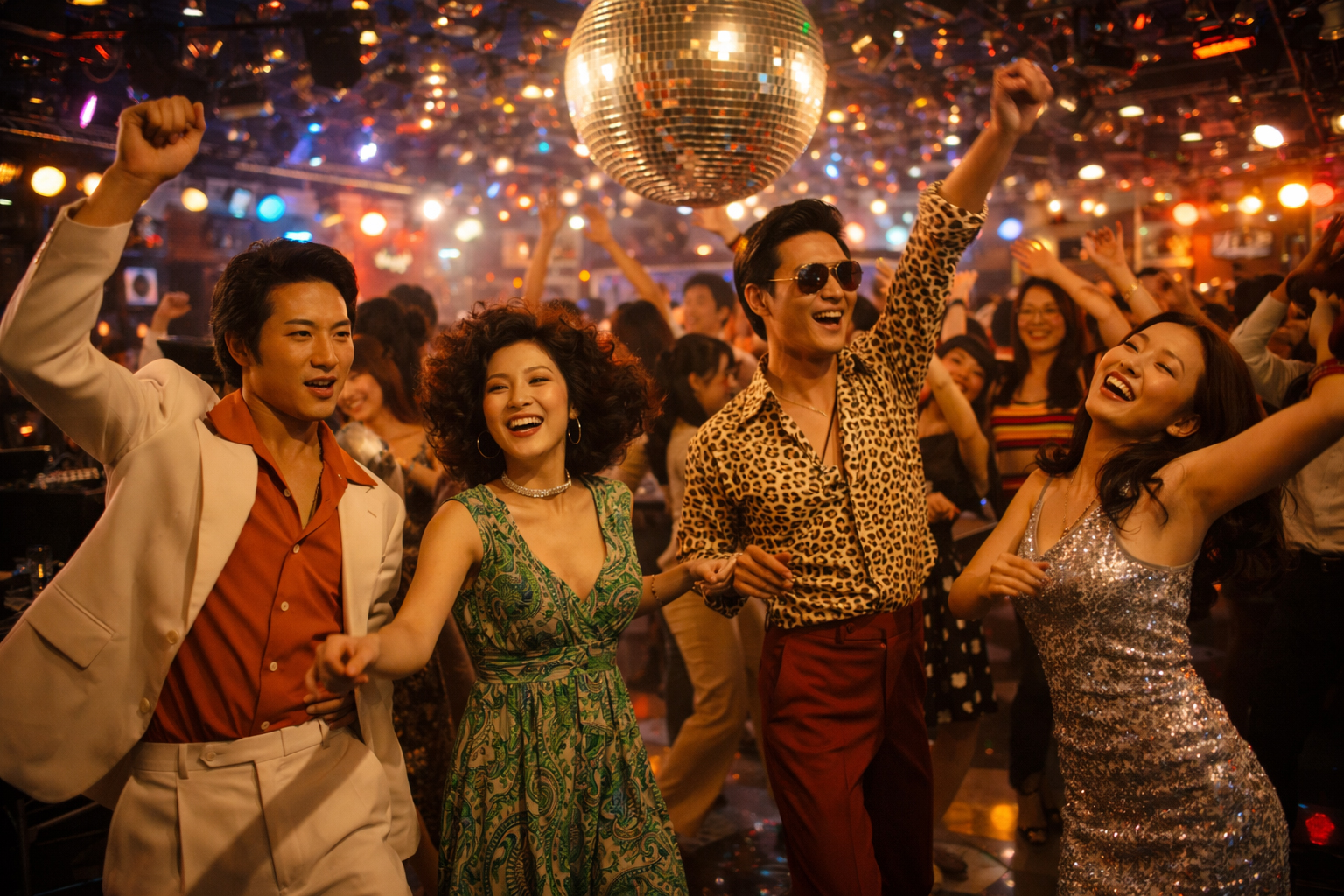
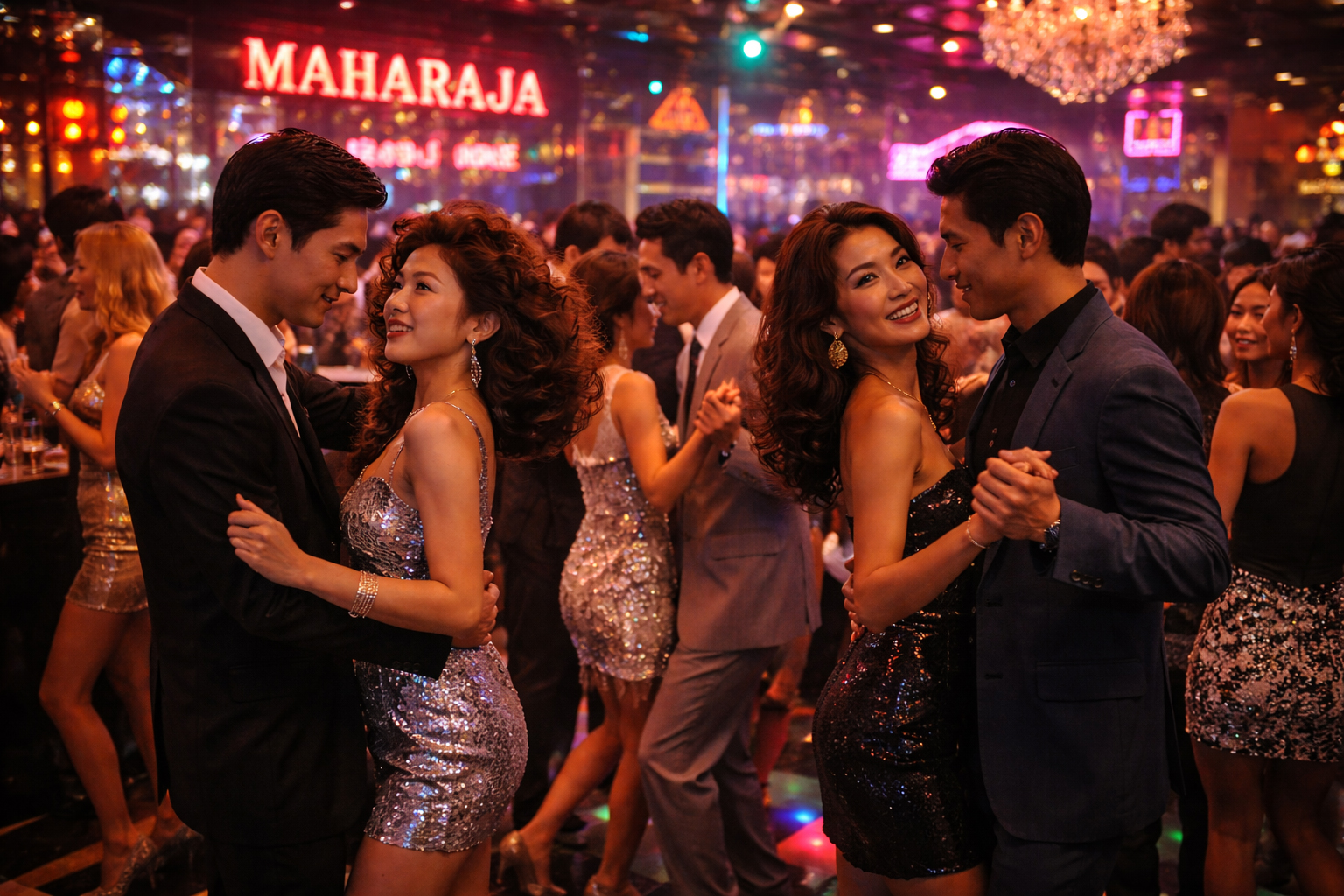
To talk about bubble-era Roppongi without mentioning venues like Maharaja would miss something important. Places like that did more than succeed commercially. They compressed spectacle, money, imported glamour, and mass desire into a visible room.
Big floors, hard lighting, conspicuous fashion, international music, and dense crowds all came together there. The effect was simple and powerful: Japan felt like it had placed itself close to the center of the world’s nightlife imagination.
In bubble-era Roppongi, the night was not only an experience.
It was a public performance of confidence.
One of Roppongi’s defining traits was how early and how intensely it mixed worlds. Japanese and foreign, industry and outsider, regular and first-timer all crossed there. That collision made the district exciting.
The bubble amplified Roppongi’s glamour, but the district’s deeper strength was always its ability to mix people and scenes. That is why a venue rarely remained just a venue. It became an introduction point, a transition point, an accident point, and often a story.
Economic optimism was not abstract. It appeared directly in the behavior of the night.
Roppongi carried a constant sense that something might happen at any moment.
Japanese nightlife and imported nightlife merged in Roppongi faster and more visibly than in many other districts.
To arrive in Tokyo in 1989 was to let the bubble define your first understanding of Roppongi. A few years earlier and you might have felt more of the ascent. A few years later and you might have started with aftermath. But arriving at the peak means the district enters memory at maximum brightness.
That matters because later eras are always compared against that original force. Once you have known Roppongi in that form, quieter or stranger later phases feel sharper by contrast.
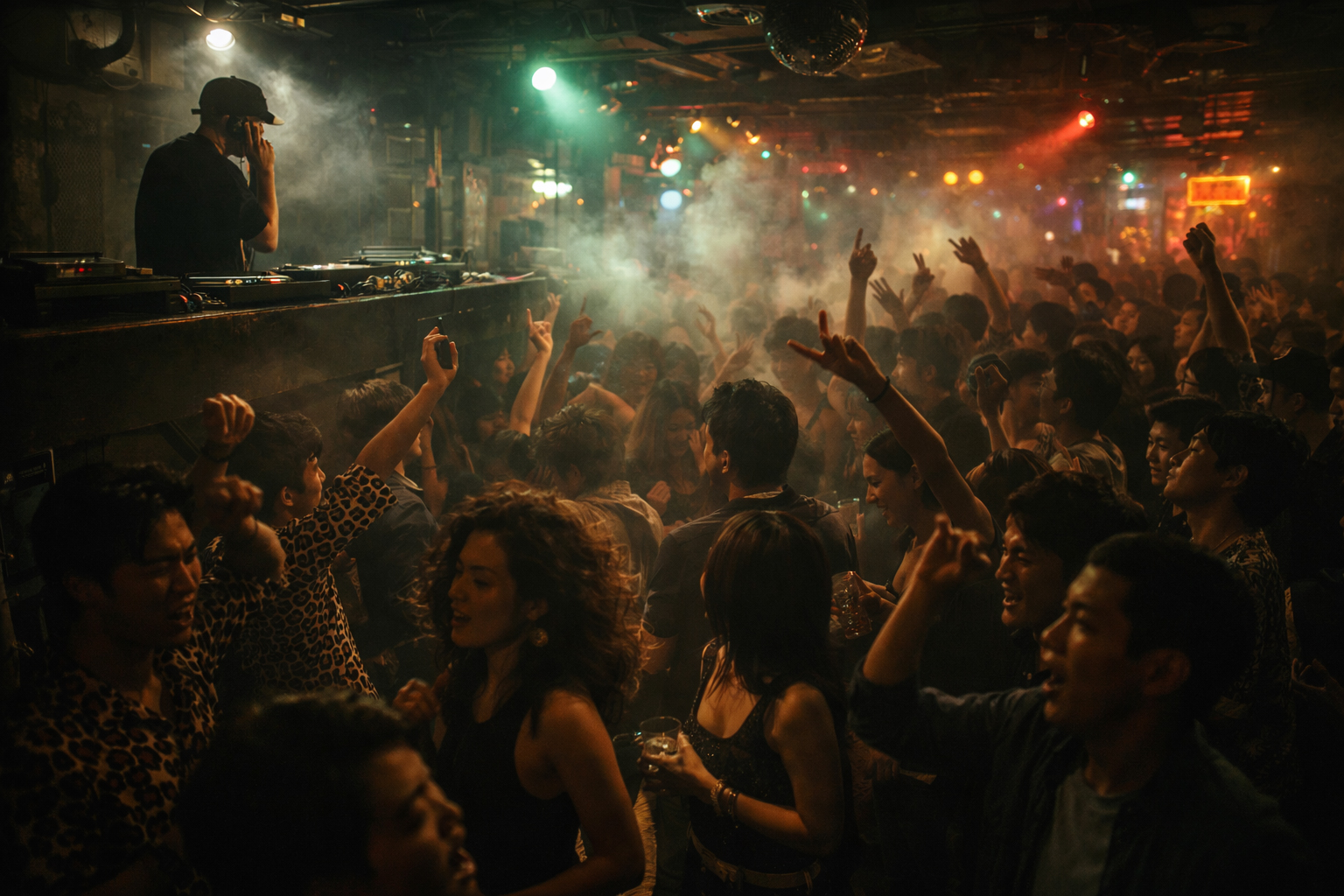
Of course those nights did not last. But that is partly why they remain so vivid. Bubble-era Roppongi was one of the periods when Tokyo believed in itself most strongly, and when nightlife became one of the clearest visual forms of that belief.
Later Roppongi still carried echoes of that energy, but not in exactly the same way. That is why bubble nights in Roppongi remain special: they were not just nights out. They were the shape of a national dream at night.
Bubble-era Roppongi is not only a memory of excess.
It is a memory of Tokyo at one of its brightest moments.
If clubs.co.jp is going to talk seriously about Roppongi, it has to talk about the bubble nights. Not because they were simply flashy, but because they became the baseline against which later nightlife, regulation, music culture, and urban mood were felt.
Roppongi at night was a compressed version of Tokyo. During the bubble, that compression burned at maximum intensity. That is worth remembering.
A closer look at the venues that captured the emotional shape of Roppongi through different decades.
A more sensory memoir of bubble-era Tokyo nights at the level of atmosphere and temperature.
How arriving in Tokyo in 1989 shaped the way I would always see Roppongi at night.