
Reform
The 2015 Reform
How the movement connected to the legal revision and what that revision actually changed.

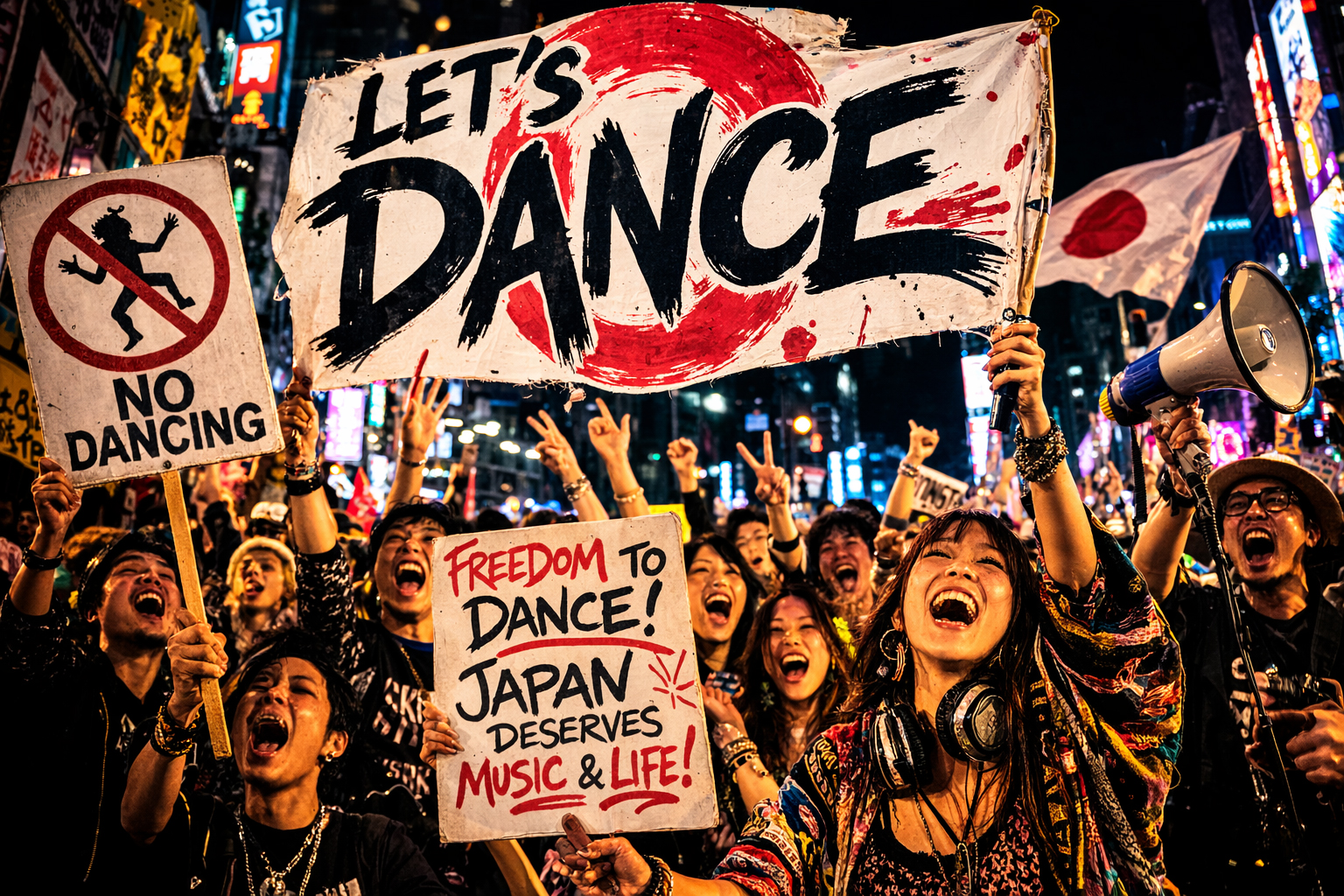
What changed Japanese nightlife was not only what happened inside clubs. It was also the moment when people in the scene said, publicly and clearly, that treating dancing itself as the problem no longer made sense. That moment became the Let’s Dance movement.
The importance of the Let’s Dance movement is not only that it came before legal reform. It is that it translated something long treated as a scene complaint into a visible public argument.
Club-goers, venue operators, DJs, musicians, lawyers, and people who cared about city culture all helped make the same point: treating dancing itself as a moral problem under an old legal framework had become indefensible. Let’s Dance was the moment that point was made in a form society could not easily ignore.
Let’s Dance was the moment nightlife culture in Japan
looked at the law and said:
look at reality.
In the early 2010s, the old regulatory framework began pressing much harder on actual nightlife spaces. Music was playing. Dance floors existed. Movement was clearly central to the room. Yet movement itself had become the legal target. That exposed a deep gap between the written logic of the law and the lived reality of culture.
And this was not a minor inconvenience. It affected club operations, music culture, city freedom, youth culture, tourism, and Japan’s international image. People in the scene increasingly felt that silence was no longer a realistic option.

One of the strongest things Let’s Dance did was make nightlife culture visible as something worth defending. The campaign gathered more than 150,000 signatures, which mattered not only numerically, but symbolically. It showed that this was not just a complaint from a tiny after-hours subculture.
The movement turned dancing, nightlife, and club space into a public question: should a modern city still regulate bodily movement through an older moral frame that no longer matched reality?
Nightlife culture stopped being only something spoken about from outside and became a speaking subject.
The petition and media attention made the issue visible as a national cultural question.
It helped turn frustration in the scene into pressure the political system had to acknowledge.
The strength of Let’s Dance was that it did not remain only a “clubbers want to party” story. Musicians, lawyers, venue people, and urban cultural figures gave it wider meaning. That widened the frame from nightlife convenience to expression, city life, business conditions, and cultural legitimacy.
This matters because club culture in Japan had often been treated too lightly or too suspiciously. Let’s Dance showed that nightlife was part of the depth of the city itself.
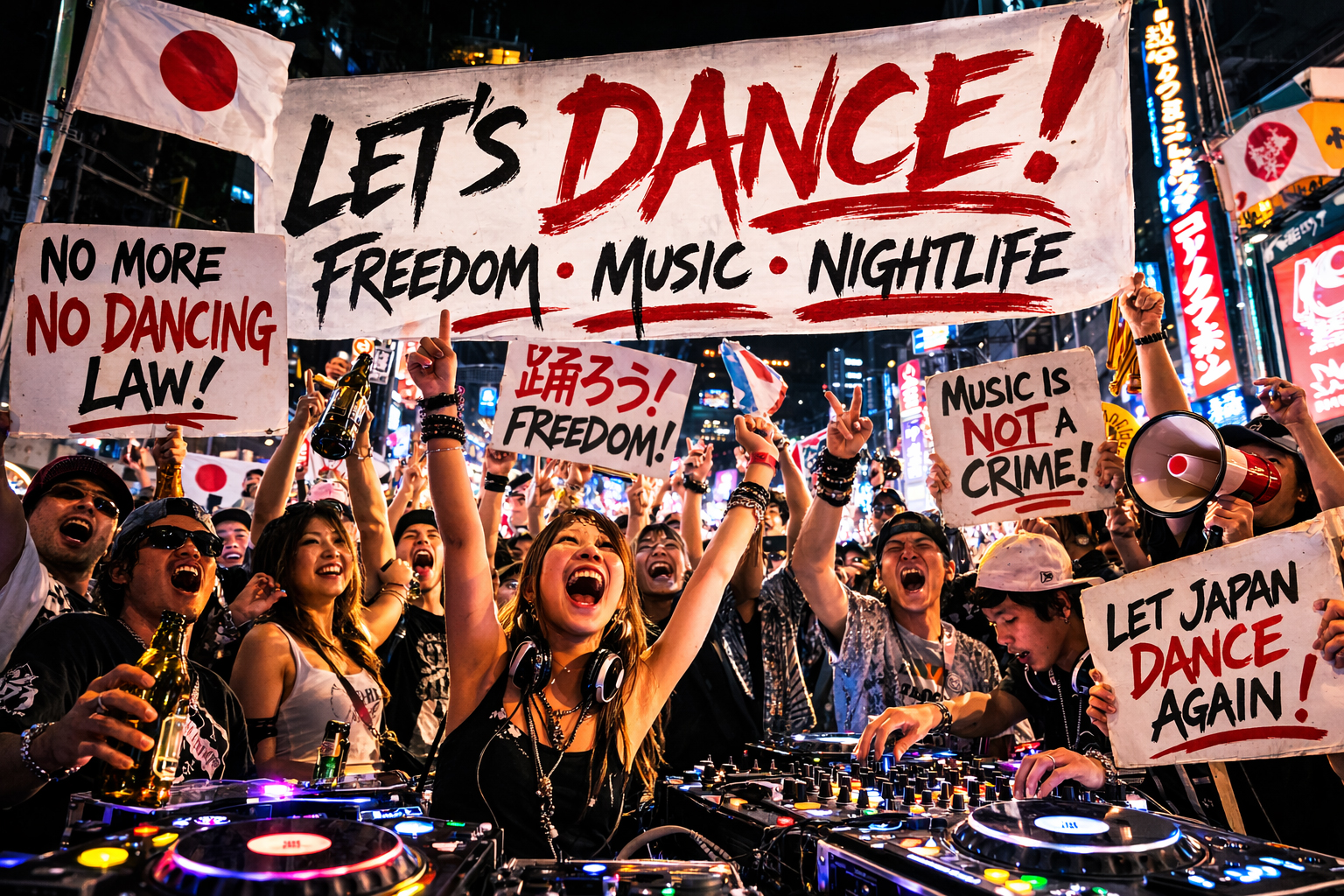
In a district like Roppongi, the meaning of the movement becomes even clearer. Roppongi has long been built out of music, human flow, foreign influence, and rooms where movement is part of the social logic of the night. In that context, “the music can play but the body must not respond” felt absurd at a very basic level.
So Let’s Dance was not only about a technical legal dispute. It was also about whether cities like Tokyo would keep treating nightlife through inherited moral suspicion, or whether they would begin acknowledging it as culture.
What Let’s Dance pushed back against
was not only a specific enforcement pattern,
but a whole way of looking down on nightlife culture.
Let’s Dance alone did not rewrite the law. Political calculation, administrative review, tourism policy, international perception, and the Tokyo Olympics context all also mattered. But without the movement, the issue would not have become so legible as a cultural problem.
The 2015 reform was not only a technical change in legal text. It was also a response to the now-public question that Let’s Dance had helped force into view: does it still make sense to govern dancing through an outdated morality framework?
Let’s Dance translated scene frustration and cultural pride into language that could pressure institutions.

It was not only about permits. It was about whether club culture deserved to be taken seriously at all.
The biggest legacy of Let’s Dance may be larger than the reform itself. It helped establish that nightlife culture deserves explanation, defense, and public language. Before that, clubs were too often treated as suspect or disposable.
The movement showed that club culture was part of modern Japanese urban life, and that people inside that culture could speak for it directly.
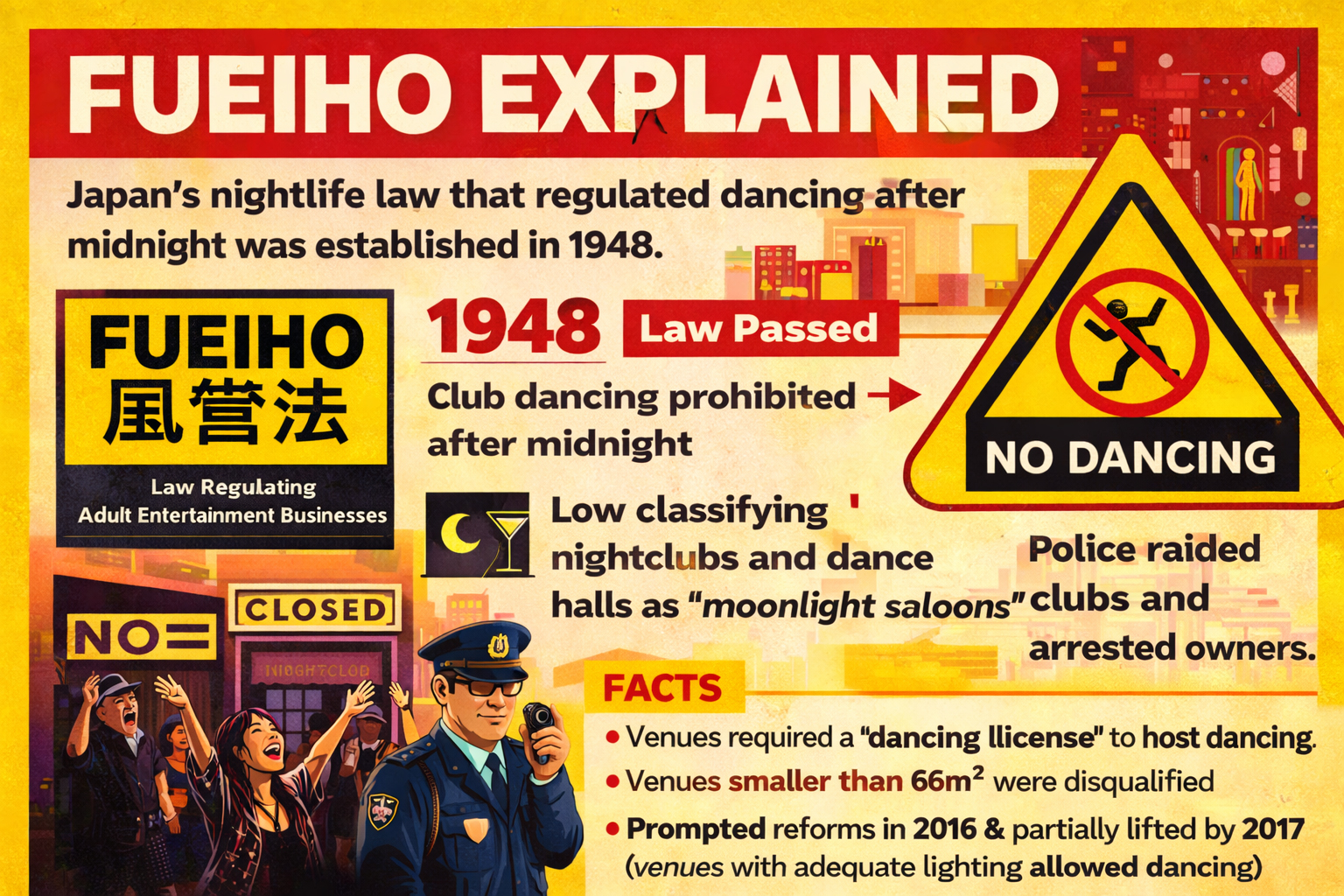
The Let’s Dance movement was not just a petition to protect partying. It was a moment when Japanese nightlife culture articulated its own reason for existing in public.
clubs.co.jp wants to hold onto that meaning. Roppongi, Tokyo, and the broader freedom of the night in Japan all look different because people in the scene chose to push back.
How the movement connected to the legal revision and what that revision actually changed.
The crackdown years that made a movement like Let’s Dance feel necessary in the first place.
A lived, on-the-ground view of the collision between music culture and legal absurdity.