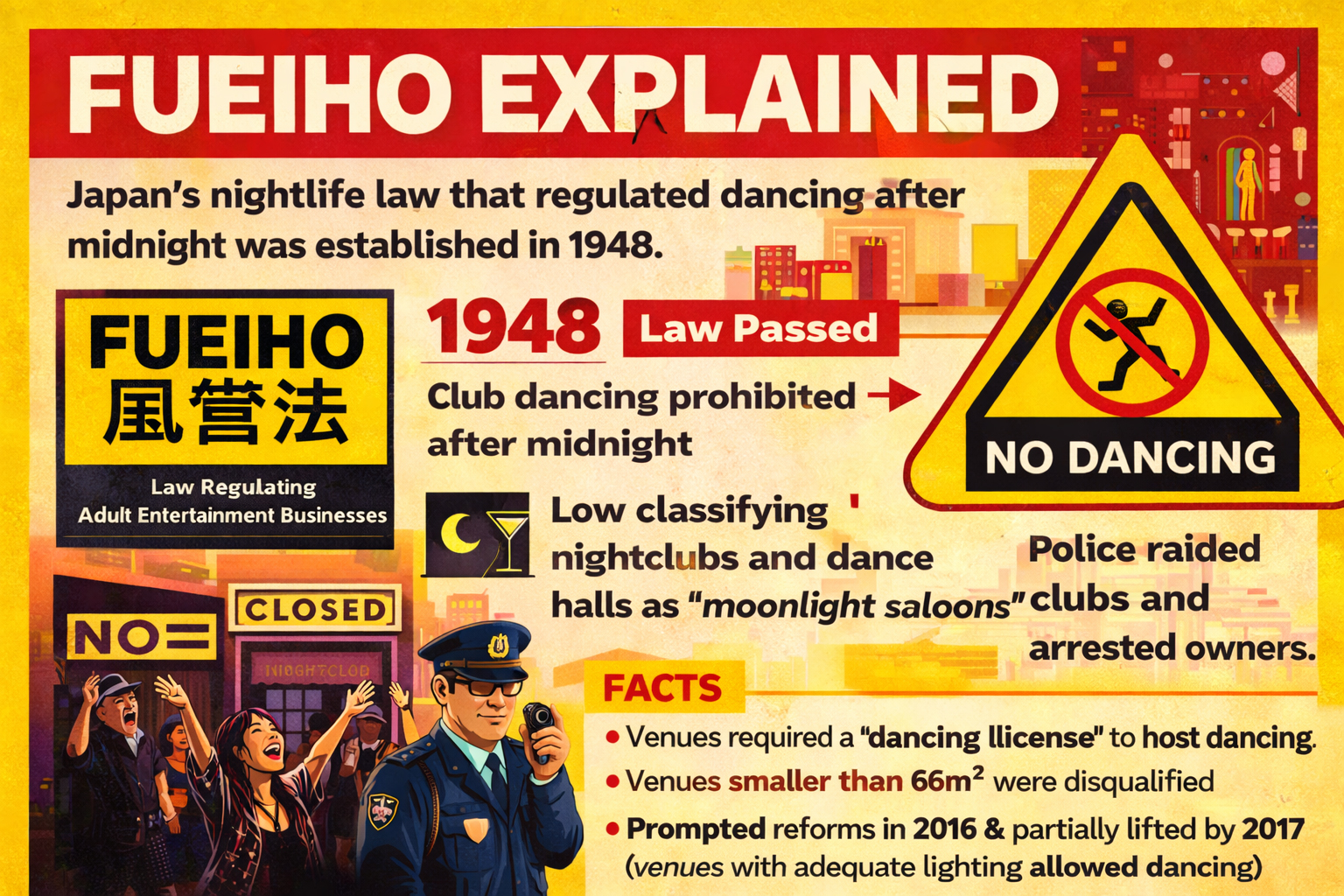
Fueiho
What Was Fueiho?
The background page explaining the wider law that shaped Japan’s nightlife regulation.

The 2015 reform was the turning point that most clearly changed Japan’s image as a “no dancing” country. But it was not a simple full repeal. This page explains what changed, what stayed in place, and why the reform still mattered so much.
If you want to understand Japanese club culture, you have to understand the 2015 reform. It matters because it was the first major moment when the long-running contradiction around dancing was publicly and politically confronted.
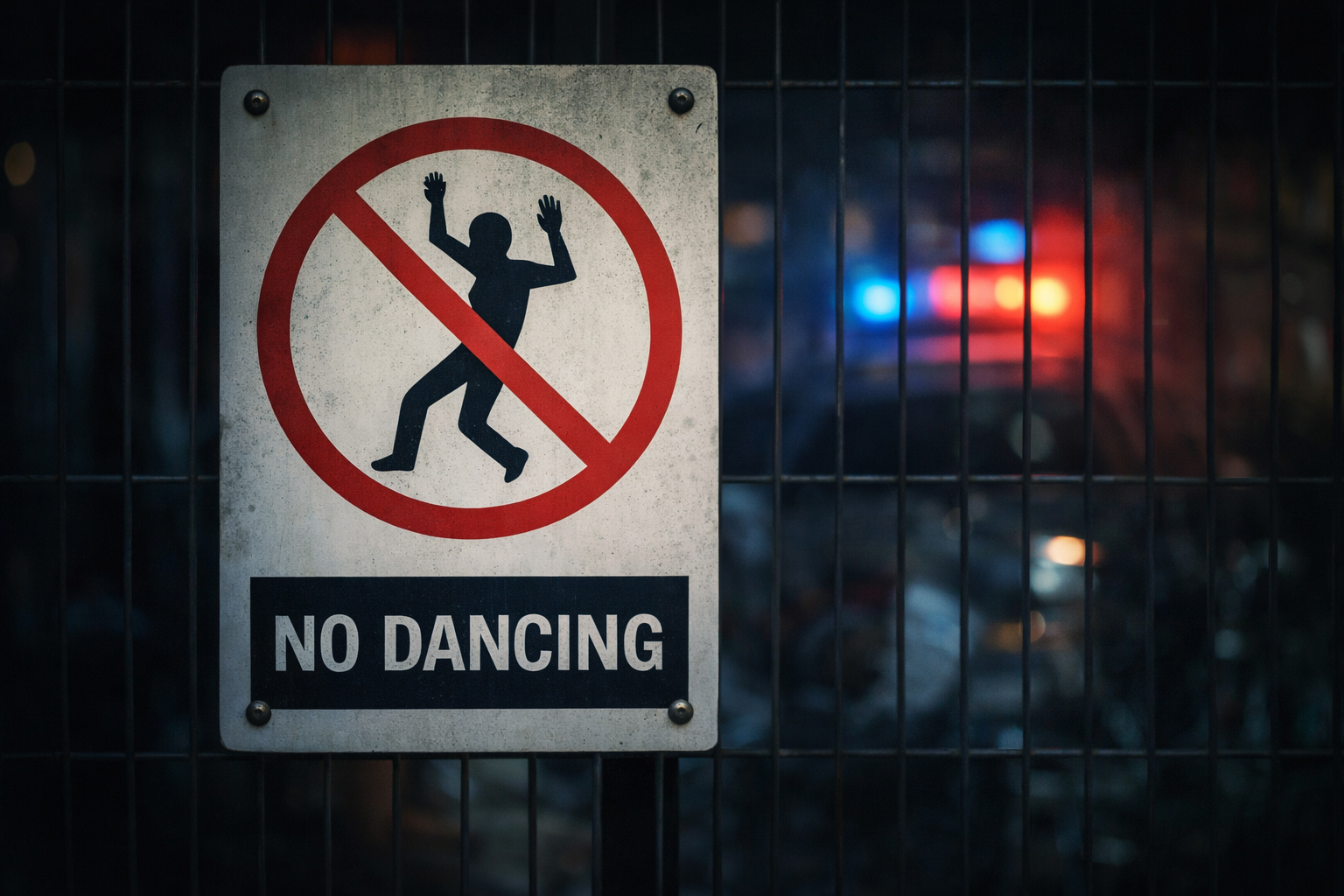
For years, dancing sat inside an outdated regulatory framework under Fueiho. In practice, clubs existed. In practice, people danced. But in law and enforcement, the situation could suddenly become unstable. That is why “No Dancing” signs appeared: music was playing, the room clearly invited movement, yet movement itself had become the legal problem.
The importance of the 2015 reform is not that it made everything fully free.
It is that it became impossible to keep pretending the old contradiction made sense.
The earlier framework came out of postwar moral regulation and treated dancing through the logic of adult-entertainment control. For decades, this structure did not always hit nightlife with equal force. That is part of why the system felt so strange: the gap between written regulation and lived culture could be very wide.
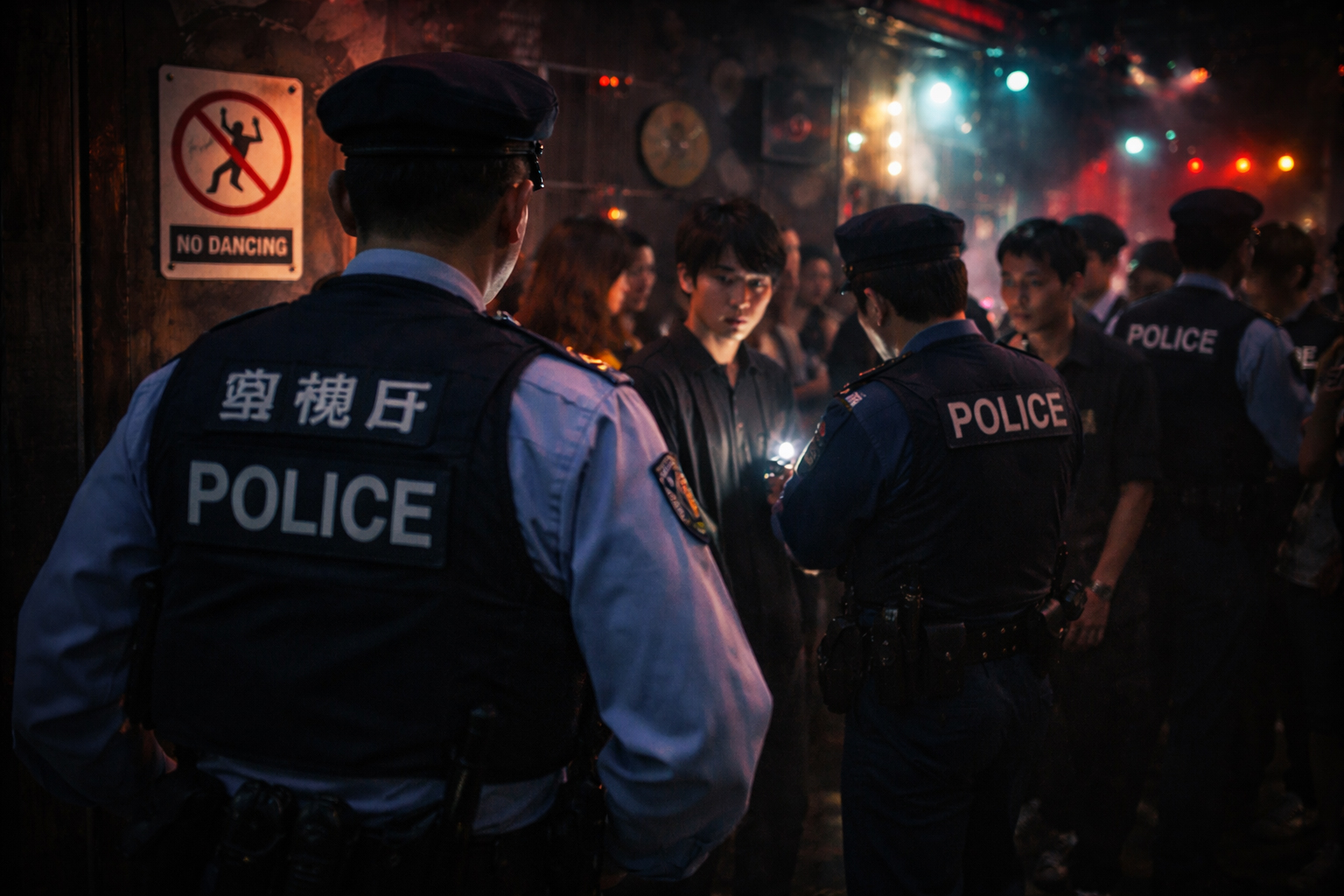
But by the early 2010s, enforcement became much more visible. Club raids in places like Osaka and Tokyo made the issue impossible to ignore, and Japan started to look like a country where dancing itself could suddenly become suspect again.
The reform mattered because it created a clearer legal route for some late-night dance venues to operate under a new framework. Instead of leaving dance culture in a broad gray zone, it recognized that there should be a lawful path for all-night dancing if specific conditions were met.
The law was revised in 2015, and the new regime took effect on June 23, 2016. After that, some venues could seek legal permission for all-night dancing under stricter conditions tied to factors such as lighting, location, and business classification.
Dance culture existed, but venues remained vulnerable to enforcement and legal uncertainty.
The reform created a route for some venues to host late-night dancing lawfully.
Conditions remained, and not every venue fit neatly into the new legal route.
This is the part people often simplify too much. The 2015 reform was symbolically large, but it did not instantly free every club or solve every practical problem. Small venues, awkward building layouts, lighting requirements, and category issues still mattered.
So the right way to read the reform is not “Japan suddenly became completely free.” It is closer to this: the state loosened an old contradiction, but did not abandon the logic of detailed control.
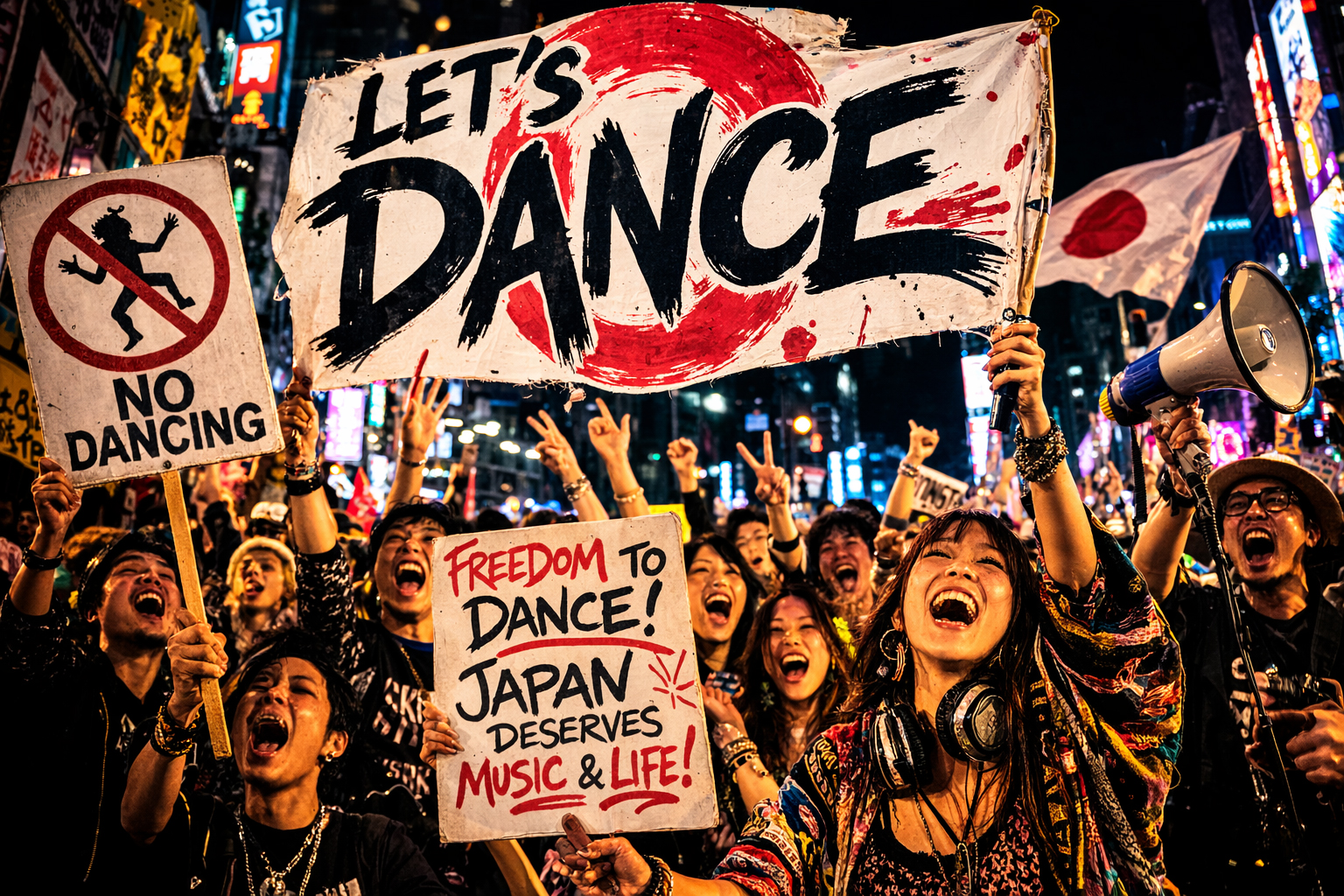
The reform did not simply arrive from above. It was pushed by pressure from the scene, by club owners, lawyers, musicians, and activists, and by the broader cultural embarrassment of treating dancing as a moral threat. The Let’s Dance movement gathered more than 150,000 signatures and made the issue impossible to dismiss.
That matters because this was never only a niche club issue. It touched music culture, city culture, tourism, youth identity, and Japan’s international image. More and more people started to ask whether it made sense to keep regulating dance as if it belonged to an earlier moral universe.
The 2015 reform was a legal revision,
but it was also an answer to a larger cultural question:
should dancing still be treated as a problem in itself?
In a district like Roppongi, the meaning of the reform becomes even easier to see. Roppongi has always been a district of music, bodies, late-night flow, foreign influence, and rooms that depend on human movement as much as sound. In that context, “the music is playing but you must not dance” felt absurd at a basic level.
So the reform was not only a technical legal change. It was also a partial return of realism: an acknowledgment that nightlife spaces built around music and movement cannot be governed forever by pretending the body is the problem.
The reform happened because nightlife culture pushed back instead of quietly accepting the contradiction.
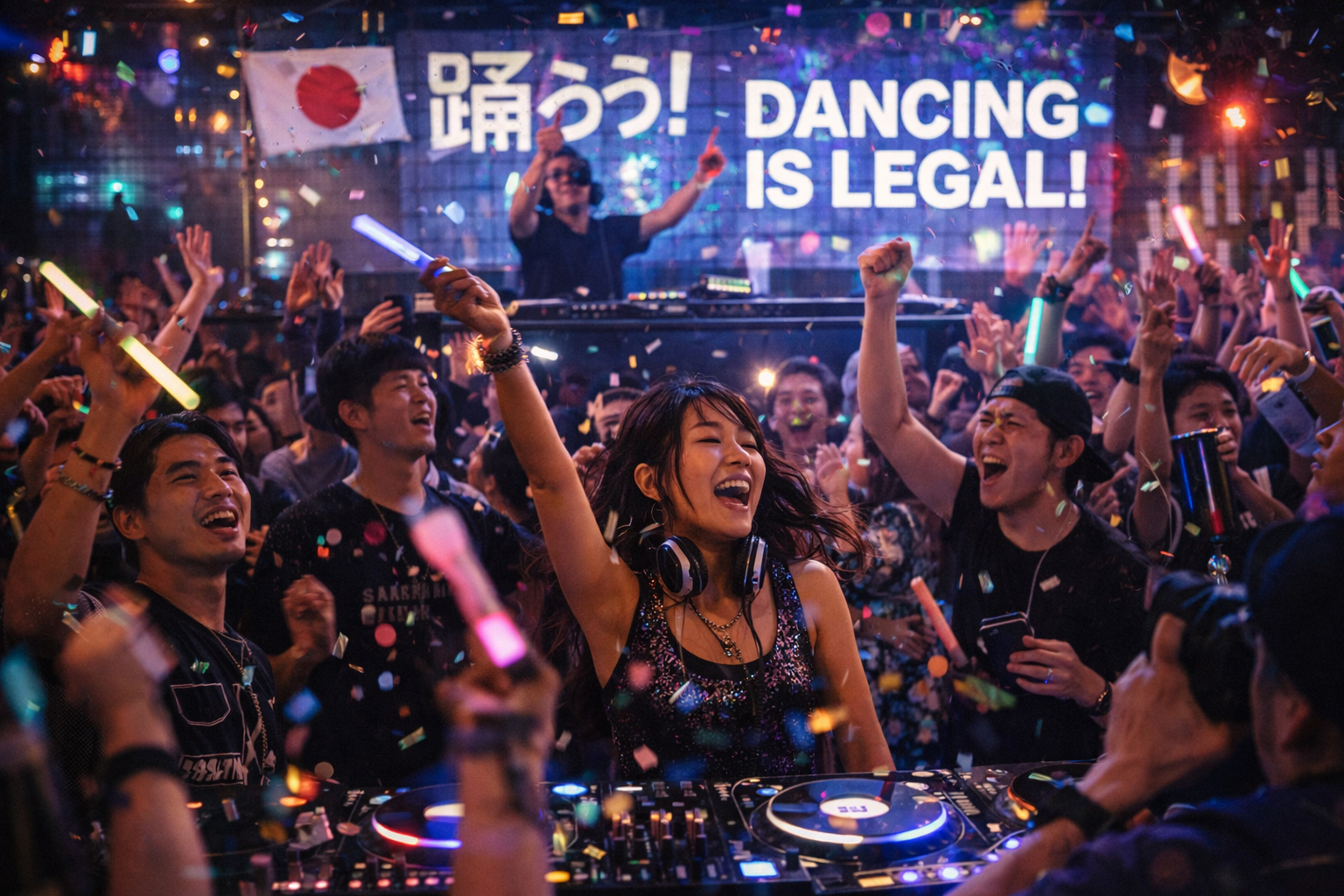
The reform mattered not only administratively, but symbolically, as a shift in how night culture was publicly understood.
The reform still matters because it changed how nightlife could speak about itself. Club culture no longer had to appear merely as something that survived in the shadows. It could more openly present itself as a real cultural field that law and policy needed to catch up with.
In that sense, the reform was about more than convenience for venues. It was about the dignity of nightlife culture itself.
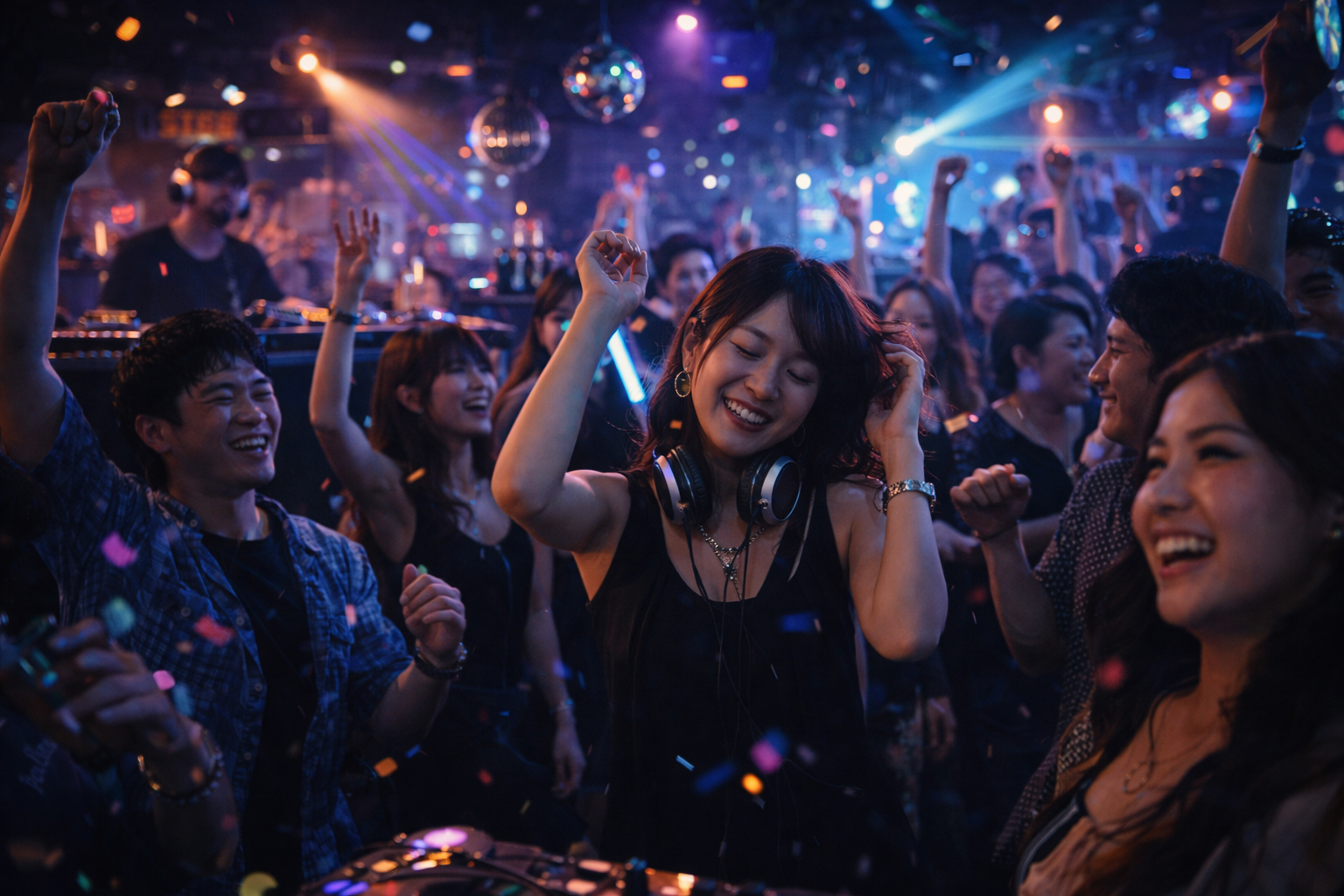
The 2015 reform was not the story of Japan becoming suddenly and absolutely free. But it was a clear turn away from the idea that postwar morality alone could keep governing nightlife indefinitely.
clubs.co.jp wants to preserve that meaning. Without this reform, you cannot properly tell the story of Roppongi, Tokyo clubs, or the broader relationship between music, dancing, and the law in modern Japan.
The background page explaining the wider law that shaped Japan’s nightlife regulation.
A look at the years when a printed sign at the door came to symbolize the contradiction.
A memoir view of the absurdity that made the reform feel culturally necessary.