Bubble Era
Bubble-Era Nightlife
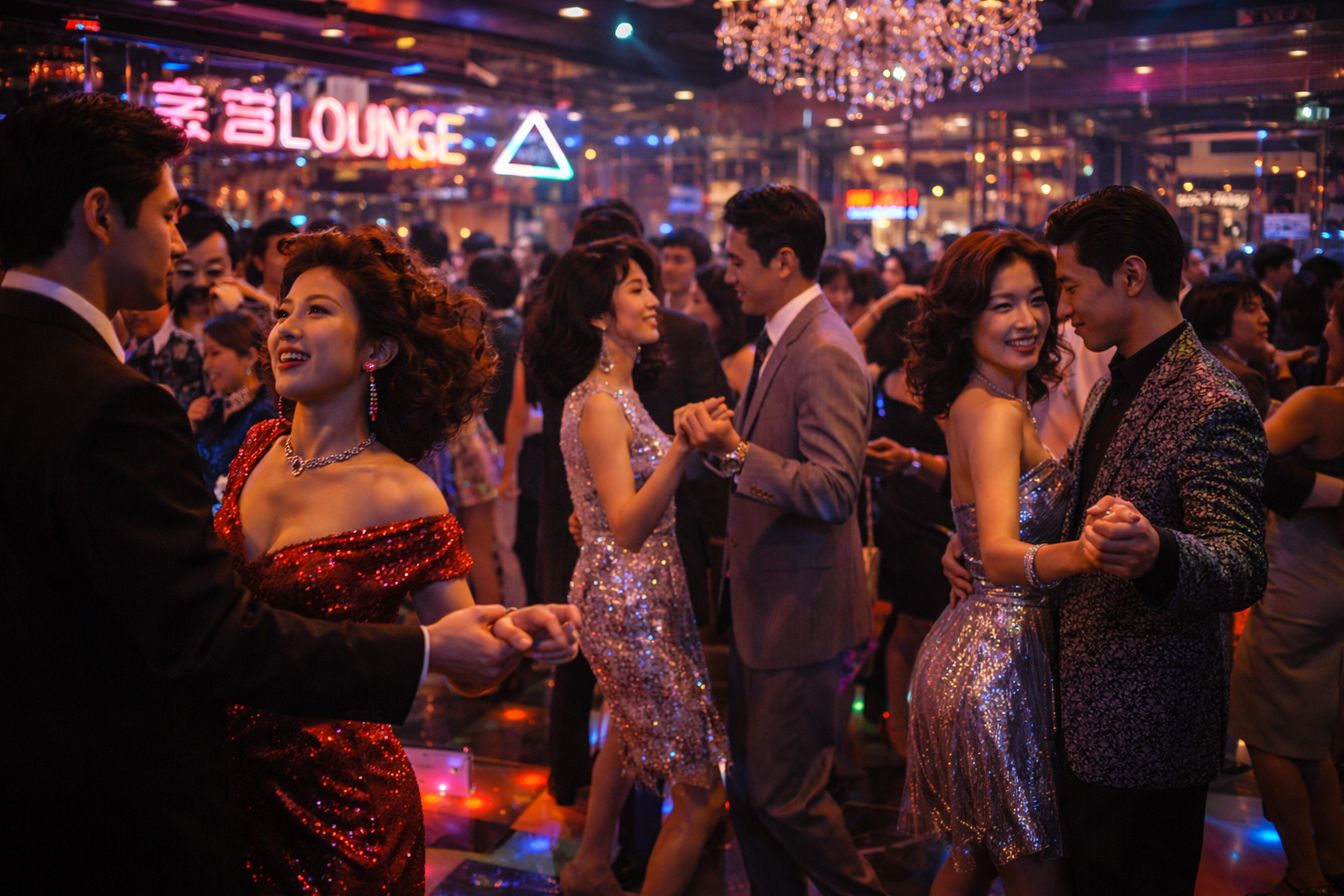
A wider look at the period when disco spectacle reached one of its brightest Japanese peaks.
To understand Japanese club culture, you have to look at disco first. Disco in Japan was never only about dancing. It was one of the first major urban stages where music, fashion, display, and the body became tightly bound together at night.
Disco in Japan was not simply a local copy of a foreign trend. Of course the musical entry points came from abroad. But in Japan, disco became its own urban cultural form and changed how the night was used.
If earlier nightlife had centered more heavily on drinking, eating, and talking, disco brought in something else with unusual force: dancing, being seen, and presenting oneself as part of the meaning of the night.
In Japan, disco was not only a place where music played.
It was a place where the city learned a new body at night.
Dancing had existed before, but disco made it central in a new urban way. It linked the dance floor to fashion, social ritual, display, and self-performance. What you wore, who you came with, which venue you entered, and how you moved inside it all became part of nightlife meaning.
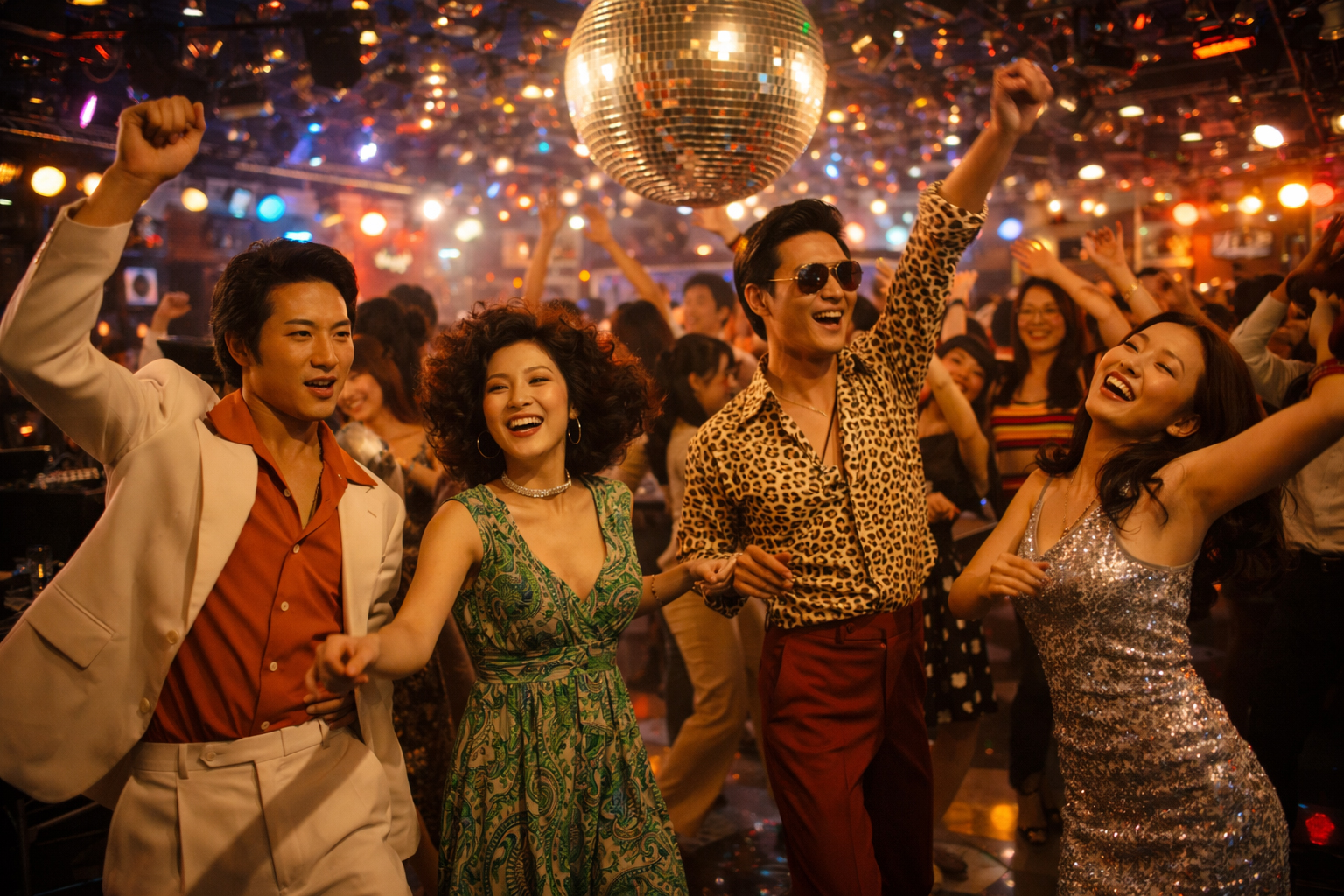
That is why disco in Japan is also visual history. Mirror balls, lighting, lines outside, and the feel of the entrance were not just decoration. They were part of the event.
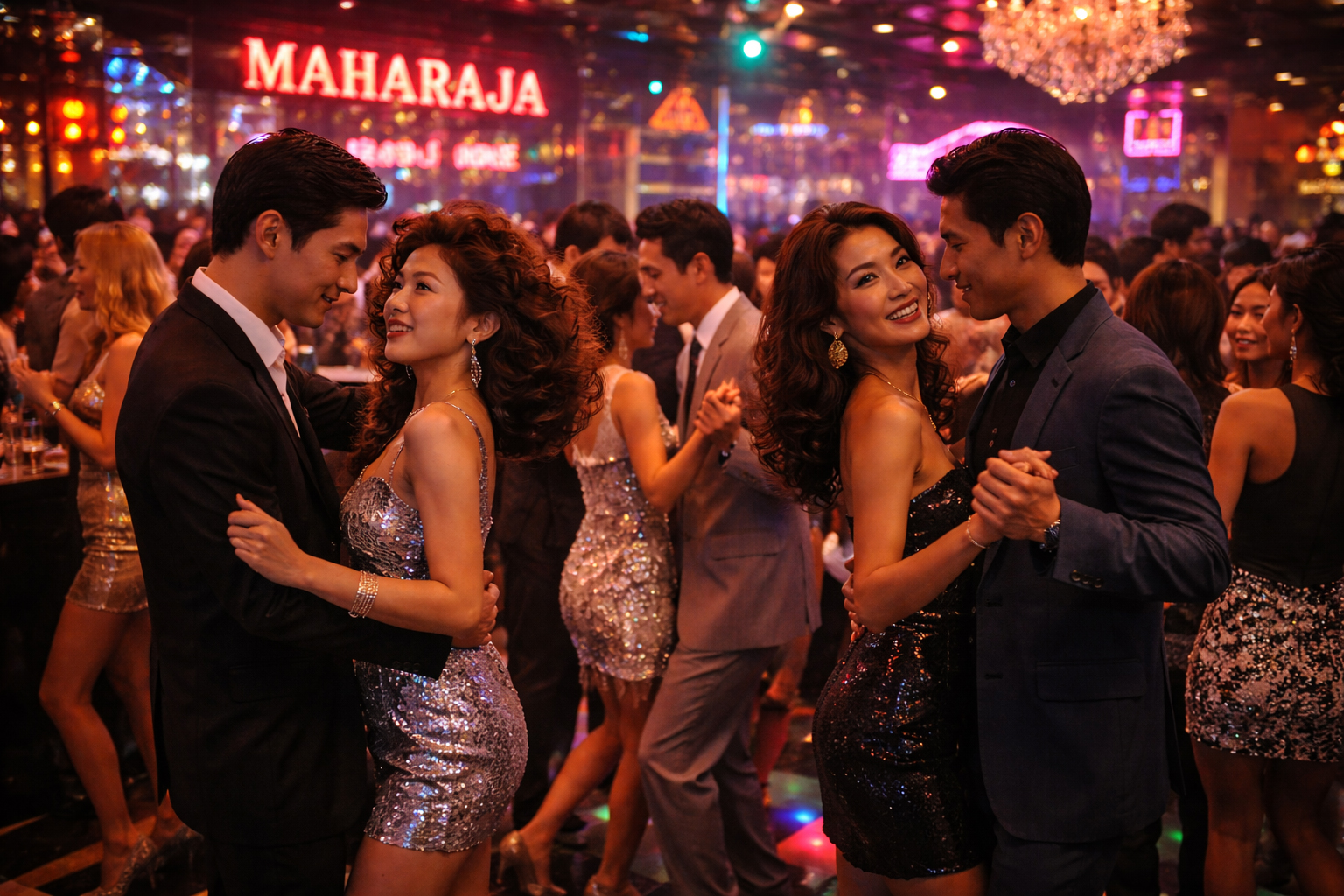
Any history of disco in Japan has to pass through the bubble era. From the late 1980s into the early 1990s, economic exuberance showed itself especially clearly in nightlife.
That is where places like Maharaja became symbolic. In such venues, music, lighting, fashion, and the ritual of getting in all worked together to sell the feeling of standing in the center of the era. Disco in Japan was at its brightest there.
In disco, fashion became part of the nightlife event and part of urban self-awareness.
Interiors, lighting, and thresholds mattered almost as much as the music itself.
A disco venue could function as a sign of belonging to a certain mood, class, or city identity.
Within Japanese disco culture, Roppongi holds a special place. That is not only because famous venues were there. It is because Roppongi brought together foreign presence, multilingual atmosphere, international aspiration, and the desire for Tokyo to look outward through the night.
That made Roppongi disco feel different from nightlife elsewhere. It was more visibly international, more openly theatrical, and more tied to the image of Tokyo as a world city.
Disco in Japan did not continue forever in the same form. After the bubble burst, its excess and surface display began to seem dated. But that did not mean it left no legacy.
The bodily habits disco created, the social practice of gathering around music, and the linking of nightlife to fashion and urban mood all became part of what later club culture would inherit. Tokyo club culture in the 1990s did not emerge out of nowhere.
Japanese club culture did not begin by rejecting disco completely.
It began by inheriting disco’s body-language and then deepening it.
The influence of disco culture in Japan did not stop in the 1980s. Later scenes such as Eurobeat and Para Para carried forward some of the same ideas: shared floor practice, visible bodily style, and communal nightlife movement.
In more recent years, late-Showa and early-Heisei disco culture has also become an object of revival and nostalgia. That revival is not only retro taste. It is also a way of reconnecting with one of the moments when Japanese nightlife felt most openly confident.
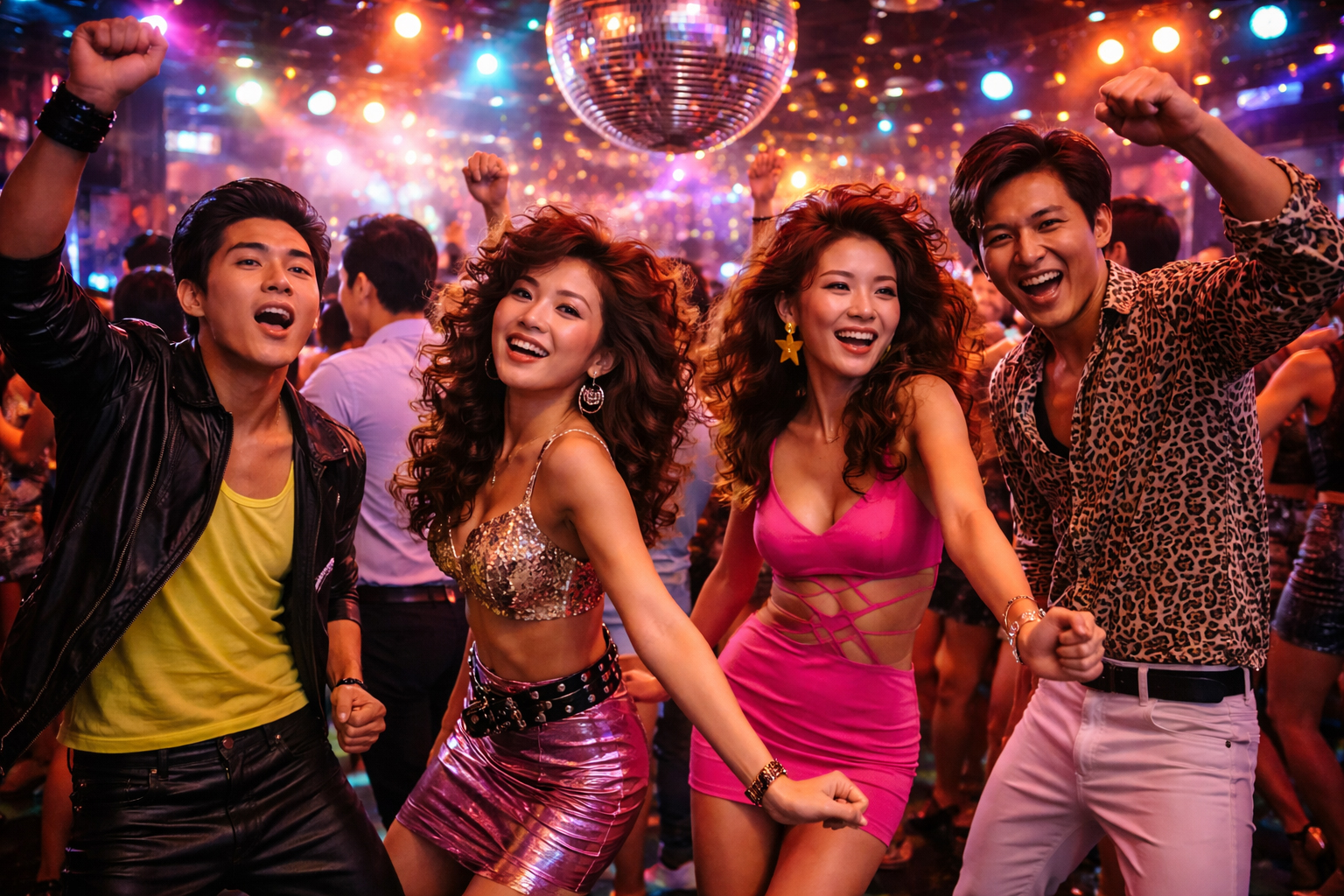
The body-language of disco cast a long shadow into later Eurobeat and Para Para scenes.
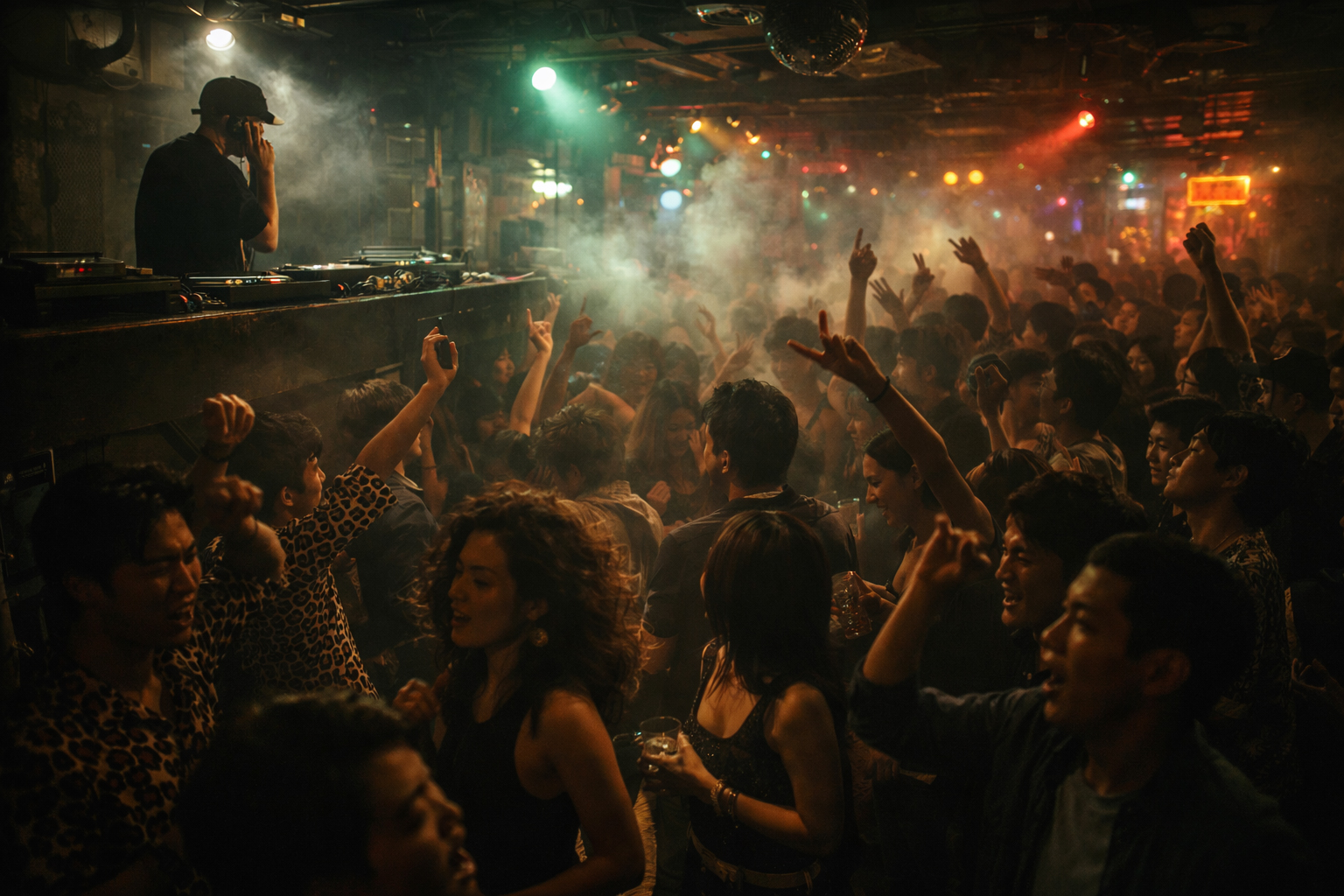
The more music-centered club cultures of the 1990s were built on top of the disco night that came before them.
Disco in Japan should not be reduced to “old flashy fun.” It is a major part of the cultural history of how Japanese cities used the night, and how music, fashion, and self-display became linked in urban life.
clubs.co.jp wants to preserve disco not as something primitive before “real” club culture, but as one of the main places where Japanese nightlife first learned its own body.
A wider look at the period when disco spectacle reached one of its brightest Japanese peaks.
The district that most visibly staged the Japanese disco imagination at its height.
How the bodily logic of disco evolved into deeper and more music-centered club culture.