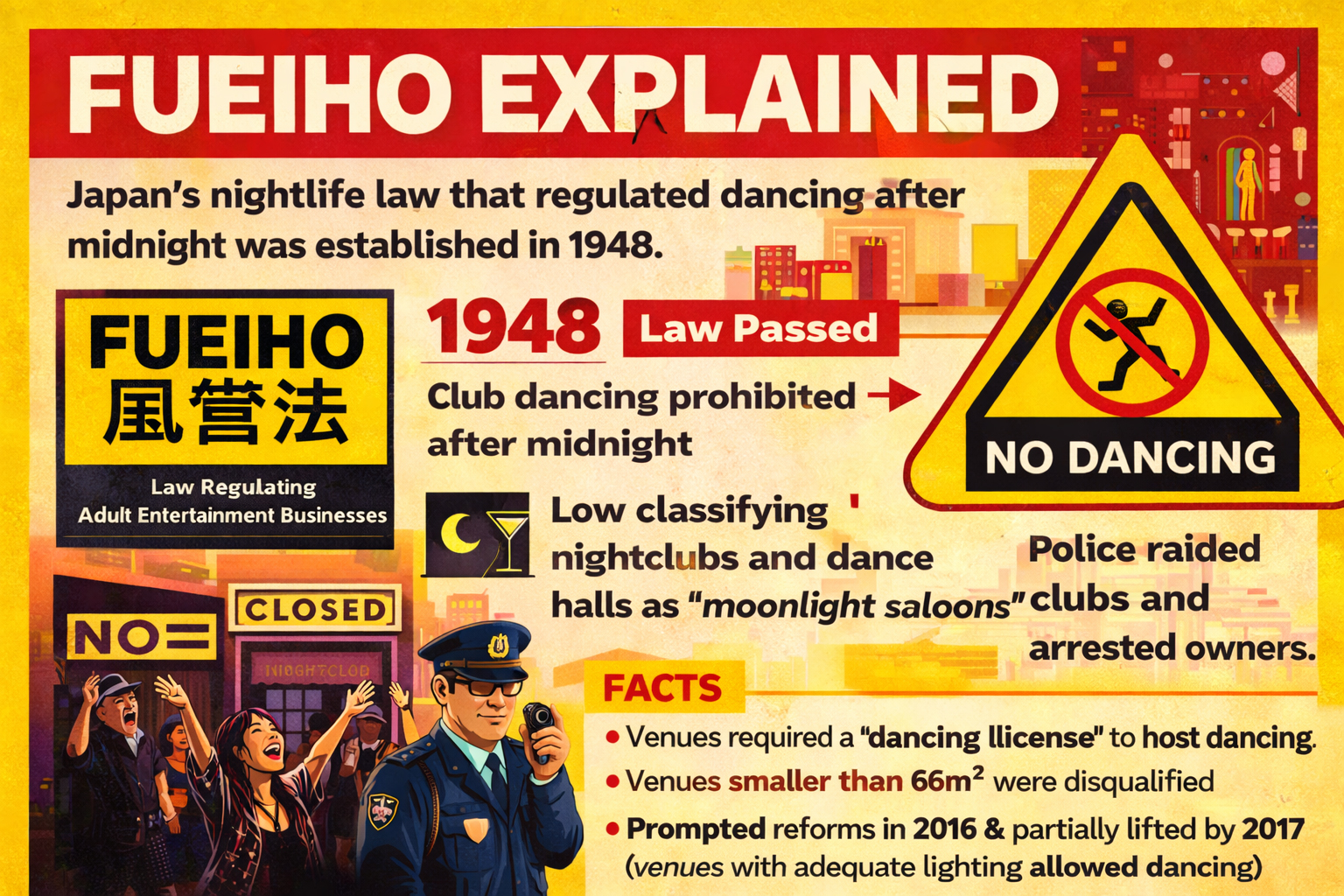
Fueiho
Fueiho and Nightlife Regulation
The broader legal structure that long treated nightlife through supervision and control.

Club culture is not made only of music and people. Behind it sit legal frameworks, Fueiho, late-night restrictions, the No Dancing years, public backlash, and reform. This section traces the collision between nightlife culture and the institutions that tried to contain it.
The law section of clubs.co.jp is not just a place for statutes and rules. It is where the site tracks how Japanese nightlife was seen, constrained, misread, and eventually defended in public.
Fueiho, the old moral framework around the night, the crackdowns of the early 2010s, the “felt like a ban” atmosphere of 2012 and 2013, the Let’s Dance movement, and the 2015 reform all belong to the same larger story. Through that arc, club culture appears not as trivial entertainment, but as a real urban culture forced into legal conflict.
Read the legal arc from Fueiho and the crackdown years to activism and reform.
The broader legal structure that long treated nightlife through supervision and control.

A plain explanation of the famous phrase and the longer contradiction behind it.
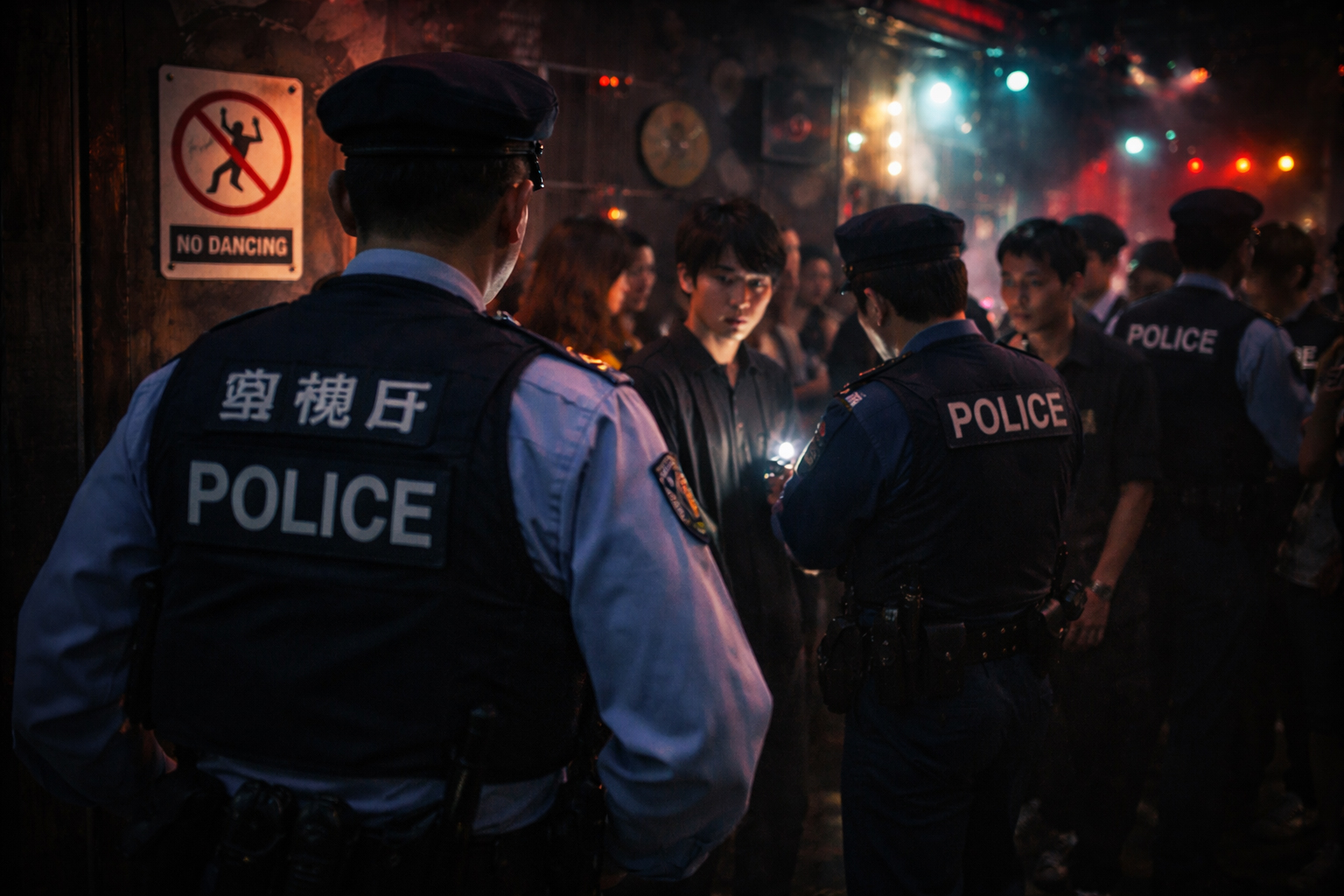
What happened in the early 2010s, and why the scene suddenly felt exposed and vulnerable.
Why the atmosphere of those years mattered even beyond the technical legal wording.
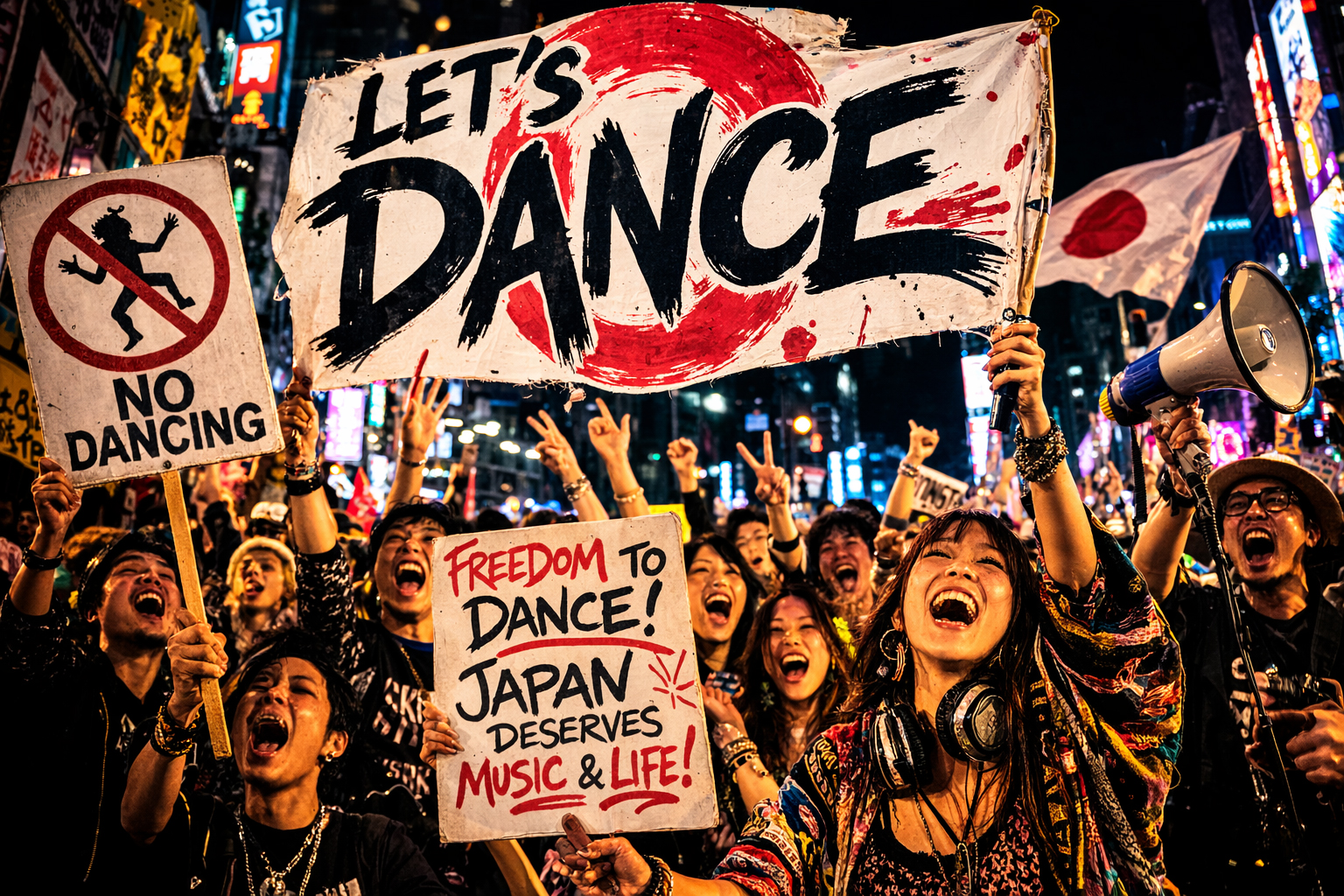
The moment nightlife culture pushed back publicly and demanded that the law face reality.

What changed, what remained, and why the reform still marked a real turning point.
If the history section follows time, the Roppongi section follows place, and the memoir section follows lived memory, the law section follows the institutional frame around the night.
Here, two ways of seeing nightlife collide: one that treats it as something to supervise, and one that treats it as culture, expression, and city life. That collision is part of the history of Japanese nightlife itself.
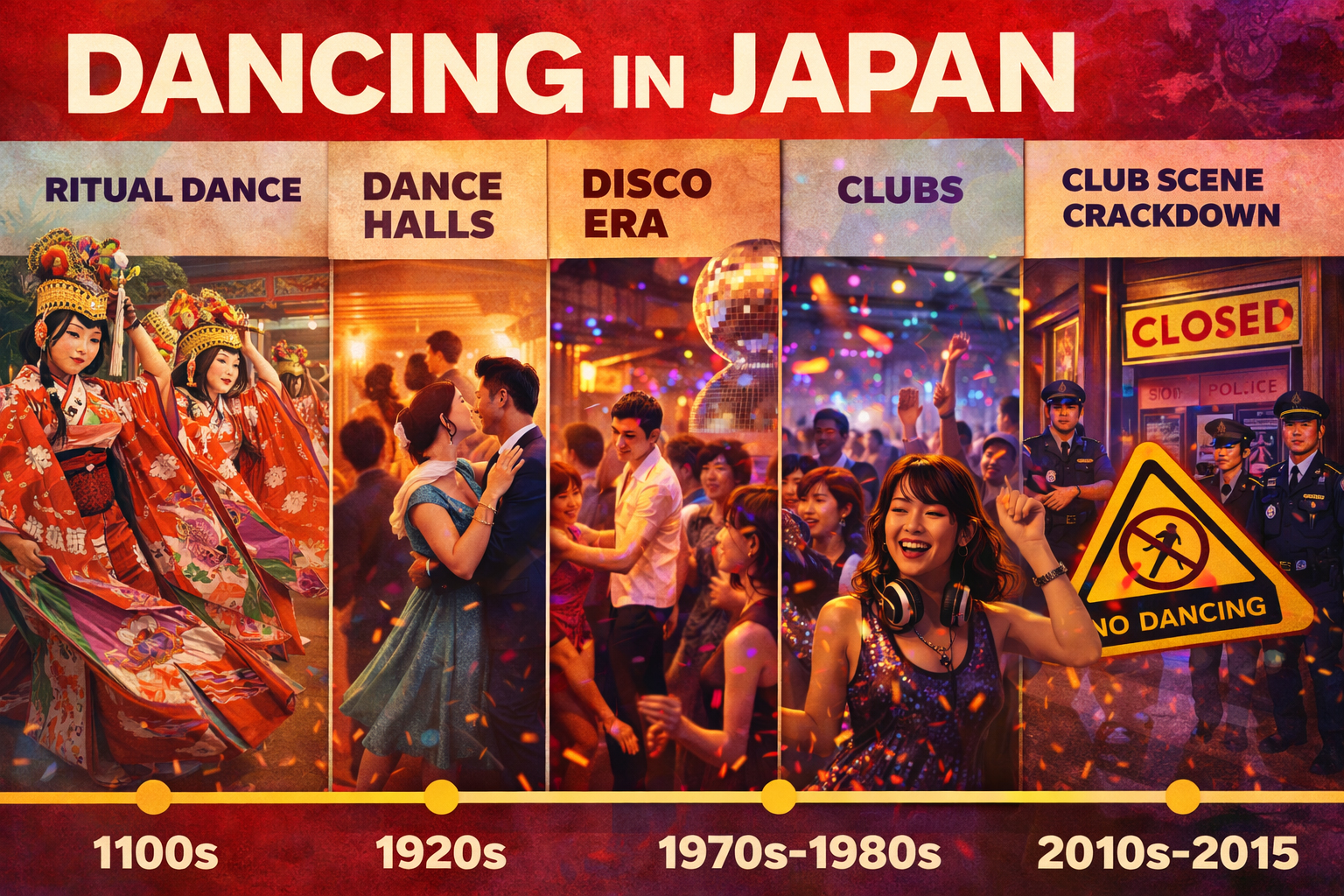
Club culture was often framed by order, morality, and supervision before it was framed as culture.
The No Dancing era exposed how deeply the legal framework and the actual room had drifted apart.
Through Let’s Dance and the reform debate, clubs began publicly defending their own legitimacy.
Move from law into Roppongi, culture, and memoir.