Crackdowns
Club Crackdowns in Japan
How Fueiho enforcement suddenly became real operating pressure in the early 2010s.

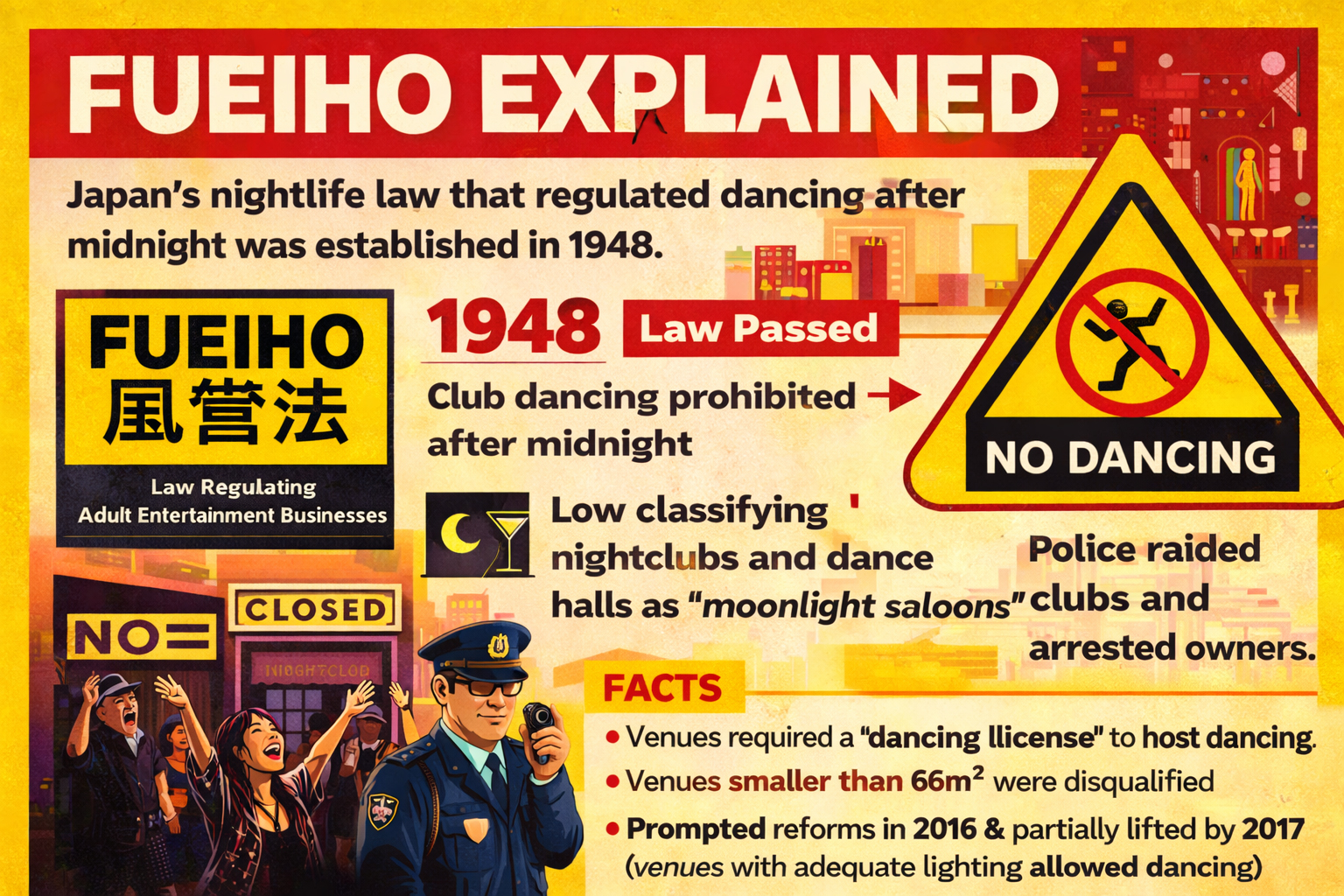
To understand Japanese clubs, dancing, and late-night culture, you have to understand Fueiho. This law was never only about paperwork. It reflected a deeper way the state looked at the night itself.
Fueiho is usually discussed as if it were simply “the nightlife law,” but its scope has always been broader than clubs alone. The important thing is that it placed dancing, late-night entertainment, and certain alcohol-serving businesses inside a regulatory logic tied to public morals and order.
Because of that, Japanese club culture was often not treated first as music culture or urban culture. It was treated through a framework of supervision and control. That is where the deep mismatch began.
The deeper problem with Fueiho was not only regulation itself.
It was the way nightlife was persistently viewed as something to manage before it was understood as culture.
Fueiho did not target clubs alone. It applied across a wider field that included host-style entertainment, certain amusement businesses, late-night alcohol-serving venues, and dancing-related operations.
That meant clubs were often grouped not as straightforward cultural venues, but as part of a broader regulatory category concerned with public morals and supervised nightlife. This is one of the defining features of Japanese nightlife law.
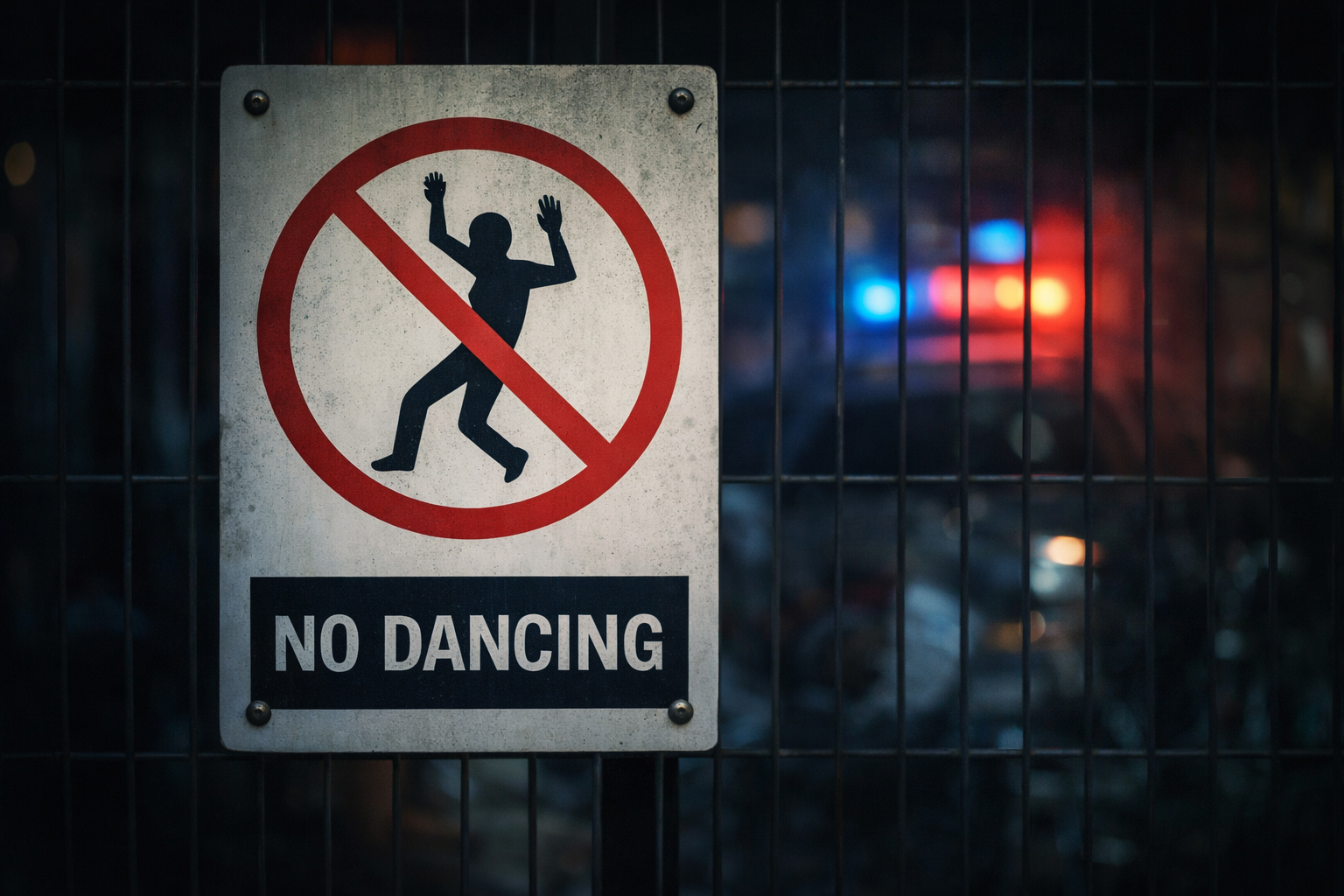
Club culture is built around the relationship between music and physical response. A DJ builds the room, people move, and the crowd becomes part of the experience. Under Fueiho-style regulation, that bodily response could become the legal problem.
That is where the contradiction became so sharp. The room exists. The music exists. The floor exists. Yet the body’s response to the room could be treated as the dangerous part. From the point of view of the scene, that meant the law was targeting the core of the culture.
A venue can exist as a music space, but that alone does not make club culture whole.
The natural physical response to rhythm could become the legal trigger for trouble.
The state’s framework often tried to manage nightlife before understanding what it actually was.
One of the most important things to understand is that club culture in Japan did not simply vanish under Fueiho. Clubs existed. People danced. The night continued. That means there was a long-running gray zone between legal framework and lived practice.
But that gray zone was never true security. It meant nightlife could function for long stretches while still remaining vulnerable to sudden enforcement.
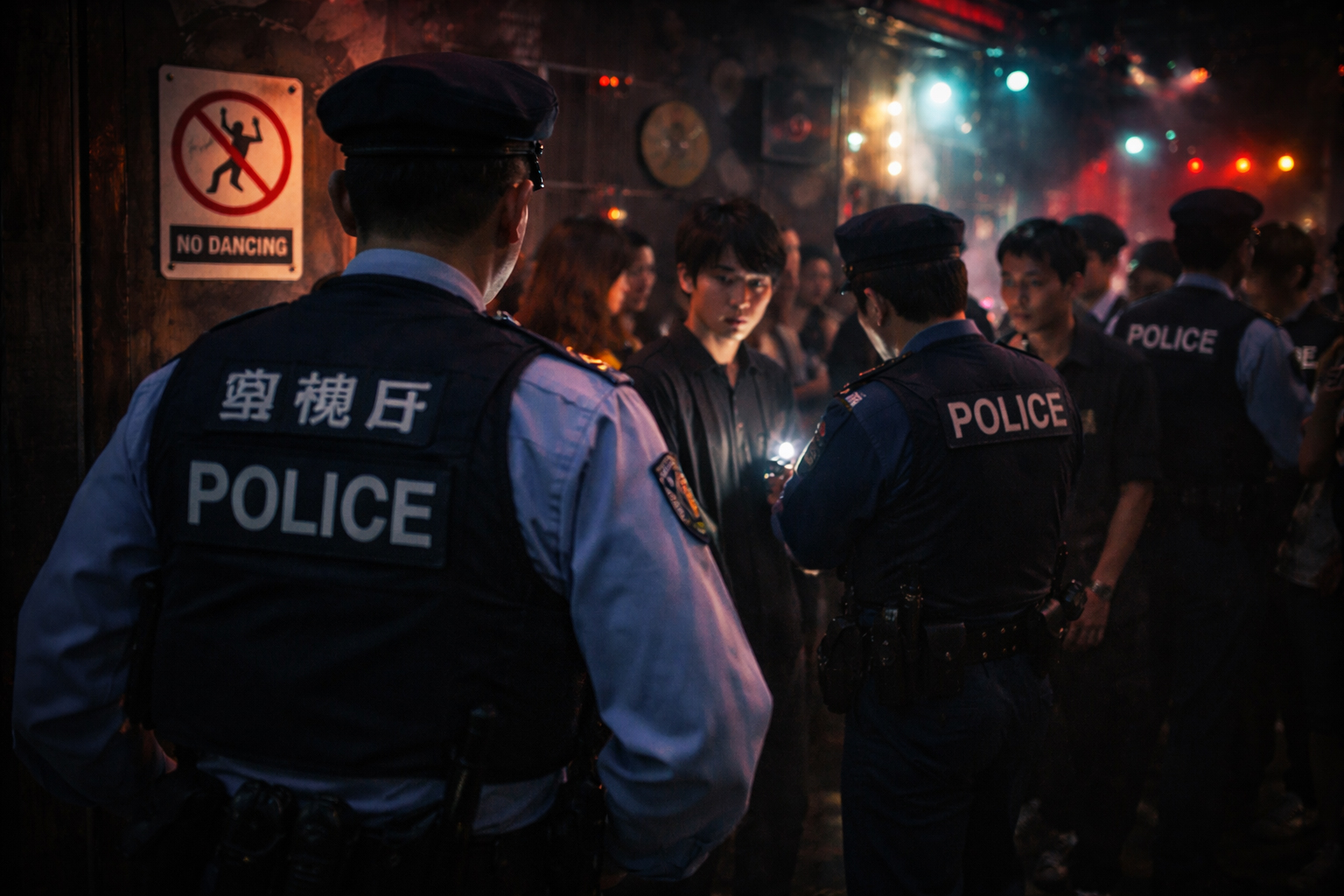
In the early 2010s, especially with highly visible crackdowns in Osaka and their wider effect on Tokyo, many people suddenly realized just how much nightlife still depended on an older legal logic. What had long been tolerated in practice started to feel exposed and unstable.
That is why 2012 and 2013 felt so intense. The issue was not a totally new law out of nowhere. It was that the older Fueiho logic suddenly became real enough to shrink the night.
Fueiho had always been there.
In the early 2010s, many people finally felt its weight in the room.
Once the contradiction became widely visible, backlash grew. The Let’s Dance movement gathered broad support and more than 150,000 signatures, making clear that nightlife culture was not simply asking for convenience. It was demanding that law stop pretending reality had not changed.
That pressure helped lead to the 2015 revision, which took effect on June 23, 2016. But the reform did not abolish Fueiho. It modified the system and created a conditional path for some late-night dance operations, while leaving the broader logic of regulation in place.
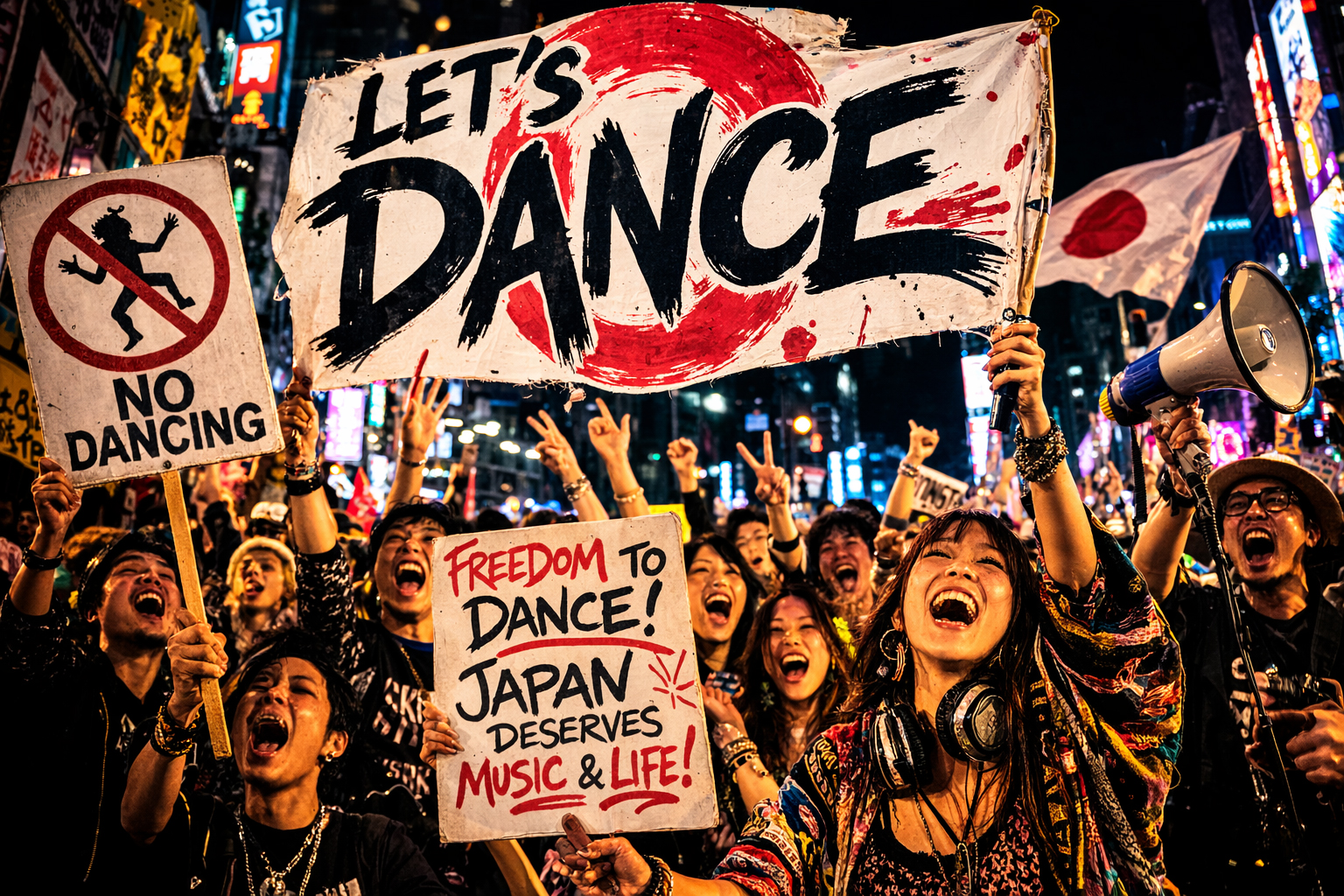
Once the contradiction was visible, the scene began defending itself in public language.
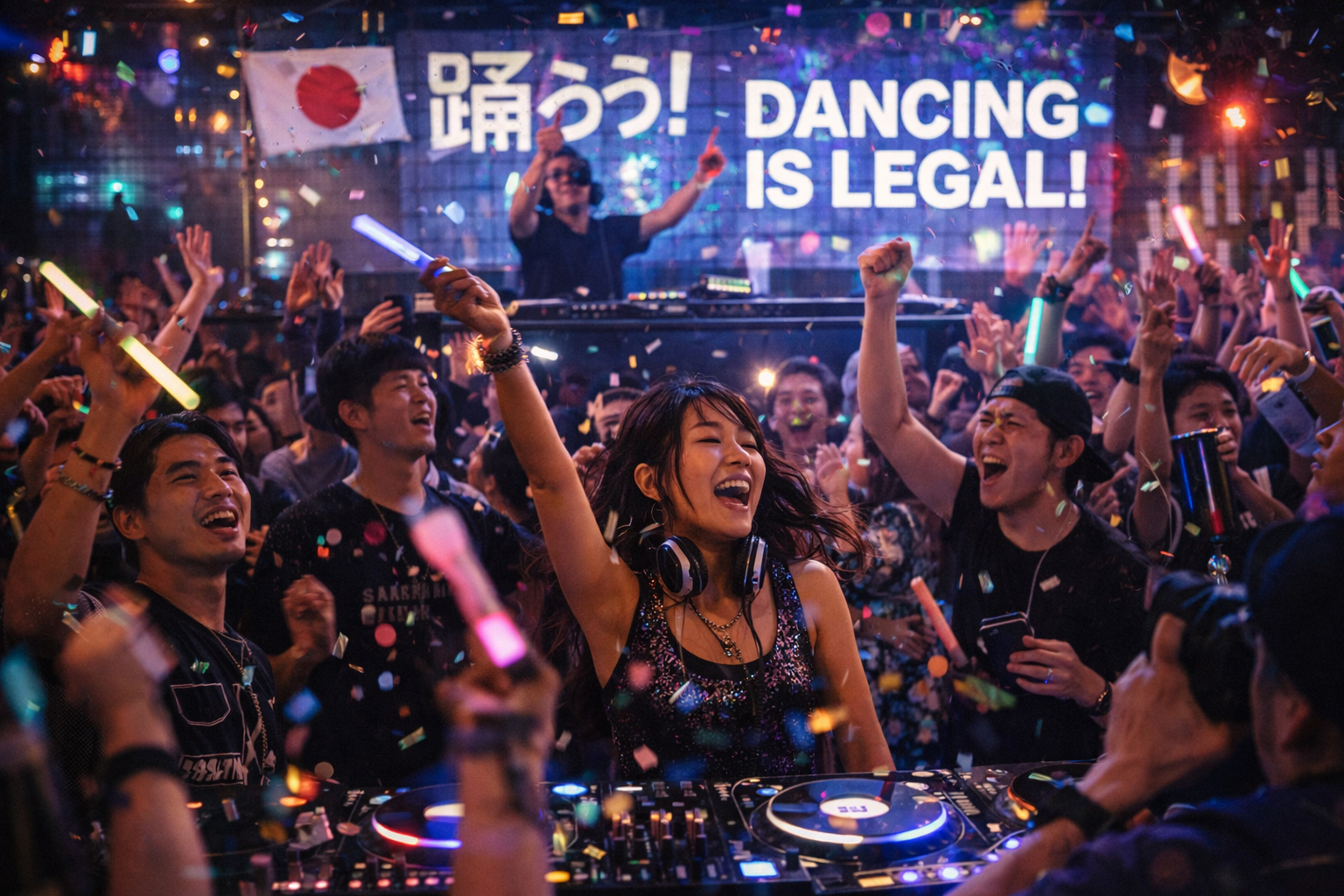
The reform mattered greatly, but it did not eliminate the regulatory mindset behind Fueiho.
In a district like Roppongi, the mismatch becomes easy to feel. Roppongi nightlife depends on music, people, chance encounters, foreign influence, and movement between rooms. In that kind of district, dancing is not an extra behavior. It is part of the natural social logic of the night.
That is why Fueiho-style nightlife regulation felt especially strange there: it could allow the atmosphere while distrusting the body that completed it.
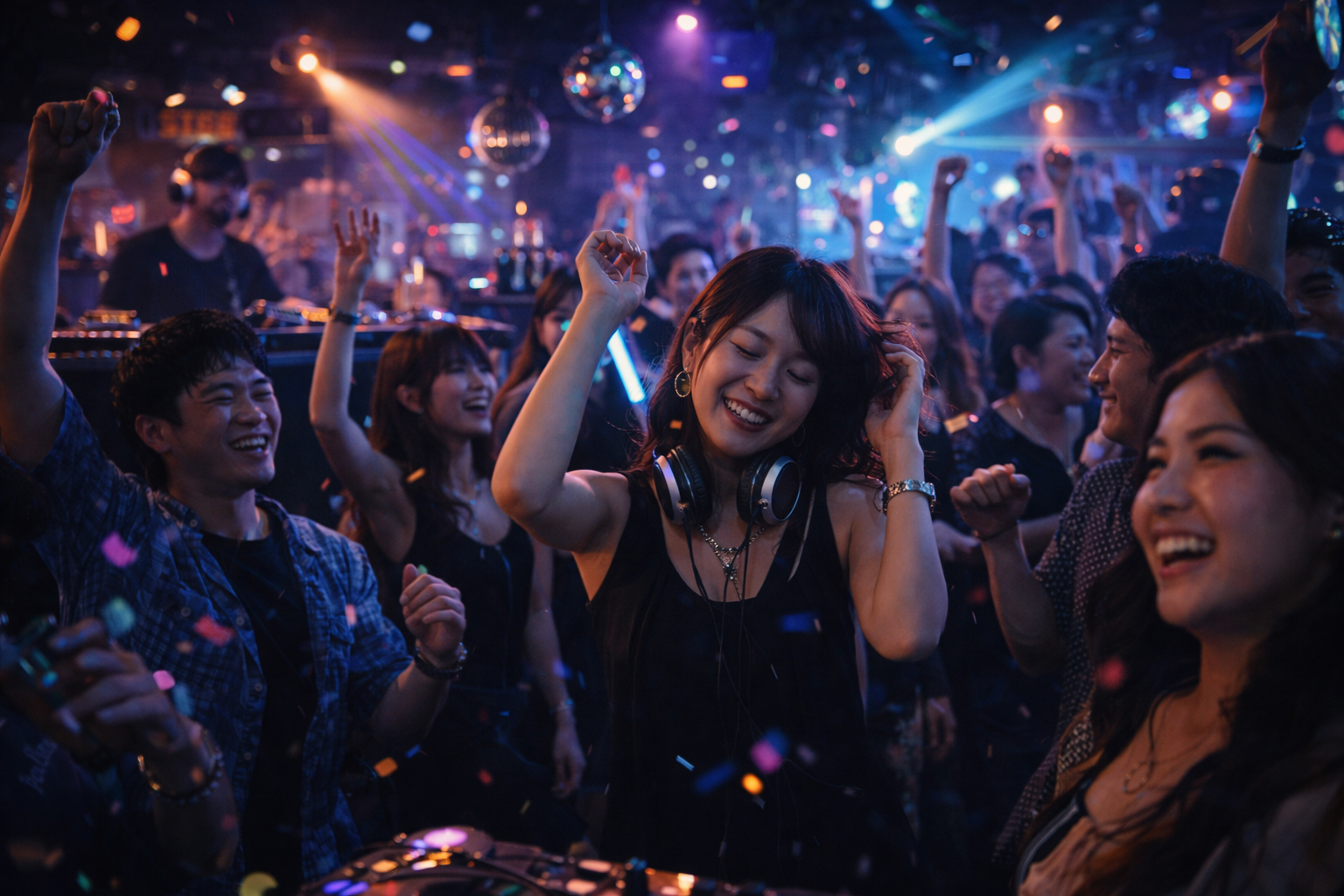
The question of Fueiho and nightlife regulation is not only a technical legal matter. It is a cultural history of how Japan has looked at the night, and how nightlife culture has had to defend its own legitimacy.
clubs.co.jp wants to preserve Fueiho not just as an old law that caused trouble, but as one of the main places where state logic and nightlife reality collided.
How Fueiho enforcement suddenly became real operating pressure in the early 2010s.
How nightlife culture pushed back once Fueiho’s contradictions became impossible to ignore.
What changed, what remained, and why the later reform still mattered so much.