Movement
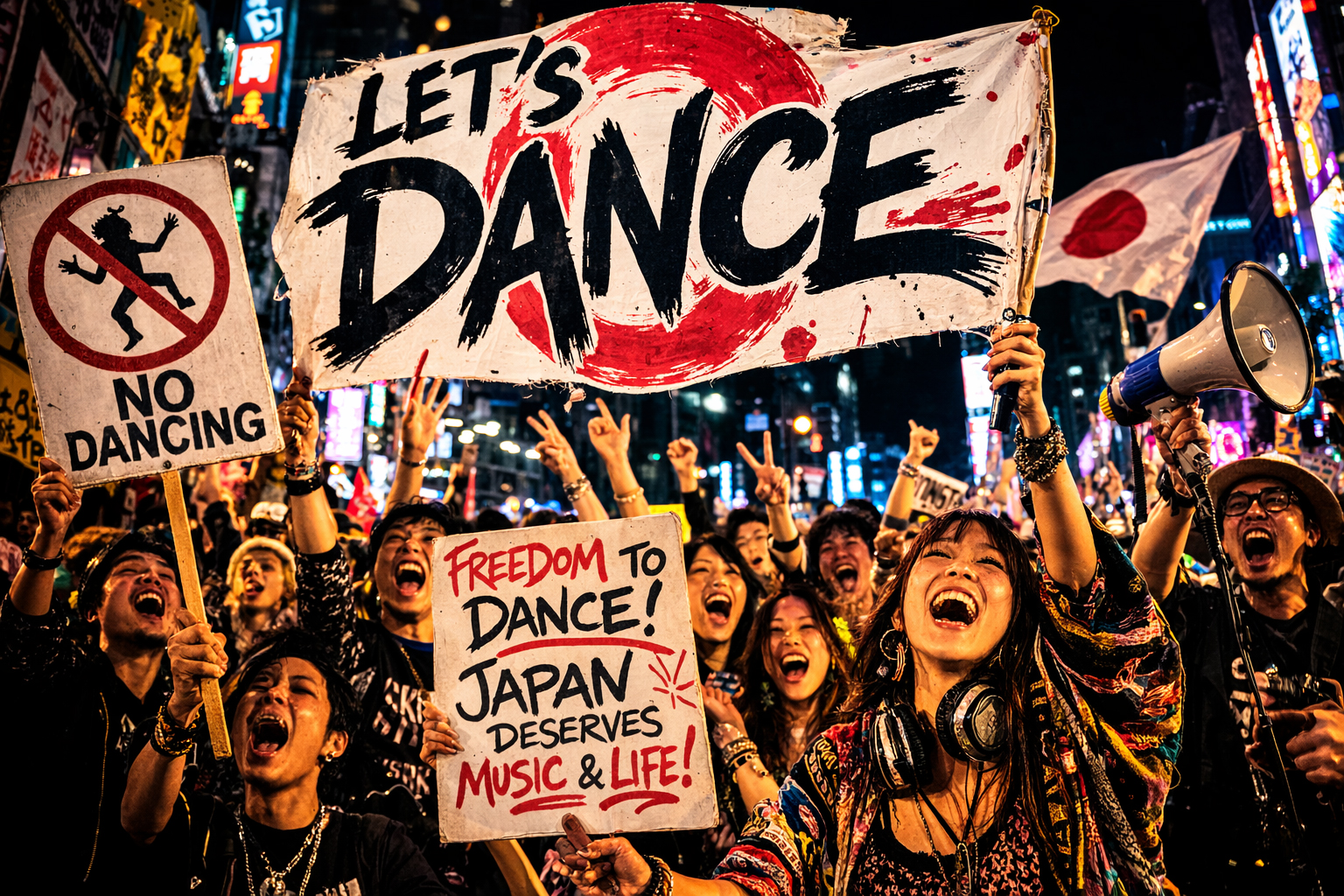
The Let’s Dance Movement
How backlash to the crackdown became a public campaign for reform.

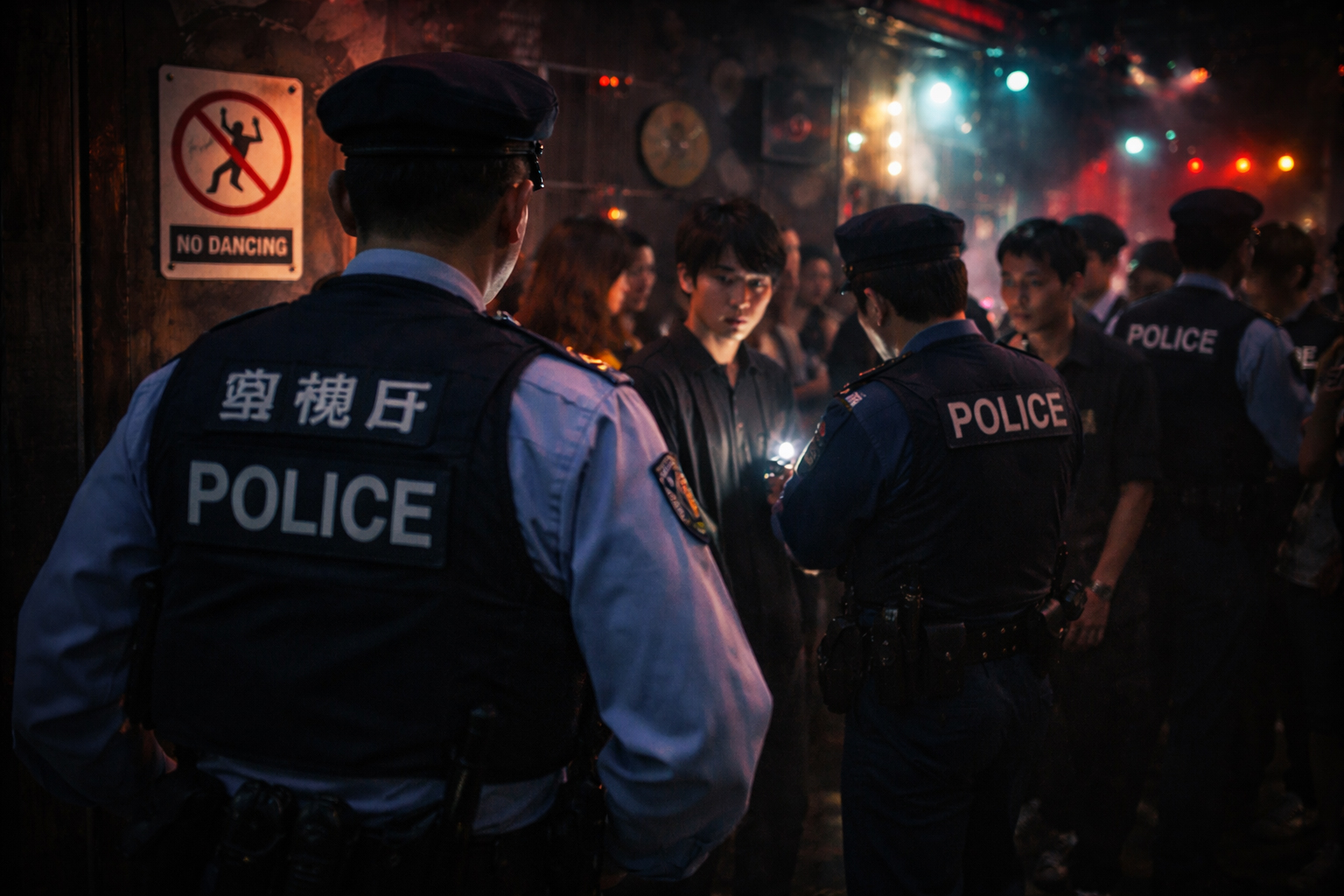
In the early 2010s, Japanese club culture suddenly started to feel less like a tolerated gray zone and more like something that could be actively targeted again. That shift changed the atmosphere of nightlife across the country.
To understand the club crackdowns in Japan, the key point is not that a totally new ban suddenly appeared. The deeper issue was that an older Fueiho framework, long present in the background, started being felt again as a real and immediate pressure on nightlife spaces. :contentReference[oaicite:15]{index=15}
Before that, clubs were not fully free in any strict legal sense. But on the ground, there had long been a kind of unstable coexistence between actual nightlife culture and an outdated legal structure. The crackdown years broke that uneasy balance. :contentReference[oaicite:16]{index=16}
The shock of the crackdown was not that a new prohibition arrived.
It was that an old prohibition suddenly began acting like it meant business.
Reporting and later commentary repeatedly point to Osaka as the place where the crackdown first became unmistakably visible. After the 2010 death of a student in a brawl outside a club in Osaka, enforcement became harder, and by around 2012 Osaka club raids had become national news. :contentReference[oaicite:17]{index=17}
What mattered was not only the fate of individual venues. The larger effect was atmospheric: club operators and people in the scene began to feel that any venue might be next. That fear changed the entire mood of nightlife. :contentReference[oaicite:18]{index=18}
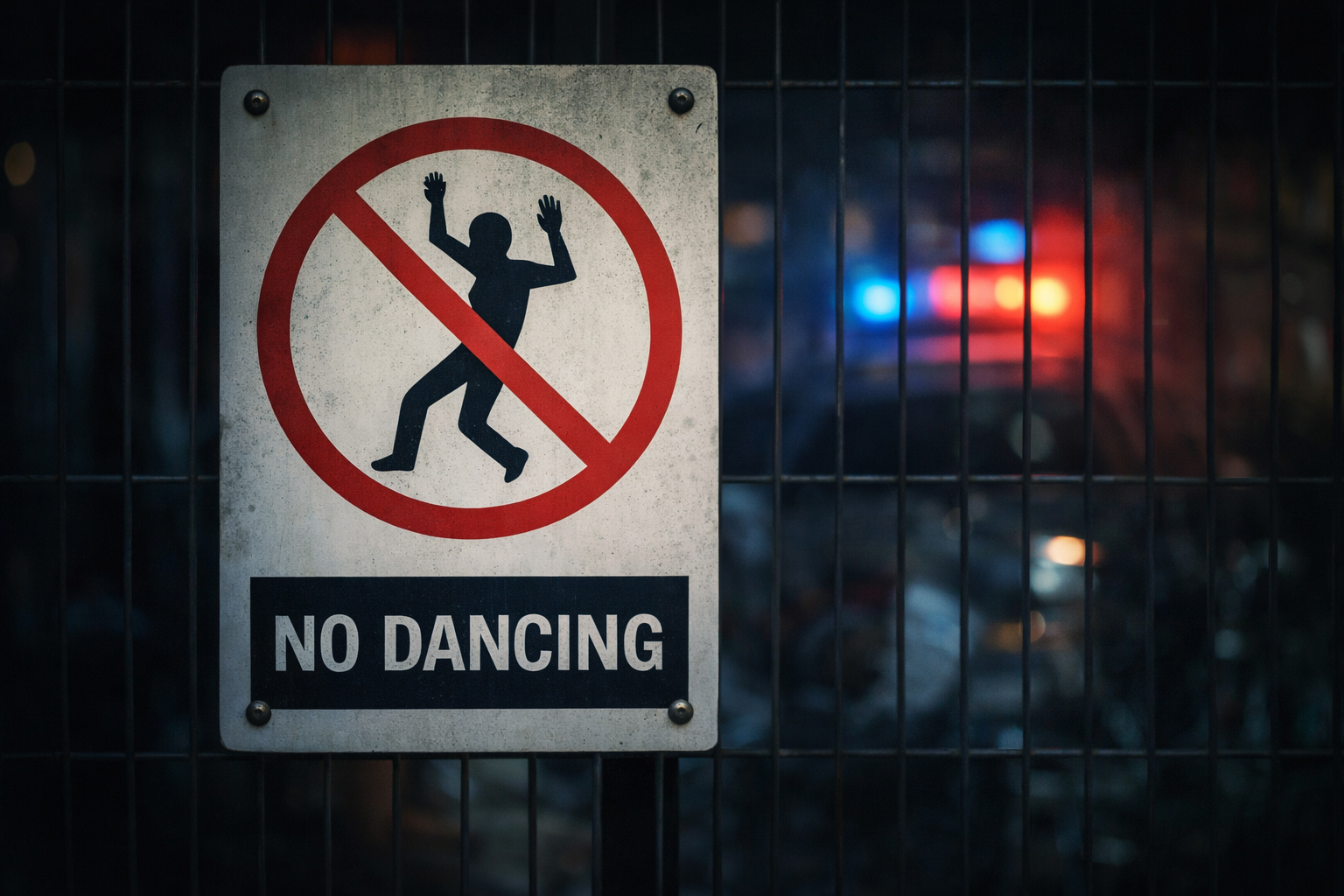
The image that came to symbolize this period was the No Dancing sign. Music was playing. DJs were present. Dance floors existed. But dancing itself became the legal danger. That was the absurdity at the center of the era. :contentReference[oaicite:19]{index=19}
The reason that image was so powerful is that almost anyone could see the contradiction. What was being targeted was not noise alone or licensing paperwork alone, but the bodily response that made the room what it was. :contentReference[oaicite:20]{index=20}
The core issue was the renewed force of old Fueiho logic, not a brand-new legal invention.
One raid could make many other venues suddenly feel exposed.
The deepest contradiction was that the room’s physical purpose became the thing treated as the problem.
The crackdown mattered because club culture was no longer a tiny fringe issue. It was already tied to music, city culture, tourism, youth identity, and the international image of Tokyo and Japan. :contentReference[oaicite:21]{index=21}
That is why the crackdowns quickly became larger than a nightlife-management story. They raised a broader question: how modern could Japan’s cities really be if bodily movement in music spaces was still being treated through an older moral framework? At the same time, public discussion also linked enforcement to complaints about noise, antisocial behavior, and drug scandals. :contentReference[oaicite:22]{index=22}
Ironically, the crackdown helped politicize and clarify club culture. What might once have stayed as private frustration inside the scene became public argument through the Let’s Dance movement. :contentReference[oaicite:23]{index=23}
The more than 150,000 signatures gathered around that movement made clear that this was not only about partying. It had become a national question about culture, expression, and whether law was keeping up with reality. :contentReference[oaicite:24]{index=24}
The crackdowns hurt nightlife culture,
but they also forced nightlife culture to find its public voice.
A crackdown that first looked especially strong in Osaka took on special symbolic force in Tokyo as well. In districts like Roppongi, music, human movement, foreign influence, and chance encounter are part of the very logic of the night. In that setting, “music may play, but you must not dance” felt culturally incoherent. :contentReference[oaicite:25]{index=25}
That is why, in Tokyo, the crackdown was often experienced not simply as enforcement, but as interference with the natural rhythm of city nightlife itself. That gave later reform debates far more emotional intensity. :contentReference[oaicite:26]{index=26}
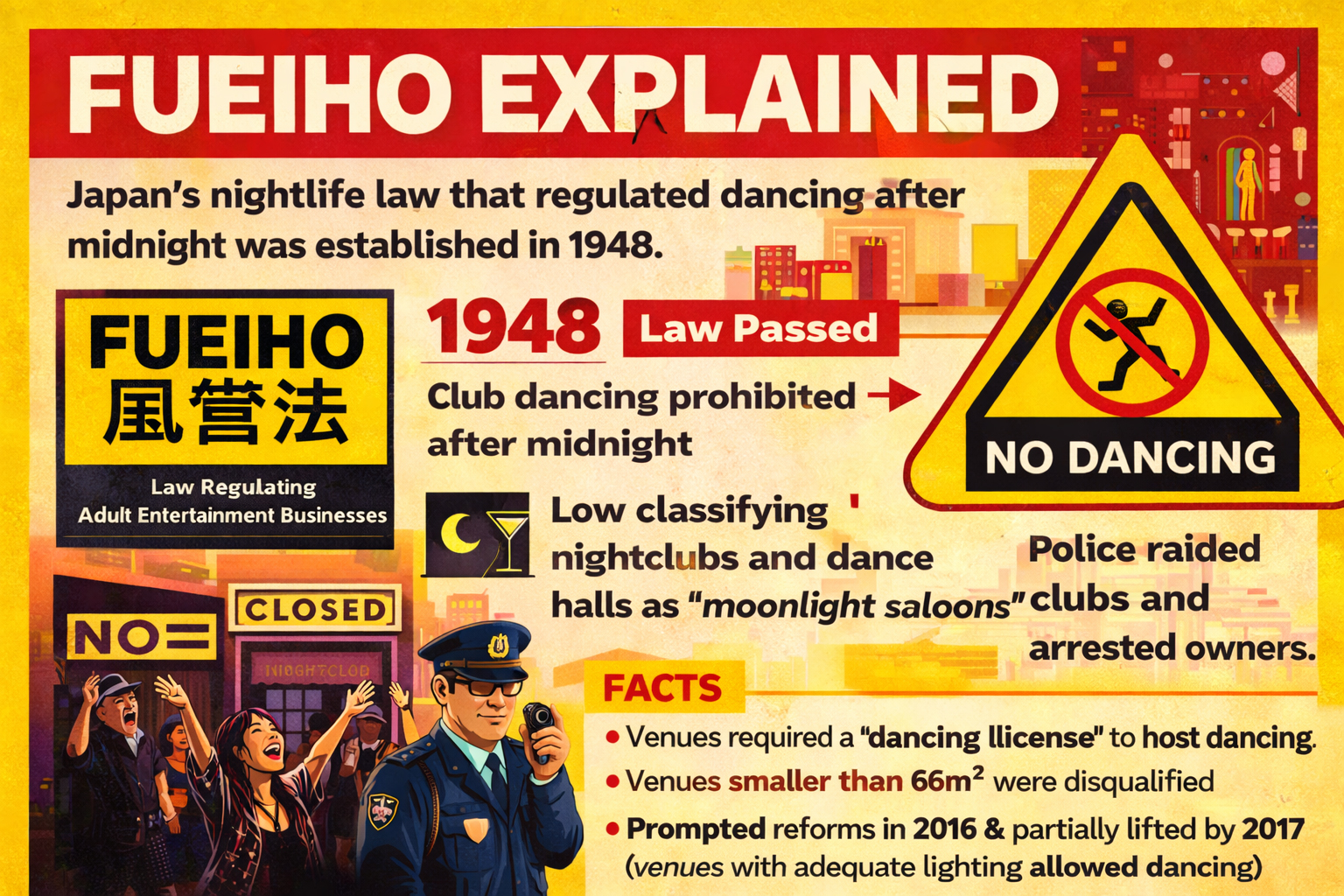
The club crackdown story is fundamentally about trying to govern a living culture through an outdated structure.
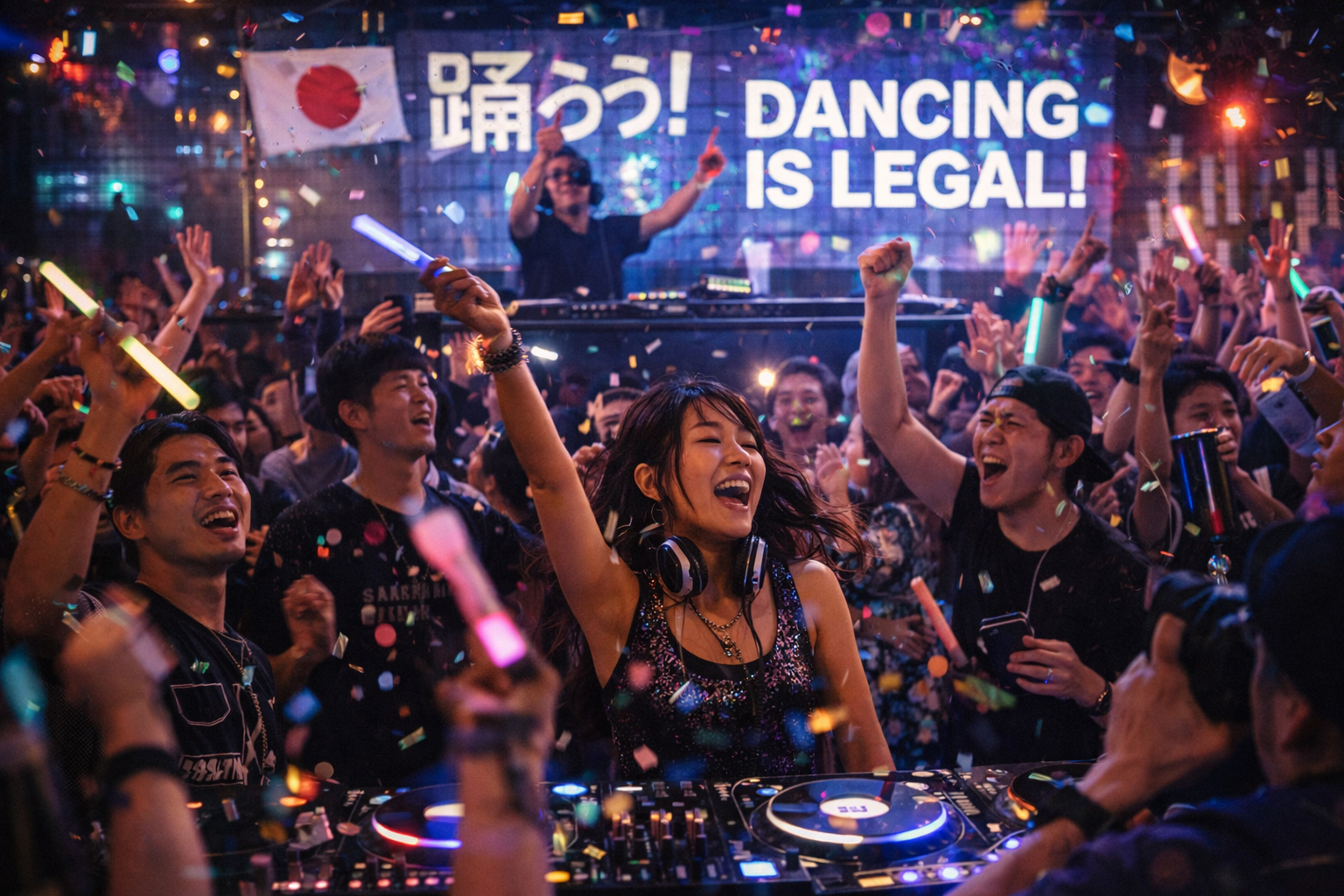
The harsher the contradiction became, the more politically necessary reform started to look.
The Japanese club crackdowns were not just a rough patch. They were the years when the contradiction between nightlife reality and legal framework became too visible to ignore. :contentReference[oaicite:27]{index=27}
clubs.co.jp wants to preserve those years not only as a record of fear or inconvenience, but as the moment when club culture in Japan began articulating its own legitimacy more clearly. The crackdown compressed the night, but it also gave the night a voice. :contentReference[oaicite:28]{index=28}
How backlash to the crackdown became a public campaign for reform.
What legally changed after the crackdown years, and what remained constrained.
A memoir-level view of what the crackdown felt like on the ground in a real room.