Crackdowns
Club Crackdowns in Japan
A larger view of the enforcement wave that made these years feel so unstable.
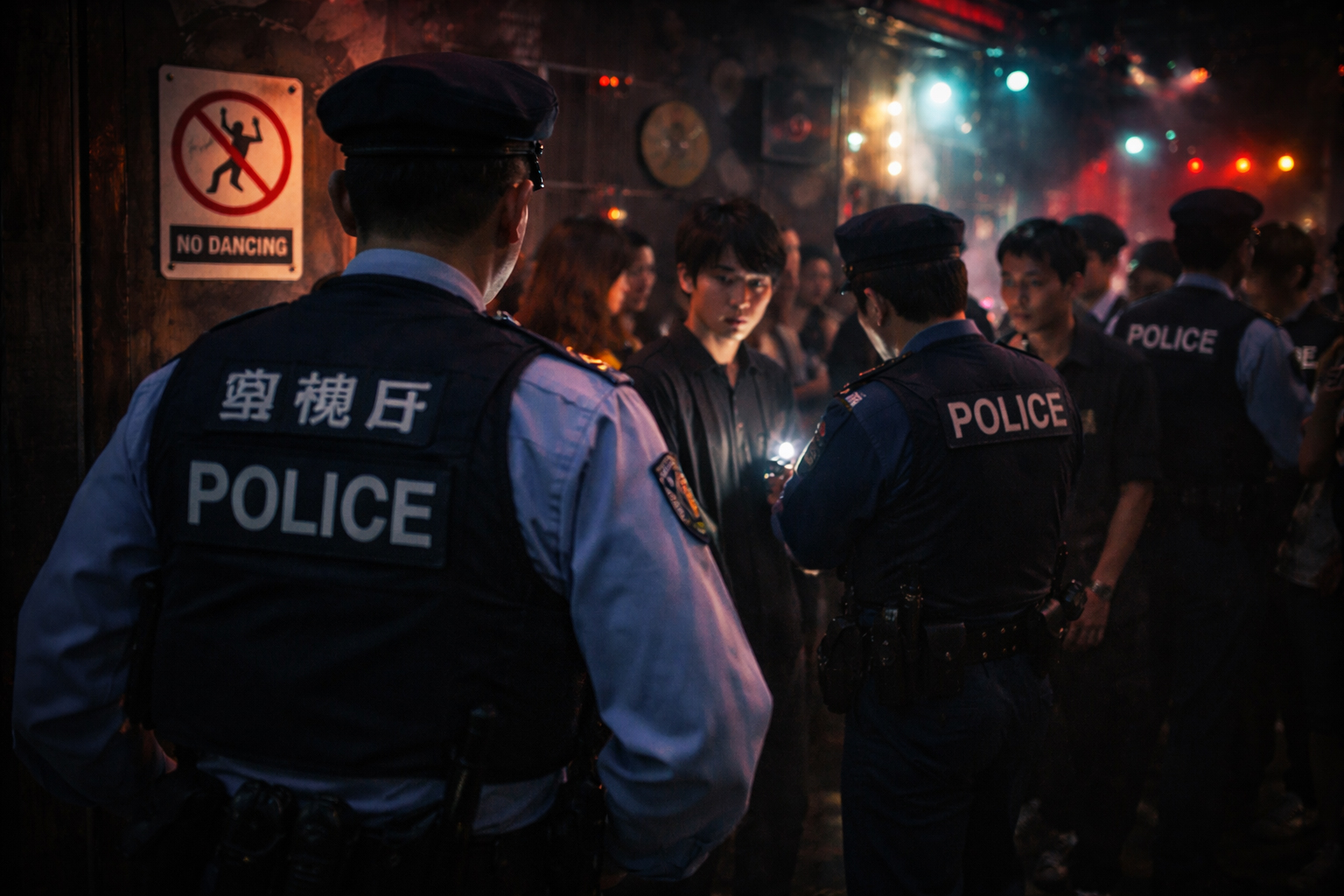
In 2012 and 2013, Japanese club culture felt a pressure stronger than “technical legal uncertainty.” No brand-new nationwide anti-dancing law had suddenly appeared, yet for many people on the ground it felt very close to a real ban.
The first thing to understand is that 2012 and 2013 did not bring a totally new “dance ban” out of nowhere. The deeper issue was that older Fueiho restrictions suddenly started being felt as real operating pressure again.
Before that, the legal status of nightlife had long been unstable in theory, but many venues still functioned as living cultural spaces in practice. In 2012 and 2013, that balance shifted. Owners, staff, DJs, and regulars began to feel that enforcement risk had become immediate. That is why it felt like a ban, even if technically the situation was more complicated.
2012 and 2013 felt like a ban
not because a new law suddenly arrived,
but because old restrictions suddenly became real in the room.
For a venue, the law is never just text on paper. What matters is enforcement posture, rumors of raids, what happened to other clubs, whether staff feel exposed, whether customers feel nervous, and whether the room still feels like a place where normal nightlife can happen.
In 2012 and 2013, that entire atmosphere changed. One raid could chill ten other venues. Once that happens, you do not need a literal total ban for the culture to begin shrinking itself.
Osaka became especially important because the crackdowns there were visible enough to make the issue feel national. Once clubs in Osaka were raided and the story spread, operators elsewhere no longer saw the problem as abstract.
In Tokyo and beyond, the message was clear: this could happen here too. That shift from distant legal oddity to direct operational fear is one of the main reasons 2012 and 2013 felt so severe.
One prominent crackdown could reshape the psychology of an entire scene.
Even when major stories centered on Osaka, the emotional effect spread nationally.
Before the legal debate was settled, the human temperature of nightlife had already shifted.
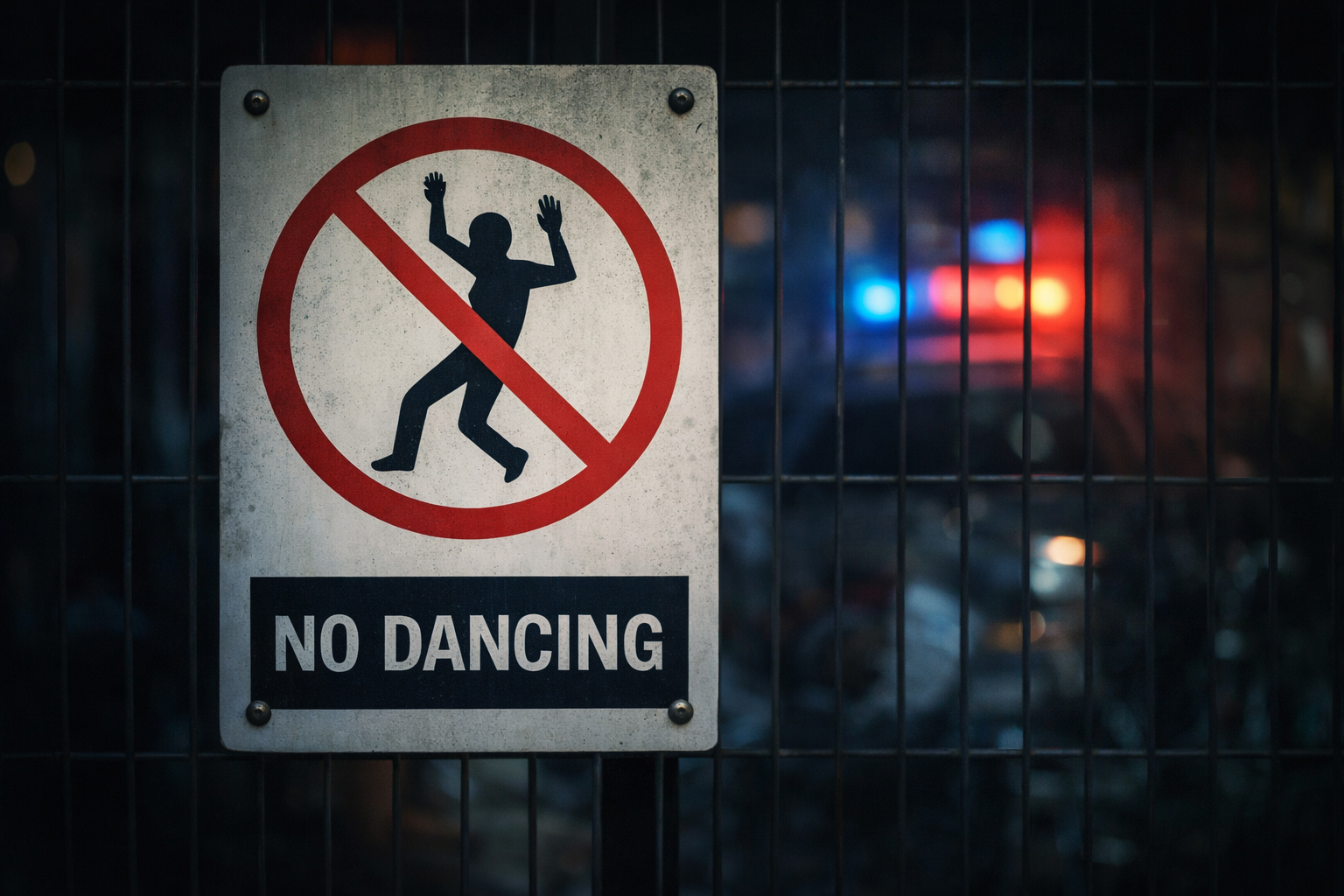
Nothing captured the contradiction of the period better than the No Dancing sign. There was music. There were DJs. There was often a dance floor. But the body’s natural response to the room had to be denied.
That made the contradiction instantly visible. Venues were effectively being pushed to admit that something central to their own reason for existing had become legally dangerous. A printed sign ended up symbolizing the whole era.
In Tokyo, and especially in districts like Roppongi, the contradiction felt even sharper. Roppongi nightlife depends on music, human movement, foreign influence, chance encounter, and the natural flow of the night from room to room.
In that context, saying “the music may play, but the body must not respond” sounded almost like a joke. The disturbing part was that it was not a joke. It was becoming a real operating condition.
If the culture’s central act is blocked,
the venue may still be open,
but to the people inside it can already feel prohibited.
In strict legal terms, 2012 and 2013 were not identical to a total, uniform nationwide ban. But that technical distinction did not fully protect the scene. Venues still had to think about risk. Customers still read the signs. Staff still felt the pressure. Music culture still had to explain itself defensively.
In other words, the years felt like a ban because nightlife contracts psychologically before it disappears legally. The atmosphere of the room can collapse before the statute is rewritten.
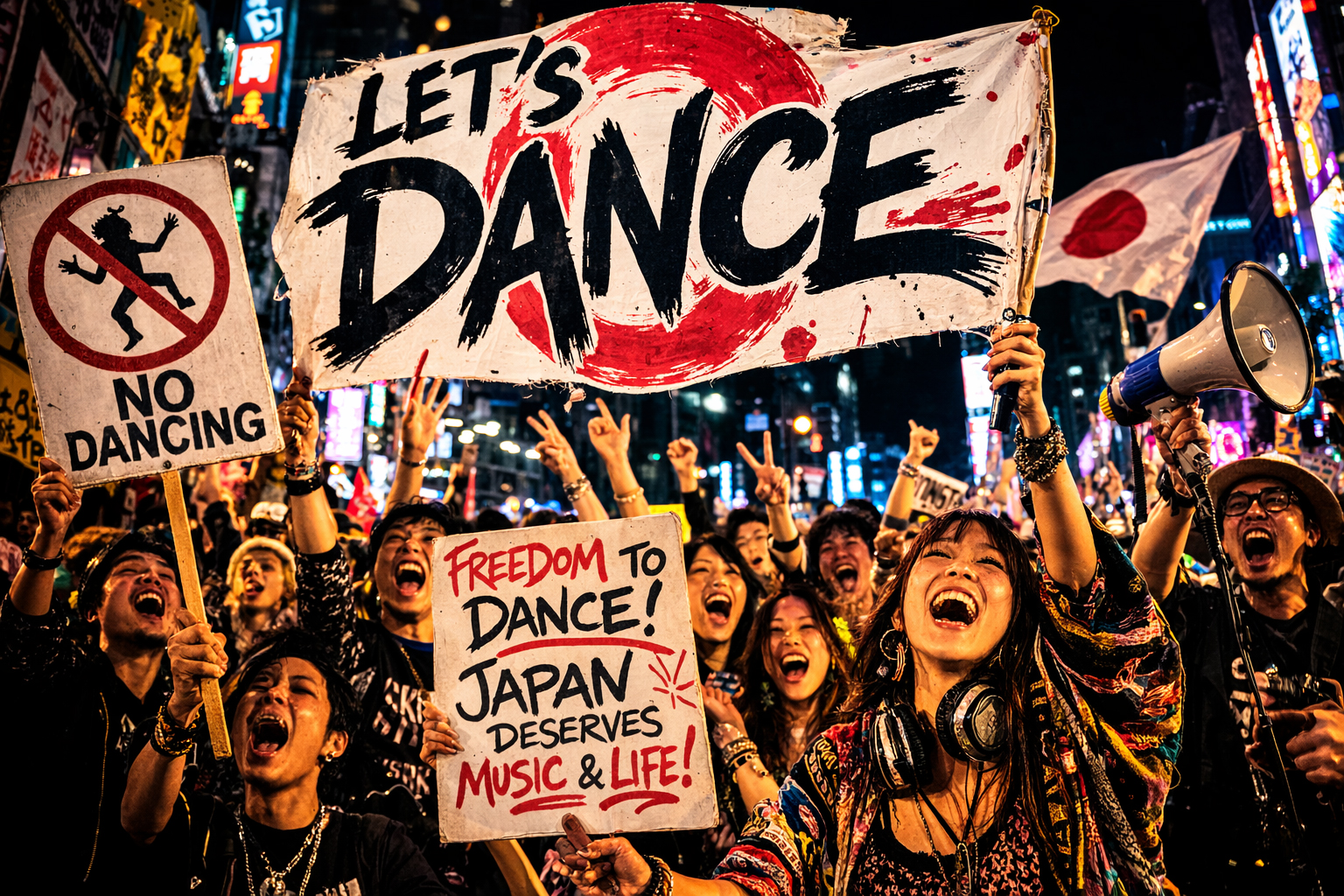
This is exactly why the Let’s Dance movement could gather broad sympathy.
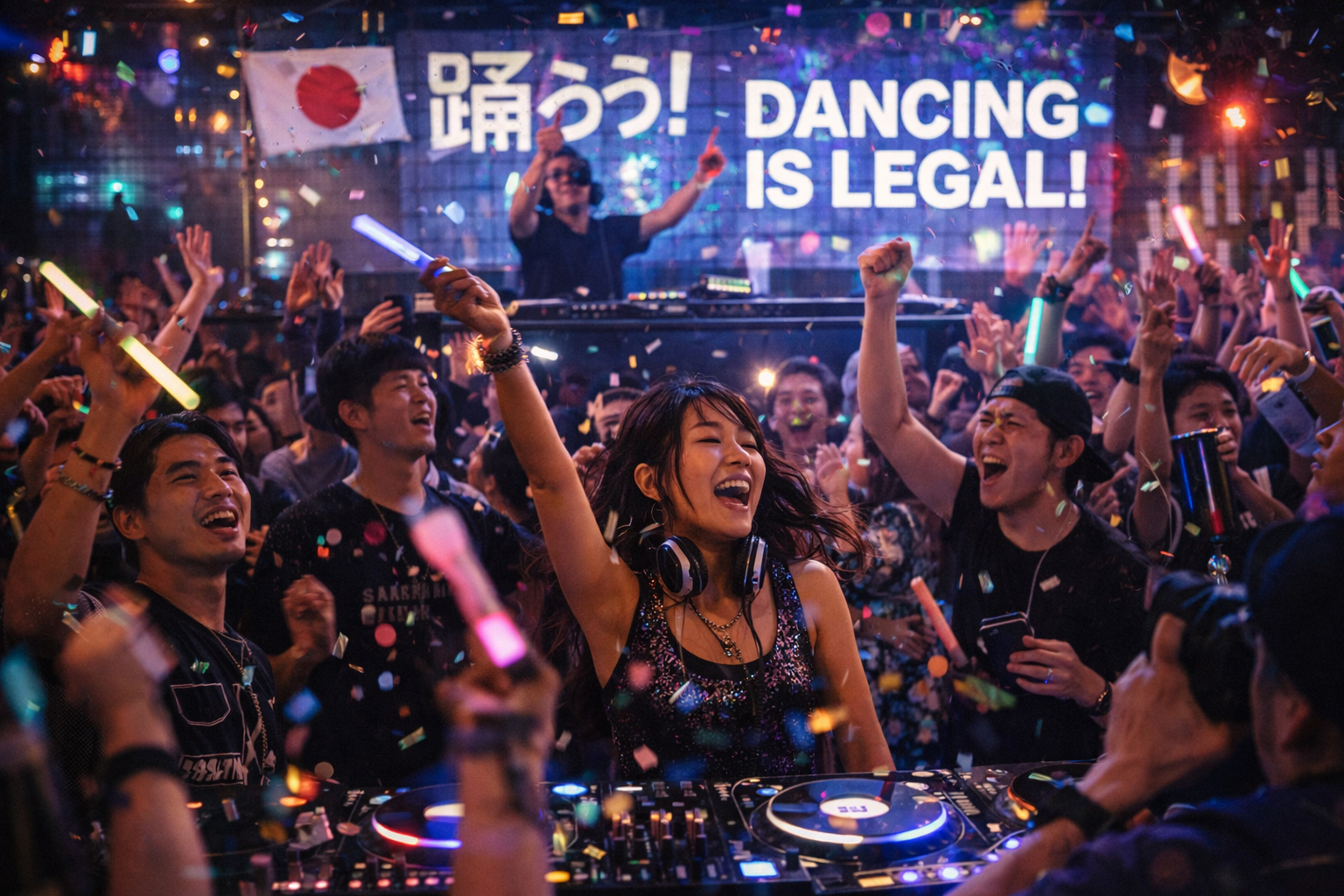
The later reform mattered so much because people had already lived through this pressure in real rooms.
2012 and 2013 were not memorable only because raids happened. They matter because these were the years when Japanese club culture had to confront, on a large scale, how insecure its own legitimacy still was.
That is why the period can honestly be described as one that felt like a ban. clubs.co.jp wants to preserve that lived perception, not only the technical legal distinction.
A larger view of the enforcement wave that made these years feel so unstable.
How the pressure of these years turned into organized cultural pushback.
What changed legally after the years when nightlife felt cornered.