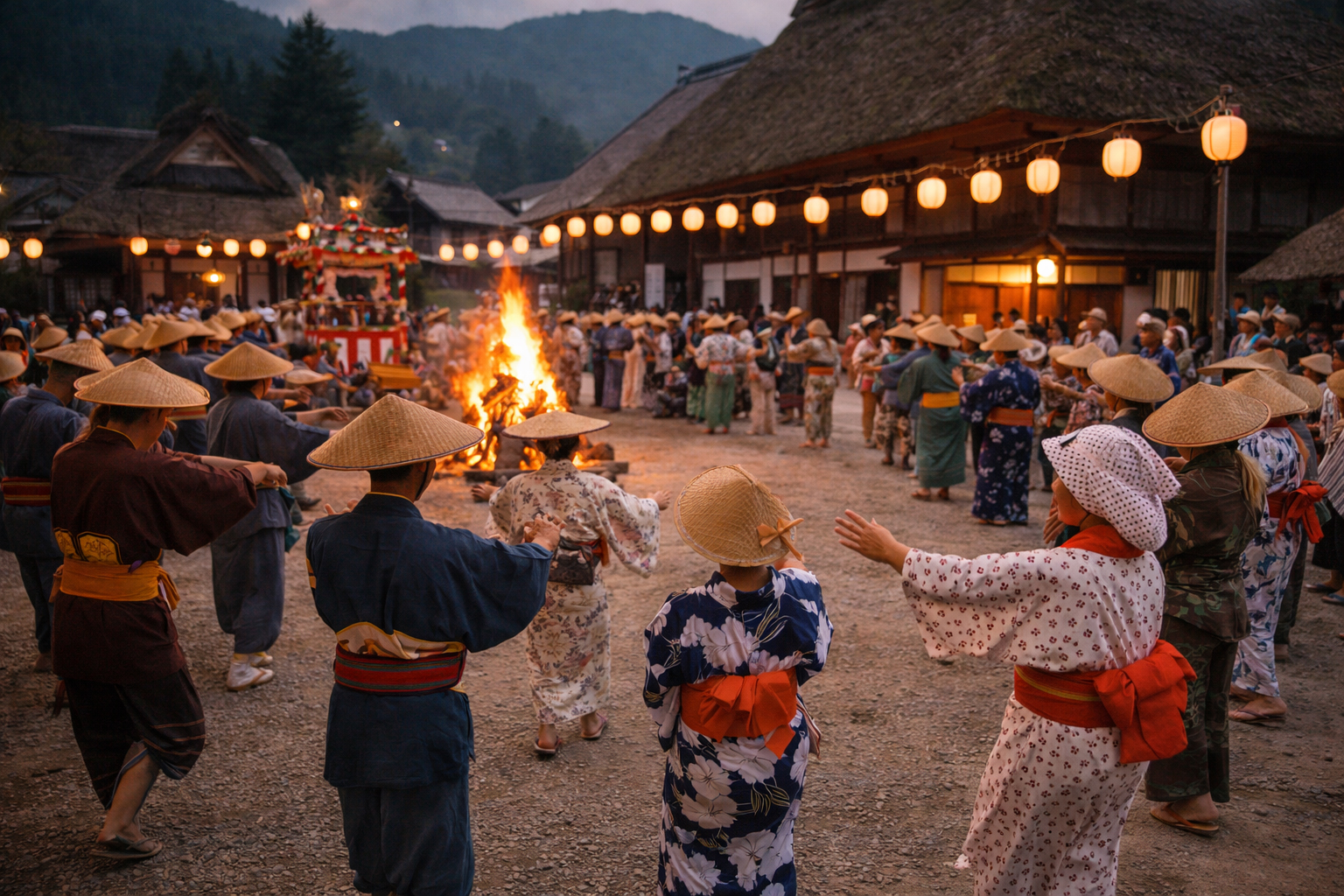
Community dance
Bon Odori and Folk Dance
Read the other major root of Japanese dance: communal and seasonal movement.

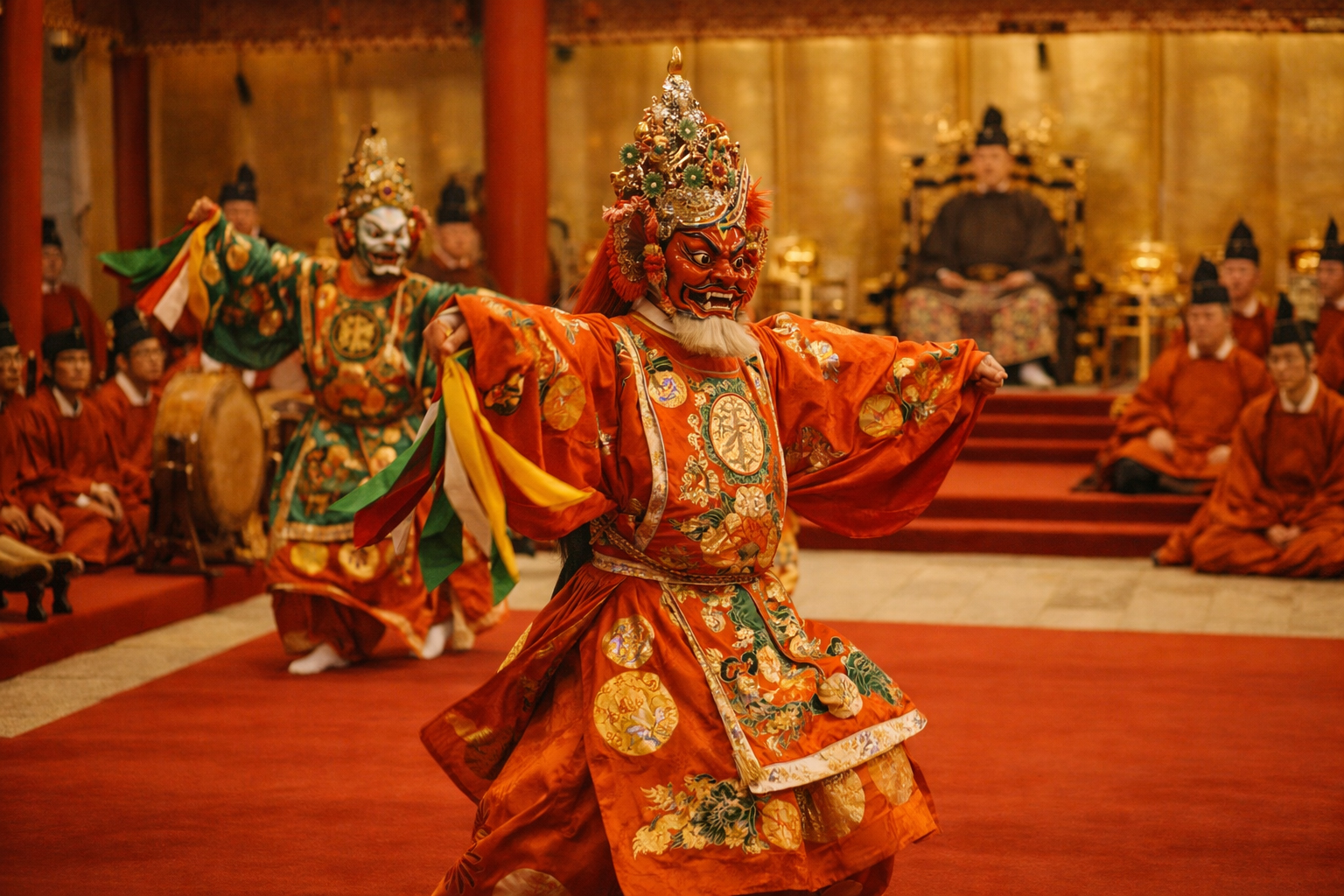
If you trace Japanese dance history far enough back, before discos, before clubs, and even before many later stage traditions, you come to dance shaped inside court ritual. That is Bugaku: dance not first as self-expression, but as order, ceremony, and form.
Bugaku is best understood as the dance component of the gagaku court tradition. It belongs to one of the oldest and most formal layers of Japanese performance history, and it carries a very different sense of time from later urban performance traditions such as Noh, Kabuki, discos, or clubs.
It is not mainly dance of emotional outburst. It is dance of arrangement: measured motion, repetition, direction, costume, and color ordered into courtly space.
Bugaku placed dance inside order
before later nightlife would place dance inside freedom.
Bugaku is often described through its relation to gagaku, meaning that the music of the court and the body of the court were always linked. Court culture was not only heard; it was also moved.
If later nightlife uses the floor to make temporary social worlds, Bugaku uses dance to make a formal world of rank, direction, and ceremony. The dance is part of how court space becomes court space.
One of the key things about Bugaku is that it belongs to a larger East Asian history. Materials and traditions arrived in Japan through exchanges with the continent, especially through China and the Korean peninsula, and were then adapted into Japanese court culture.
That means Bugaku is not simply “foreign” and not simply “native.” It is one of the classic examples of Japan receiving, refining, and ritualizing transmitted forms until they became part of court identity itself.
Bugaku belongs to a broad history of cultural movement across East Asia.
Continental forms were organized into durable Japanese court ritual.
Even as other performing arts developed elsewhere, Bugaku remained strongly court-centered.
A famous part of Bugaku structure is the distinction between left and right dances. Origins, colors, and formal arrangement were organized through these categories, so that direction itself became part of the aesthetic.
This is striking from a modern dance perspective. Many later forms emphasize individual freedom or emotional expression. Bugaku begins from structure: position, direction, color, balance, and ceremonial order.
Where Bon Odori and folk dance often live inside communal circles, Bugaku belongs to a different root of Japanese dance: the root of court ceremony and formalized beauty.
That difference matters. It suggests that Japanese dance history has more than one beginning. One line runs through community and seasonal gathering. Another runs through court ritual and highly structured movement. Bugaku is one of the most beautiful expressions of the latter.
Japanese dance grows out of more than one source:
the circle of community, and the order of ceremony.
When many people imagine Japanese traditional performance, they think first of Noh or Kabuki. But Bugaku belongs to an older stratum. And because it stayed so close to court ritual, it preserves a world very different from later urban entertainment.
In that sense, Bugaku is nearer to ceremony than to theater. Its value lies less in surprise than in the endurance of form. That is one of the oldest foundations of Japanese dance.
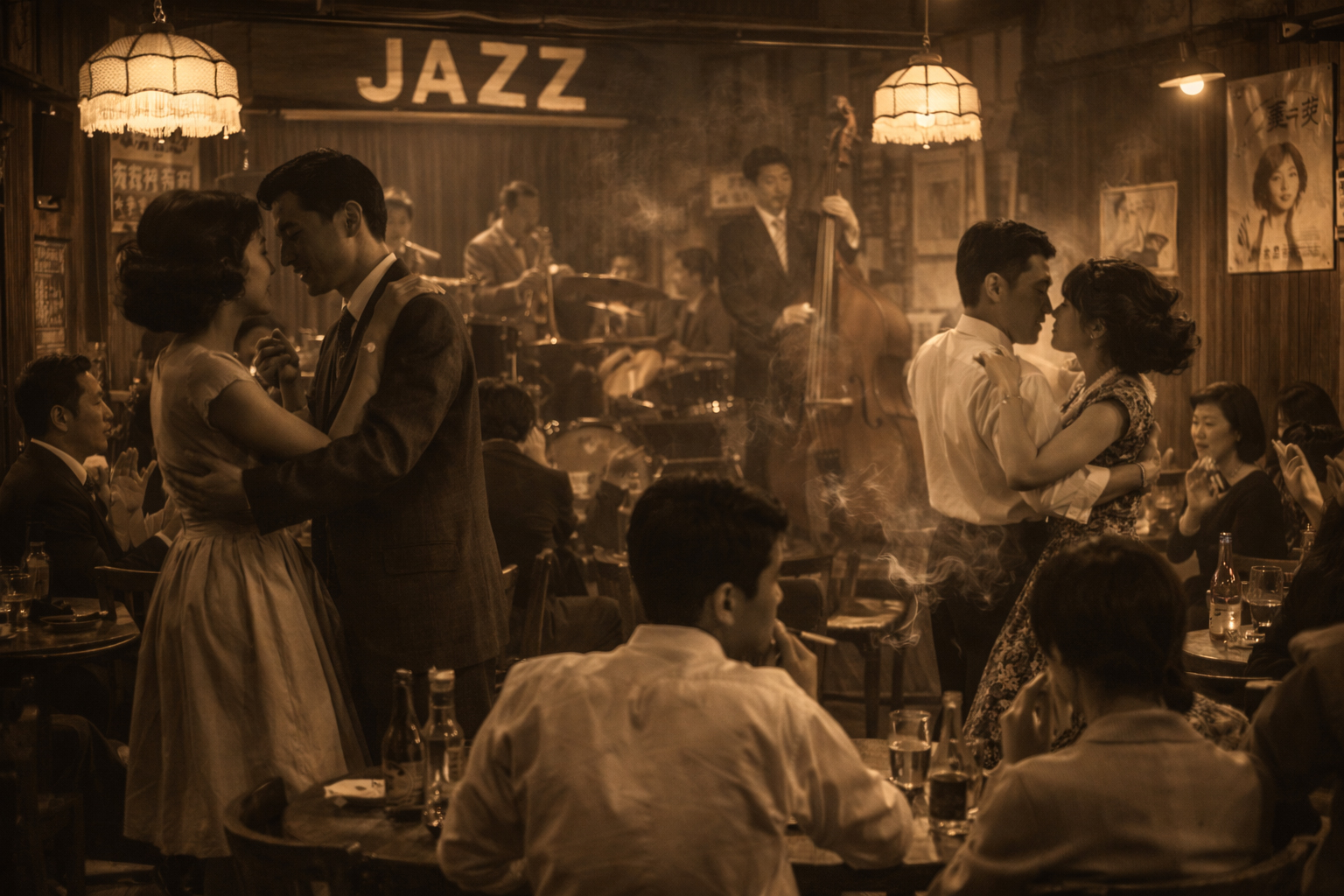
Its atmosphere is very distant from jazz cafés, discos, or clubs.
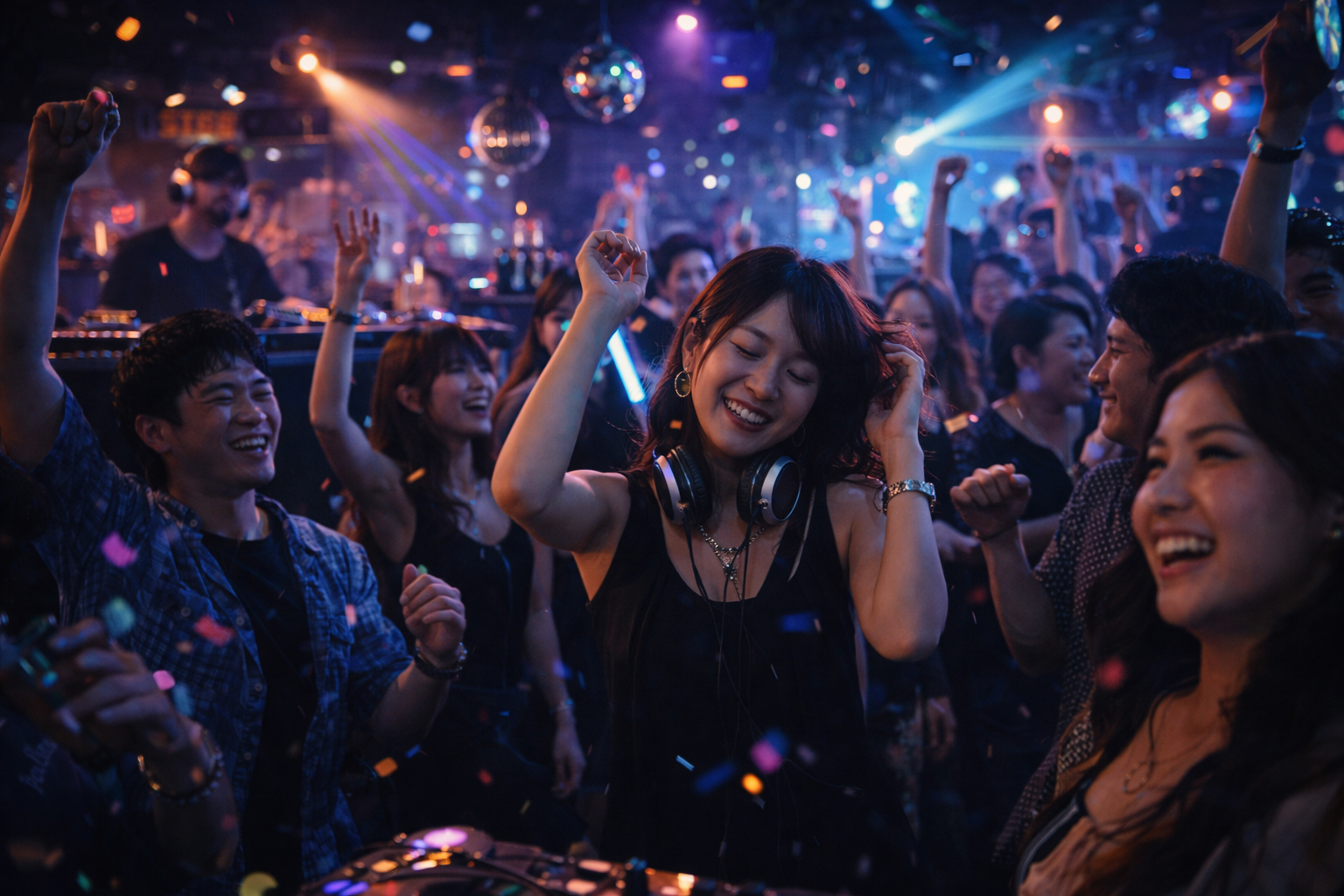
And yet it remains one of the old formal foundations for how bodies move meaningfully in Japan.
Bugaku and imperial court culture can seem far away from modern nightlife. But in the long history of Japanese dance, they remain a vital origin point: one of the places where movement first took on durable national and ceremonial form.
clubs.co.jp wants to preserve Bugaku not merely as a difficult old court art, but as one of the great beginnings of formalized bodily expression in Japan.
Read the other major root of Japanese dance: communal and seasonal movement.
Much later, the city reorganizes sound and movement into modern nightlife forms.
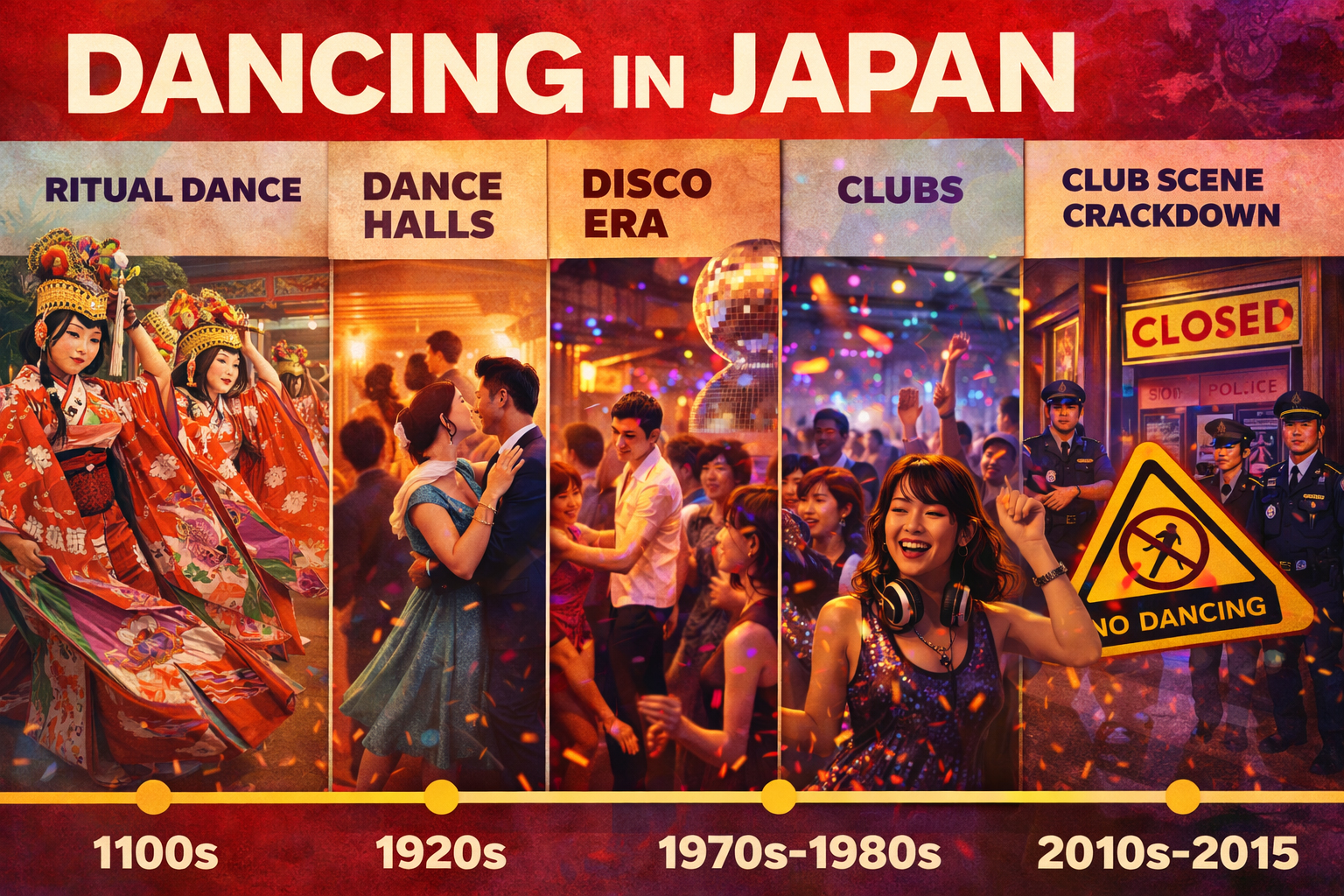
Follow the wider arc from court ritual to community dance, cities, discos, clubs, and reform.