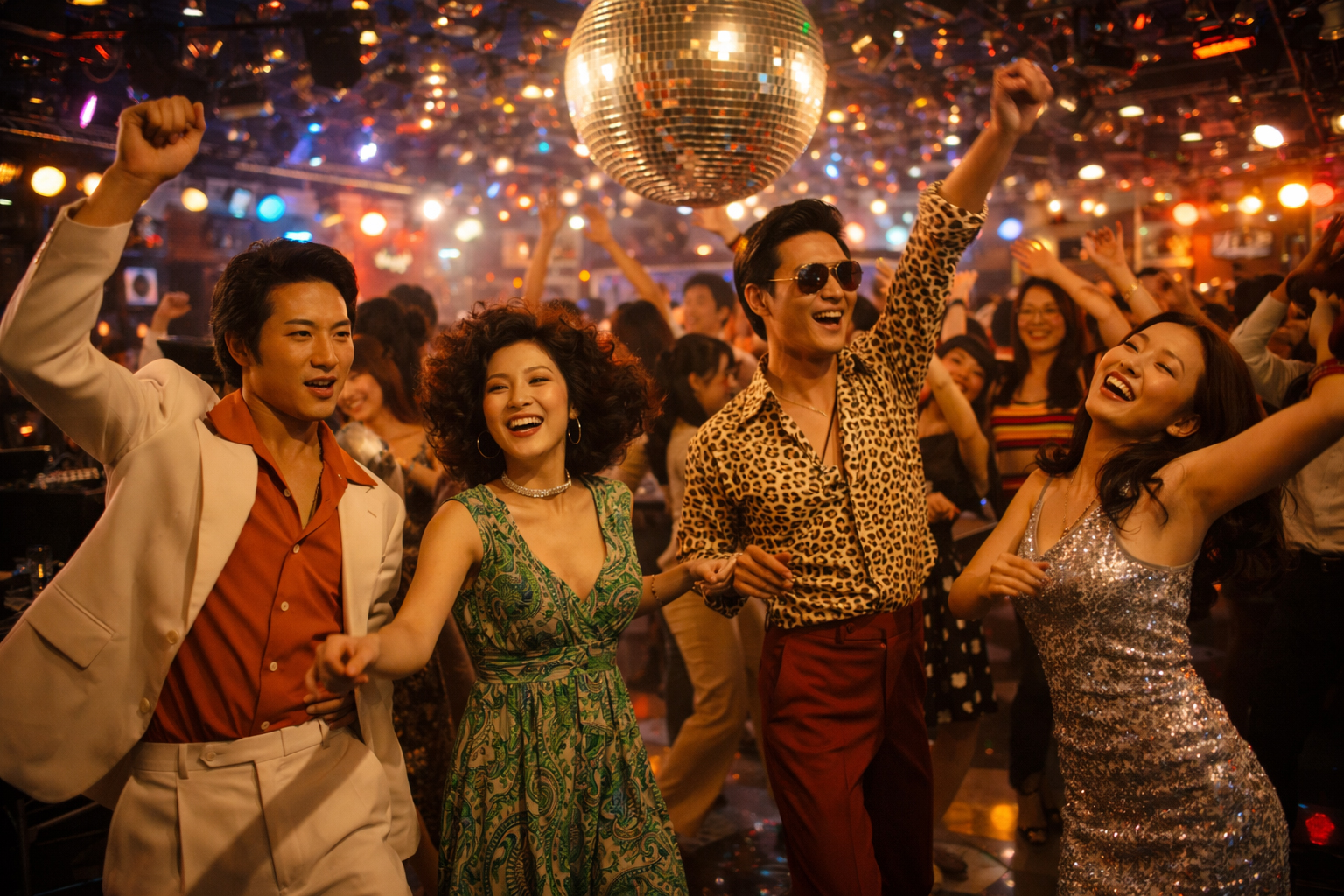
Disco
Disco in Japan
How the listening city and the dancing city later gave way to a brighter, more theatrical nightlife form.

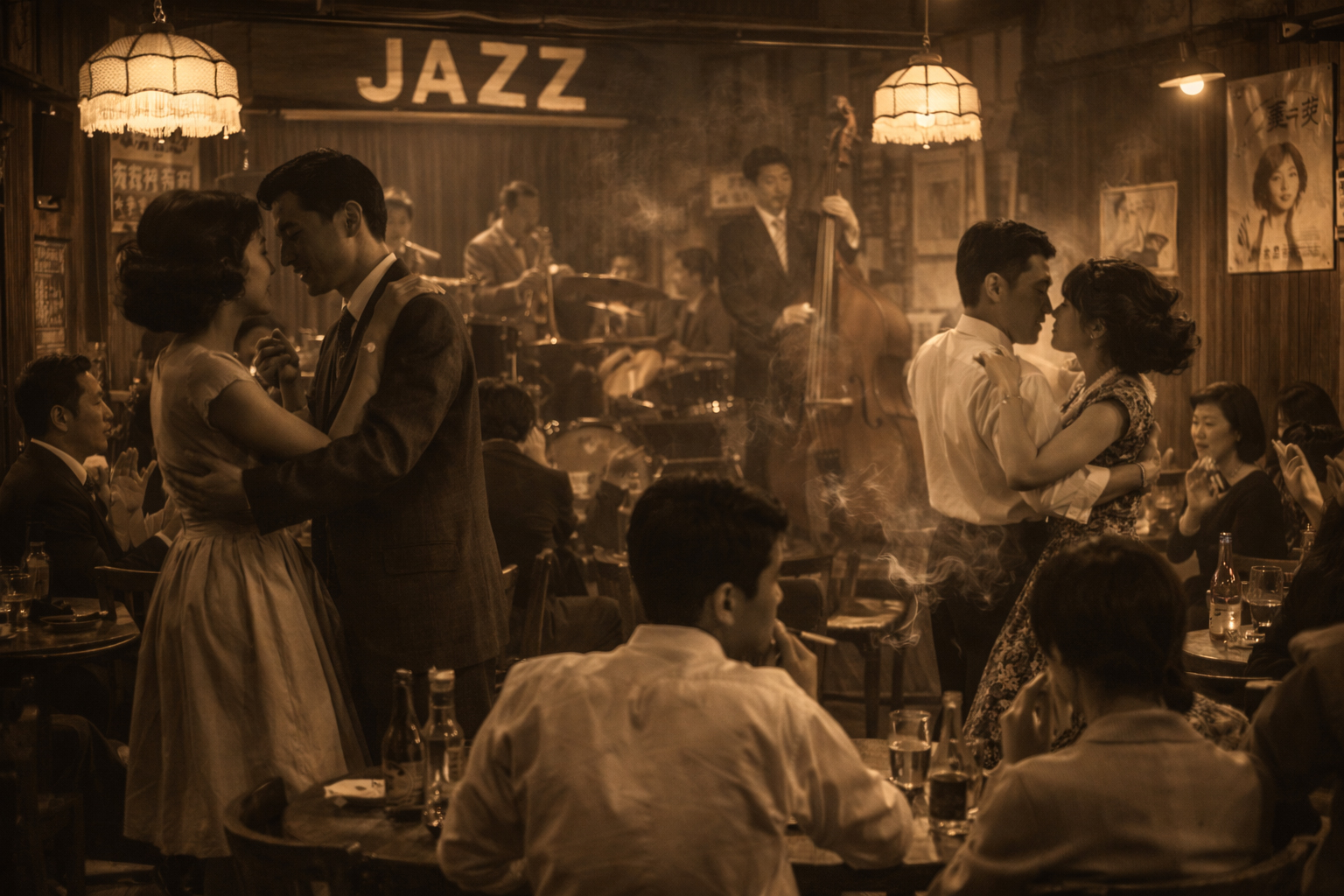
Japanese nightlife did not jump directly into disco and clubs. Before that, there were jazz cafés where people listened seriously, and there were dance halls where people moved together. The modern night in Japan grew between those two spaces.
In Japanese urban culture, jazz was never only background music. It arrived as a sign of modernity, taste, and outward-facing city life. And from early on, it developed along two closely related paths: the jazz café as a listening space, and the dance hall as a moving social space.
These paths can look opposite, almost like stillness and motion. But they were deeply connected. Both were ways of asking how jazz could become part of everyday urban life in Japan.
Japan’s modern night first learned how to listen,
and then learned how to move together around the same music.
The jazz kissa is one of Japan’s most distinctive cultural forms. At a time when records were expensive and home listening was limited, jazz cafés became public spaces where people could hear imported music on serious sound systems.
In many of these cafés, conversation was secondary to the music. Some even developed an atmosphere where talking was discouraged. That made the jazz café something more than a coffee shop: it was a room for concentrated listening, and it gave Japanese urban culture a special kind of depth.
At the same time, jazz cafés were not purely solitary spaces. People gathered around the same records, returned to the same owners and rooms, and formed communities through shared taste.
Even without loud conversation or overt dancing, listening together was already a kind of urban sociability. Jazz cafés created a city culture where intensity and connection could coexist quietly.
Jazz cafés made listening itself the main event rather than a background activity.
People built shared urban culture through hearing the same records in the same rooms.
The proprietor’s collection and sensibility often became the character of the space itself.
Alongside the listening room, the modern city also had spaces for dance. From the prewar period into the postwar years, dance halls and social dance venues formed part of urban modern entertainment.
In the postwar era especially, with jazz bands and American influence visible in city nightlife, dancing became increasingly legible as urban sophistication and social technique. Dance was not only physical movement. It was a way of inhabiting modern city life.
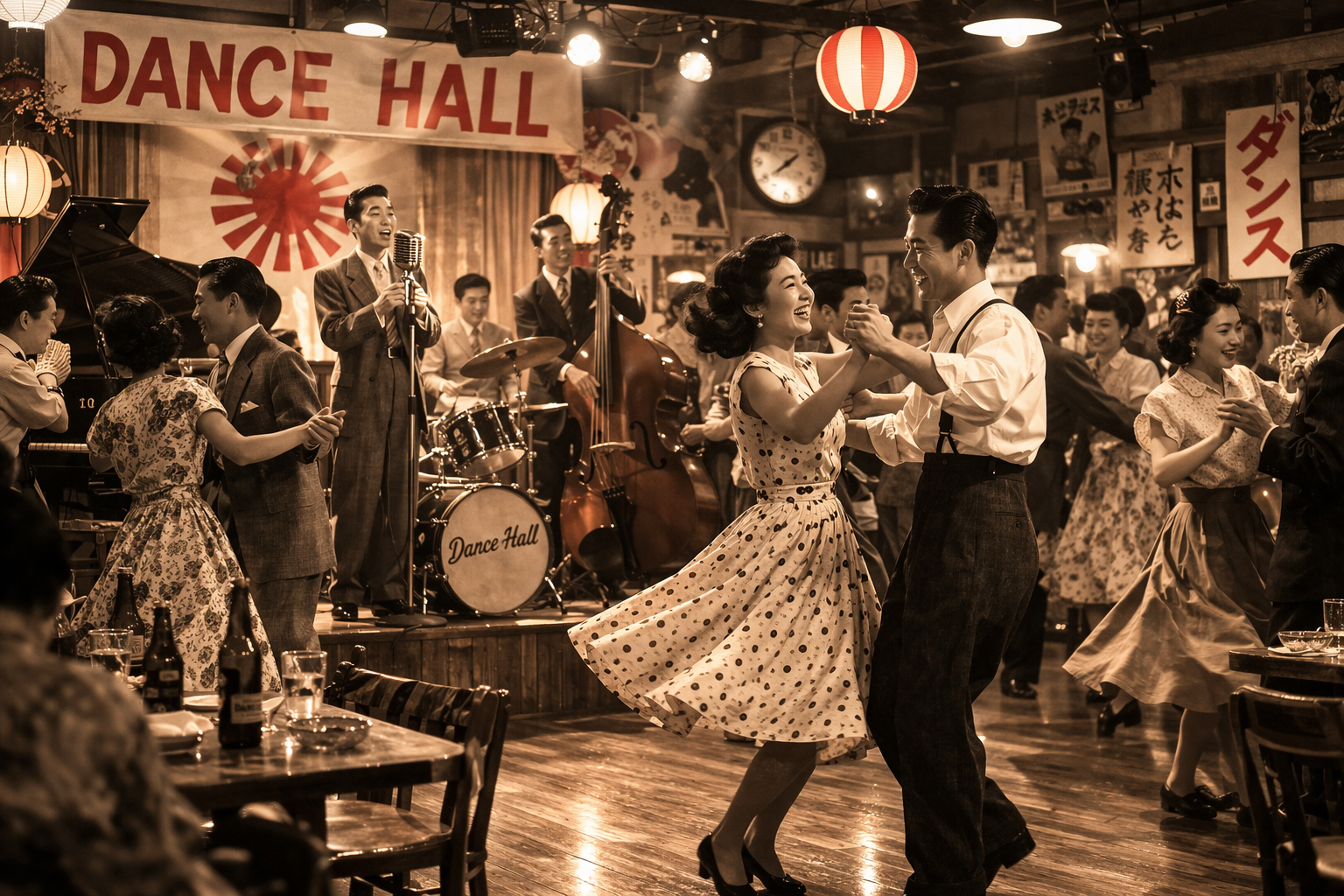
Jazz cafés and dance halls were not the same thing. One prioritized concentrated listening; the other prioritized social movement. But in Japan they were never completely unrelated.
Both were experiments in how imported modern music could be absorbed into Japanese city life. One trained the ear, the other trained the body. Together they created part of the foundation for later disco and club culture.
If jazz cafés built the city’s ears,
social dance spaces helped build the city’s body.
By the 1960s, Japanese cities had become denser and more culturally layered. Jazz cafés often took on an almost sacred seriousness, while nightlife sociability itself diversified into dance halls, bars, cafés, and live rooms.
These spaces were separating by function while still belonging to one wider urban ecology. That layering helped make cities like Tokyo and Osaka feel more musically and socially complex.
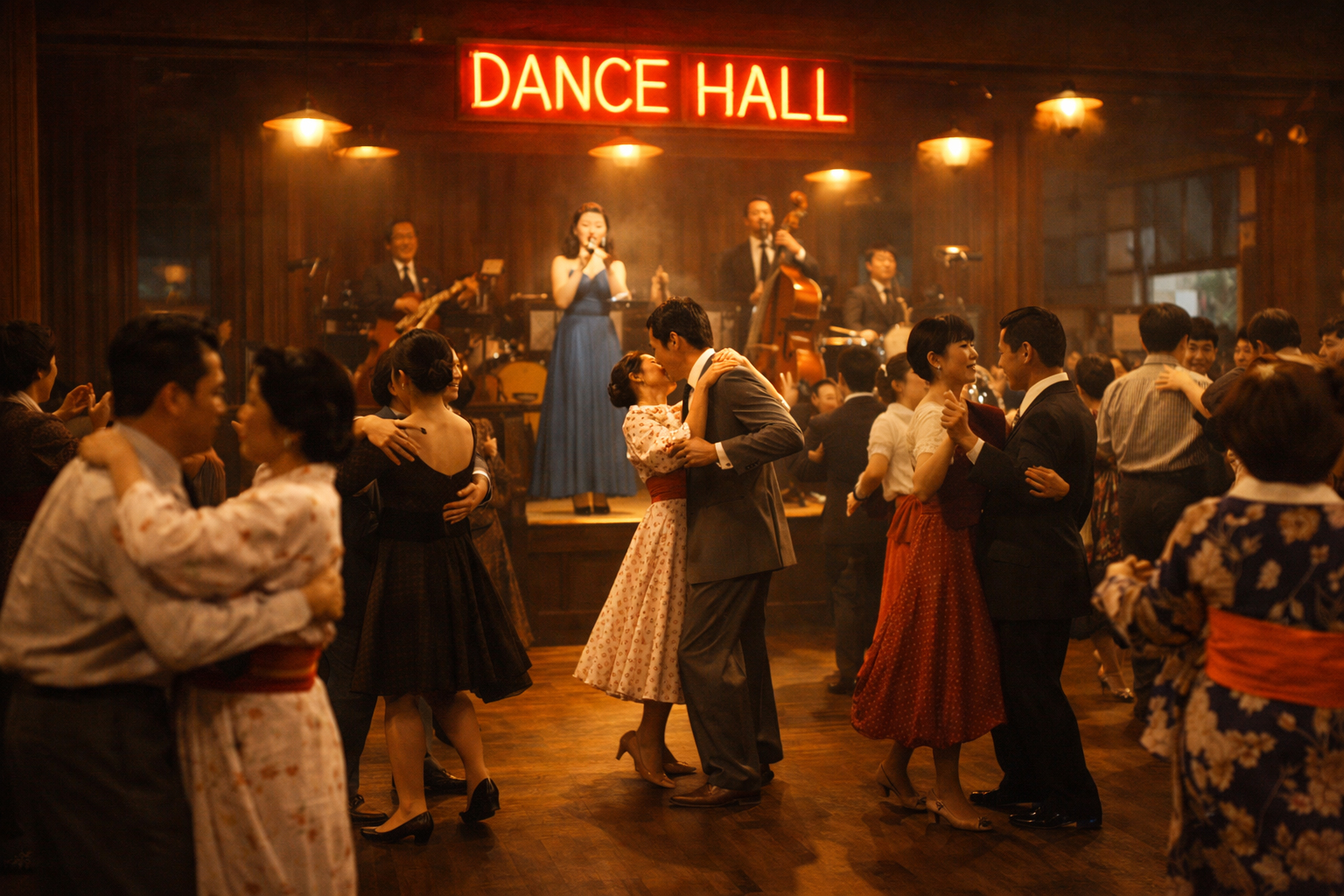
Social dance also taught people how to inhabit the city and its codes.
Jazz cafés cultivated a style of serious listening that would shape later music culture as well.
Jazz cafés and urban social dance matter because they show that Japanese nightlife did not suddenly become disco or club culture. Before those later forms, there were already separate but connected spaces for hearing and moving.
Disco would later add spectacle and fashion. Clubs would later deepen sound-centered identity. But both were built on earlier urban practices that had already taught people how to listen together and move together.
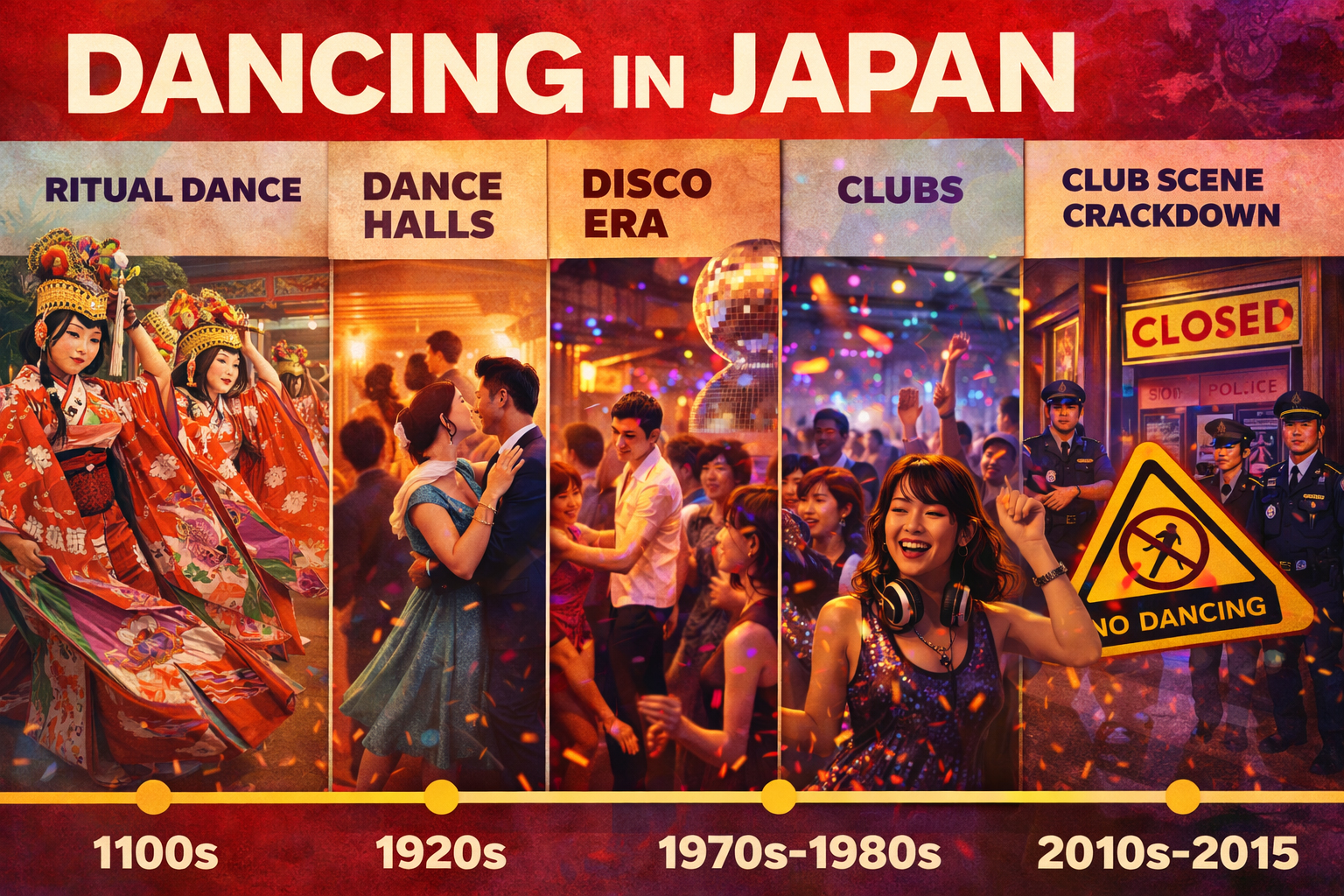
Jazz cafés and urban social dance may seem less flashy than later nightlife forms. But they are among the most important foundations for how Japanese cities learned music and movement at night.
clubs.co.jp wants to preserve this period not only as a prehistory of disco and clubs, but as a fully meaningful urban culture in its own right.
How the listening city and the dancing city later gave way to a brighter, more theatrical nightlife form.
A more dance-hall-centered view of postwar urban sociability and music culture.
Trace the wider arc from ritual dance to clubs, regulation, and reform in Japan.