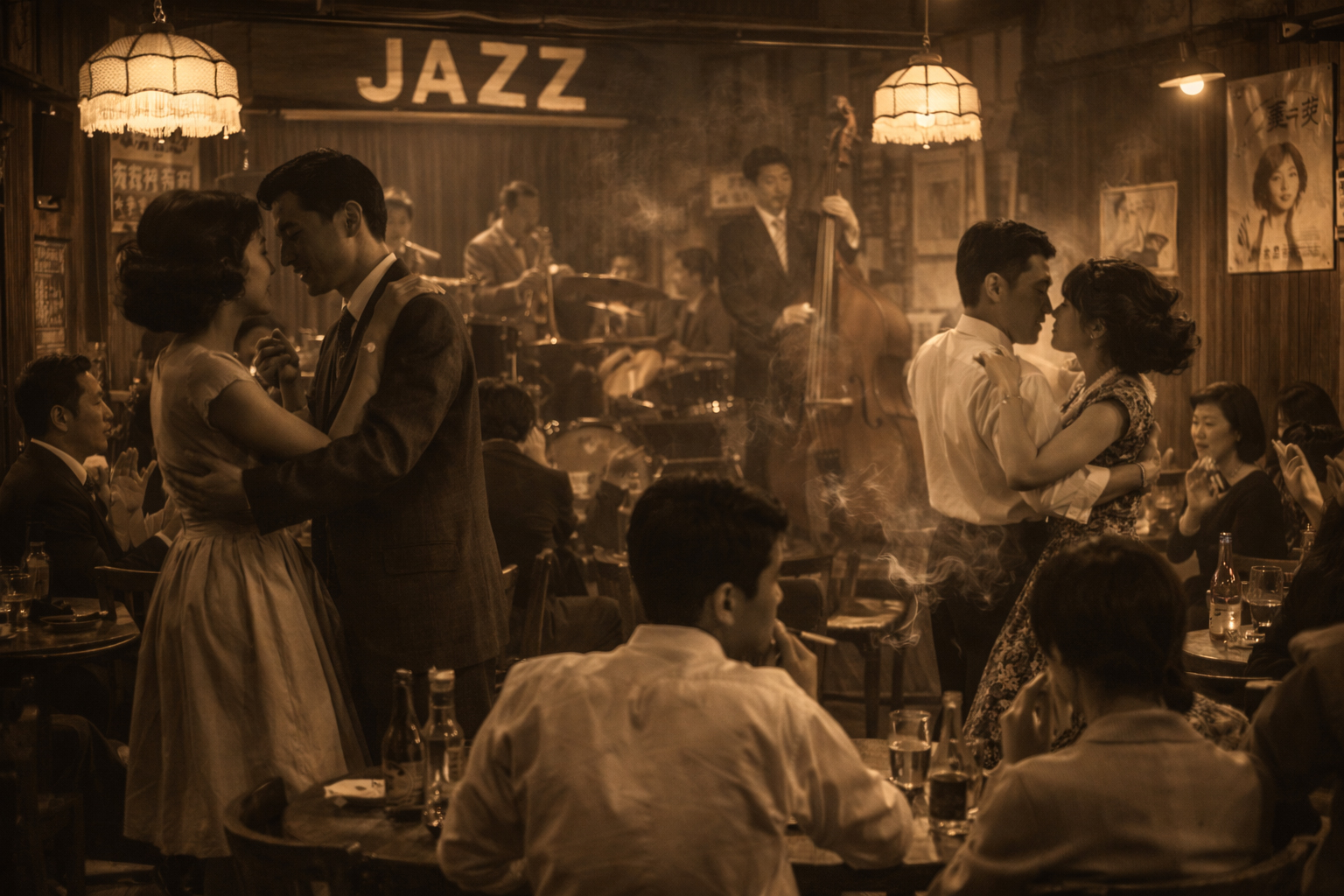
Jazz
Jazz Cafés and Urban Social Dance
A wider look at how the listening city and the moving city developed together after the war.

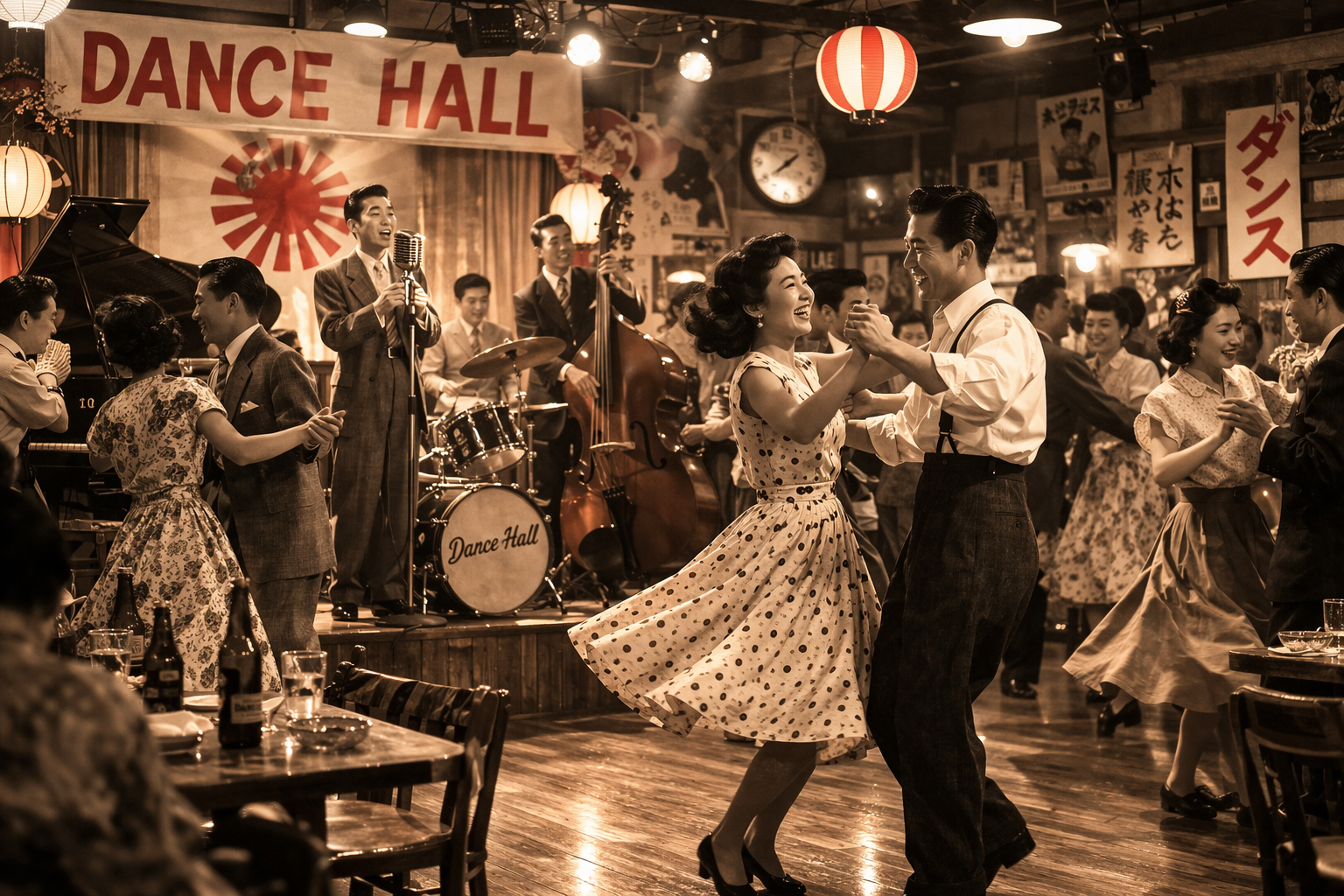
In postwar Japan, the dance hall was more than a place for entertainment. It was one of the spaces where the city relearned proximity, music, and sociability after rupture and reconstruction.
In postwar Japan, urban life itself was being reassembled. Within that process, the dance hall mattered as more than amusement. Music, sociability, American influence, postwar openness, and urban recovery all crossed on the floor.
The postwar dance hall was both a continuation and a return. Modern urban time, interrupted by war, began to reattach itself there. That gives the period a special texture.
The postwar dance hall was not only a place where people danced.
It was one of the places where the city began breathing again.
Prewar Japan already had dance halls and forms of social dance, but wartime controls sharply restricted or shut down much of that culture. That is why postwar dance halls felt not simply new, but restorative: a return of interrupted urban modernity.
The return was not innocent. It happened in the atmosphere of Occupation, hardship, rebuilding, and complicated feelings toward American influence. Yet people still gathered where music was. That layered condition is part of what makes the period so meaningful.
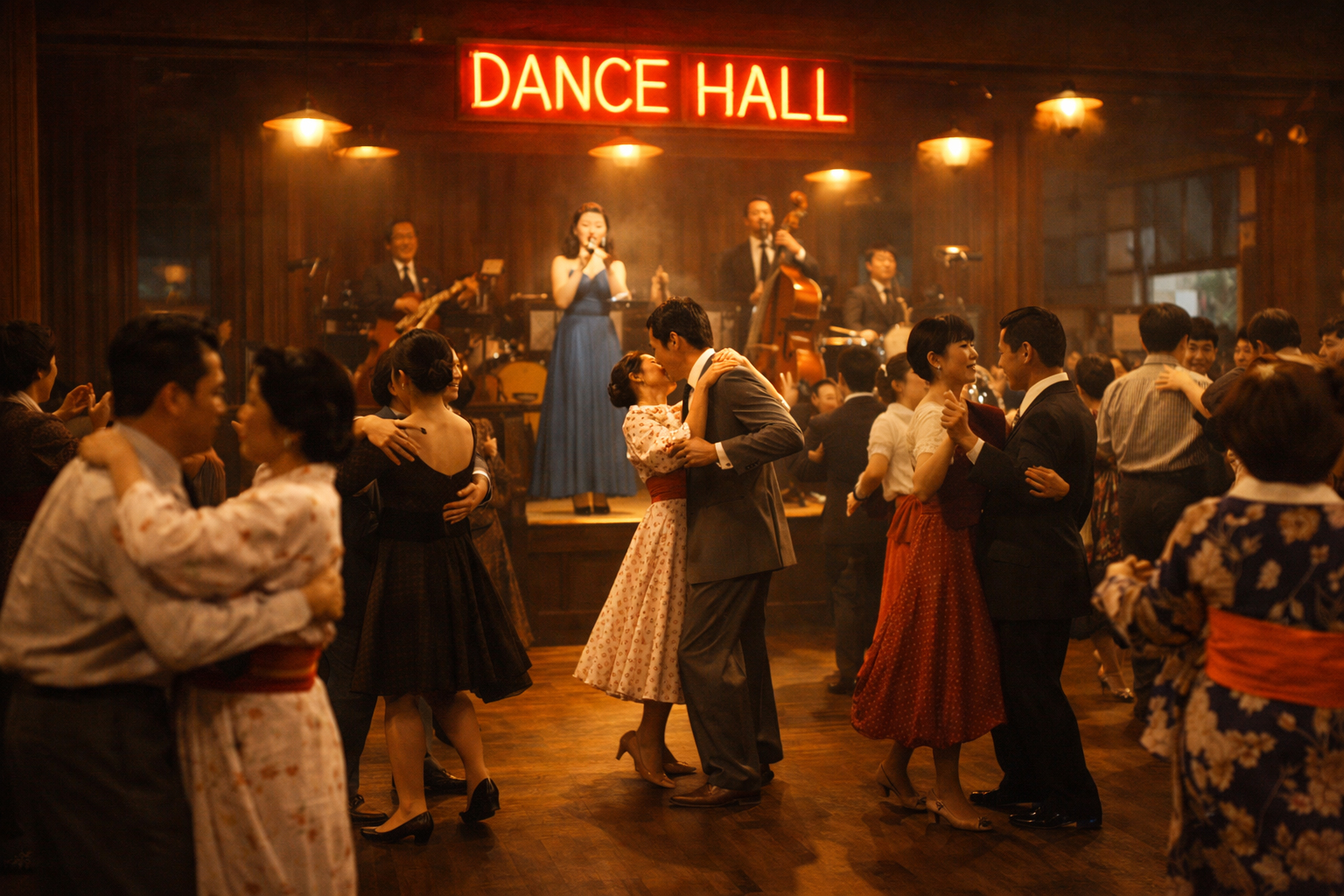
Jazz is central to this story. In the postwar years, jazz was not only music to hear. It was also music that reorganized how people moved together in urban space. Live bands, rhythm, couples dancing, social codes, and a sense of modernity all entered the room together.
The postwar dance hall is not yet disco in the later sense. It is more physical, more immediate, and often more human in scale. That is exactly why the relation between sound and body becomes so visible there.
Postwar jazz was not only for listening; it was also for gathering and movement.
Dance halls taught urban codes of approach, distance, and conduct.
Before disco and clubs, postwar dance halls helped teach Japan’s modern night how to move.
Dance halls mattered because they were social spaces during a time when urban life itself was being rebuilt. People were not only working and surviving. They were also relearning how to meet, perform, and belong in a changing city.
Standing on the same floor with strangers, moving to shared rhythm, and learning the codes of the room — all of that was part of how postwar urban society regained social technique.
In the same postwar cities, jazz cafés were also developing. One space trained listening, the other trained movement. They were different, but not distant.
If the jazz café helped build the city’s ears, the dance hall helped build its body. Both were machines for bringing music deeper into everyday urban life.
Jazz cafés taught the city how to listen.
Dance halls taught the city how to move.
Later nightlife needed both.
The postwar dance hall is not disco, but it already contains some of the key elements that disco and later clubs would amplify: gathering around music, the floor as a social stage, and the body becoming part of urban identity.
Disco would later add spectacle and stronger visual display. Clubs would later add deeper music-centered focus. But before either of those, the postwar dance hall had already taught people what it meant to stand on the floor.
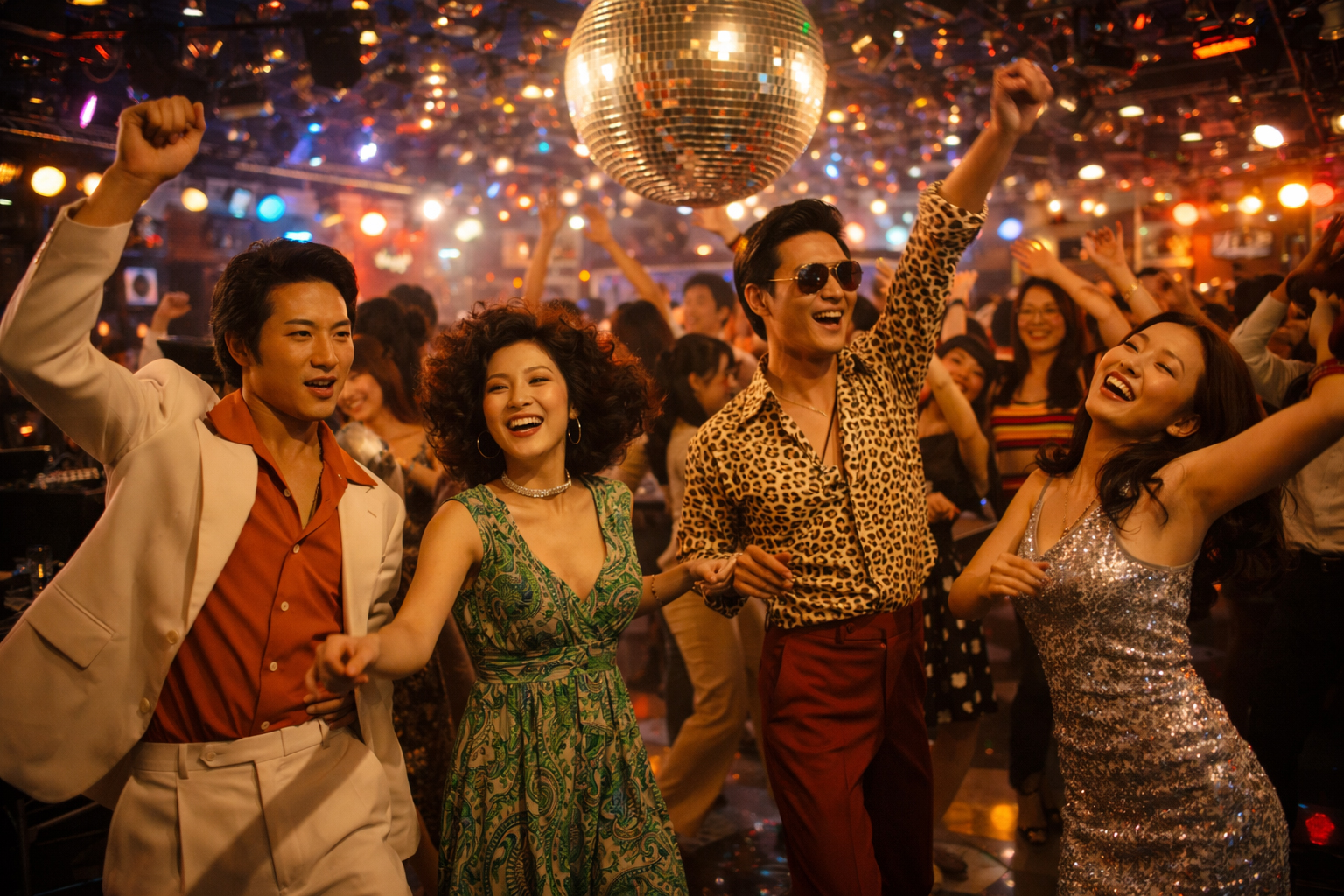
Postwar bodily and social habits became part of the foundation for later disco culture.
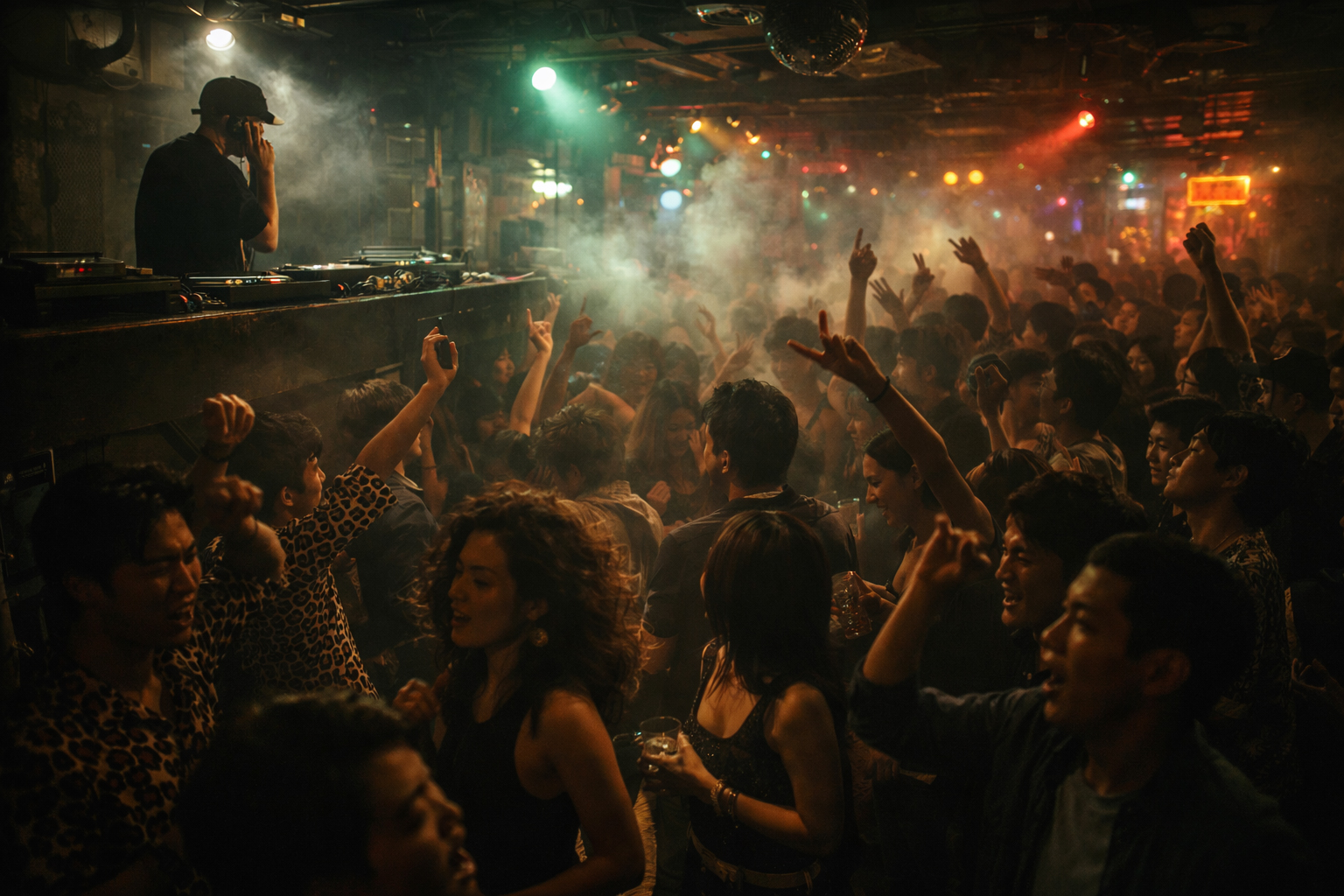
The postwar dance hall also belongs to the prehistory of later club-floor feeling.
Postwar dance halls are not only nostalgic scenery. They are part of the deeper history of how Japanese cities relearned the relation between sound, sociability, and the body.
clubs.co.jp wants to preserve this period not as a mere preface to disco and clubs, but as a fully meaningful chapter of urban culture in its own right.
A wider look at how the listening city and the moving city developed together after the war.
How postwar social dancing later transformed into brighter and more theatrical nightlife culture.
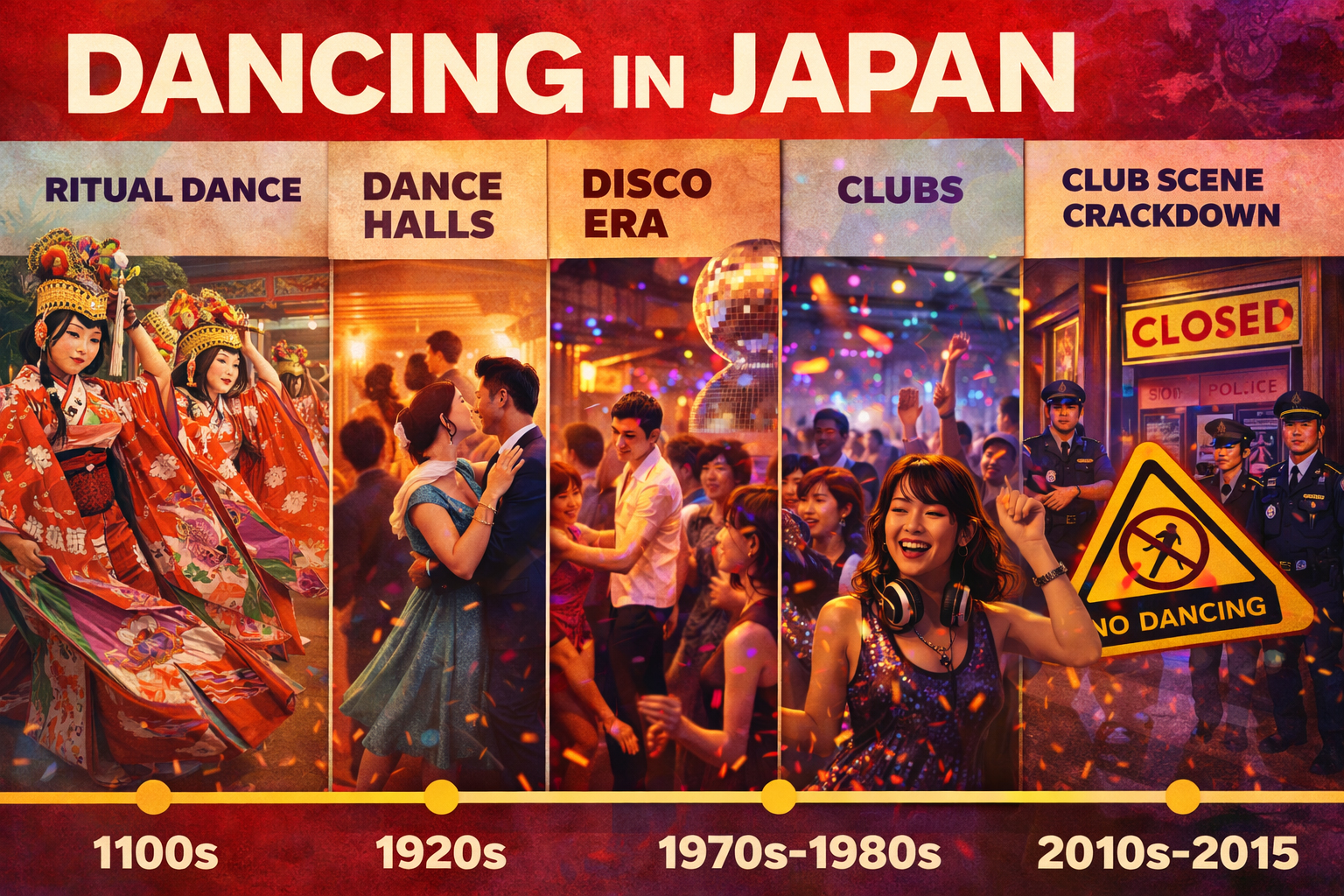
Follow the wider arc from ritual dance to clubs, regulation, and reform in Japan.