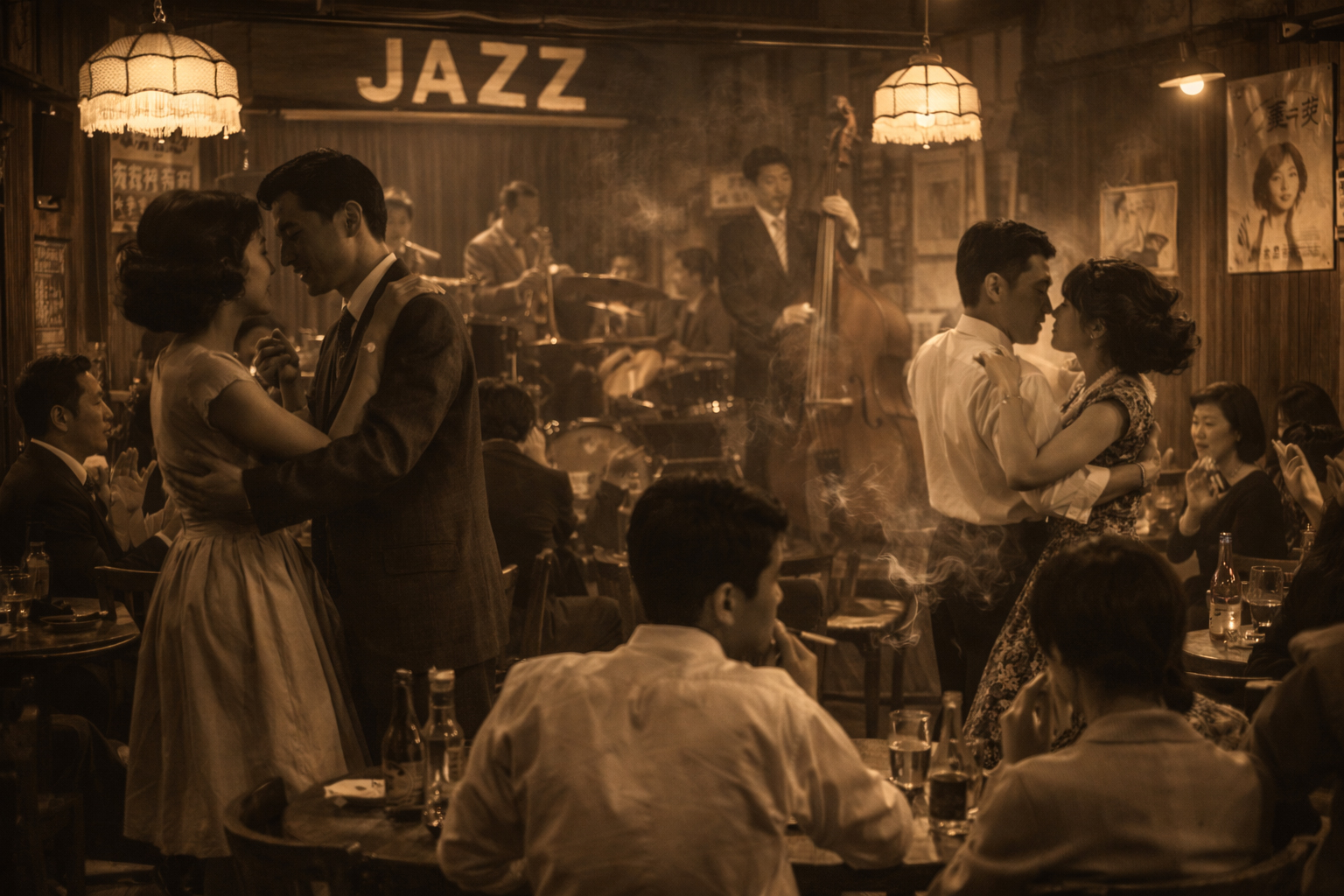
Urban modernity
Jazz Cafés and Urban Social Dance
How communal dance gave way to urban listening rooms and social movement spaces.

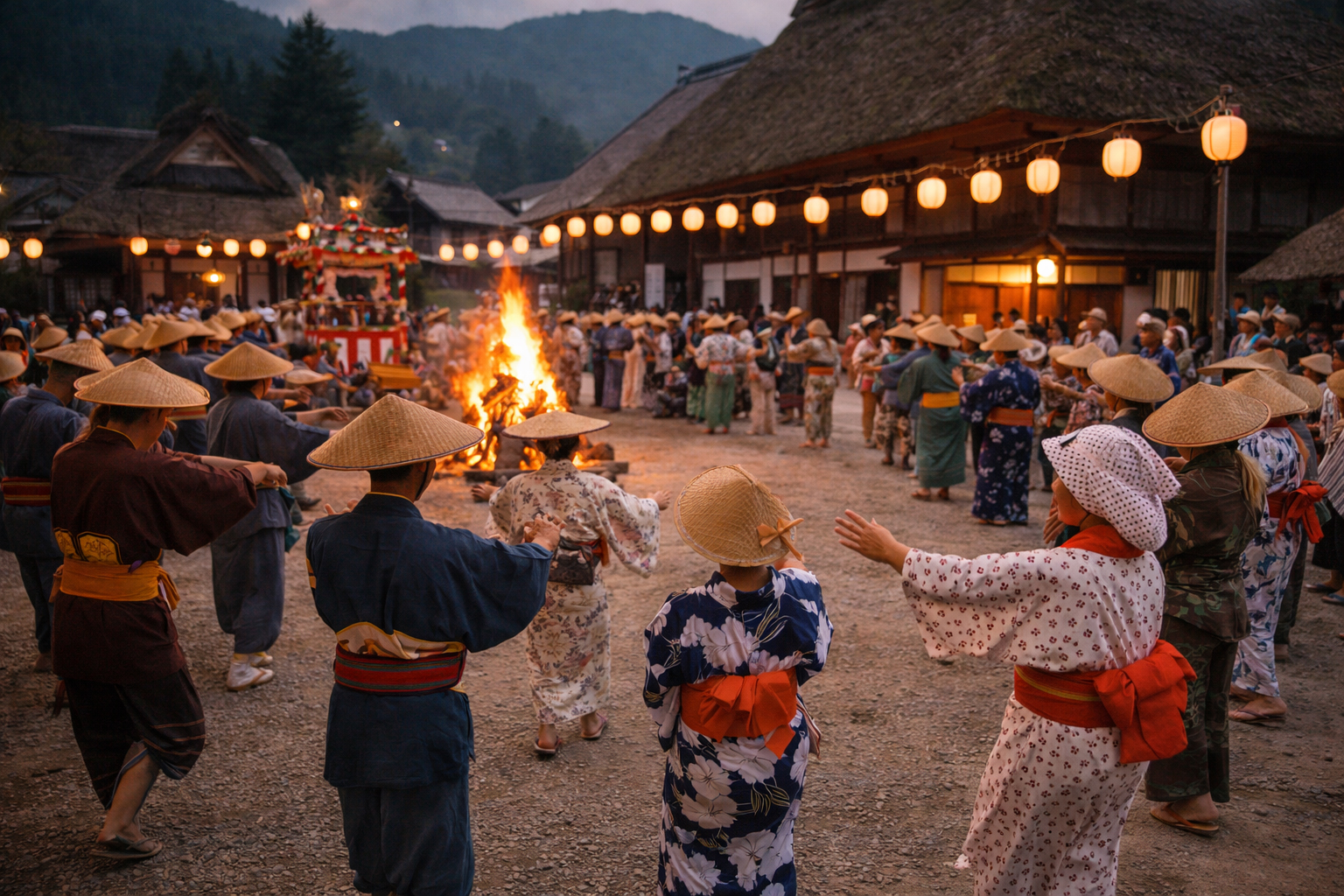
The history of Japanese dancing did not begin with discos or clubs. Before that there was Bon Odori, summer nights around the yagura, and many local folk dances carrying the memory of land, labor, ancestors, and community. The Japanese night first learned to dance together.
Bon Odori is one of the most recognizable forms of dancing in Japan. It is generally tied to Obon, the summer season when ancestral spirits are welcomed and remembered, and it is often danced in circles around a raised wooden platform called a yagura. :contentReference[oaicite:11]{index=11}
But Bon Odori is not the whole of Japanese folk dance. Across Japan there are many regional dance traditions rooted in local history, agricultural life, religious custom, and community memory. Bon is one major branch within that larger world. :contentReference[oaicite:12]{index=12}
Japanese dance began not mainly as spectacle,
but as a way of welcoming, remembering, and moving together.
Bon Odori is most closely associated with the Obon season. Because it belongs to a time of ancestral remembrance, it carries a festive surface and a spiritual background at once. It can be joyful and communal while still rooted in ritual feeling. :contentReference[oaicite:13]{index=13}
At the same time, Bon Odori is famously open. Travel guides often describe it as easy for visitors to join, and while steps vary by region, many dances are intentionally repetitive and learnable. :contentReference[oaicite:14]{index=14}
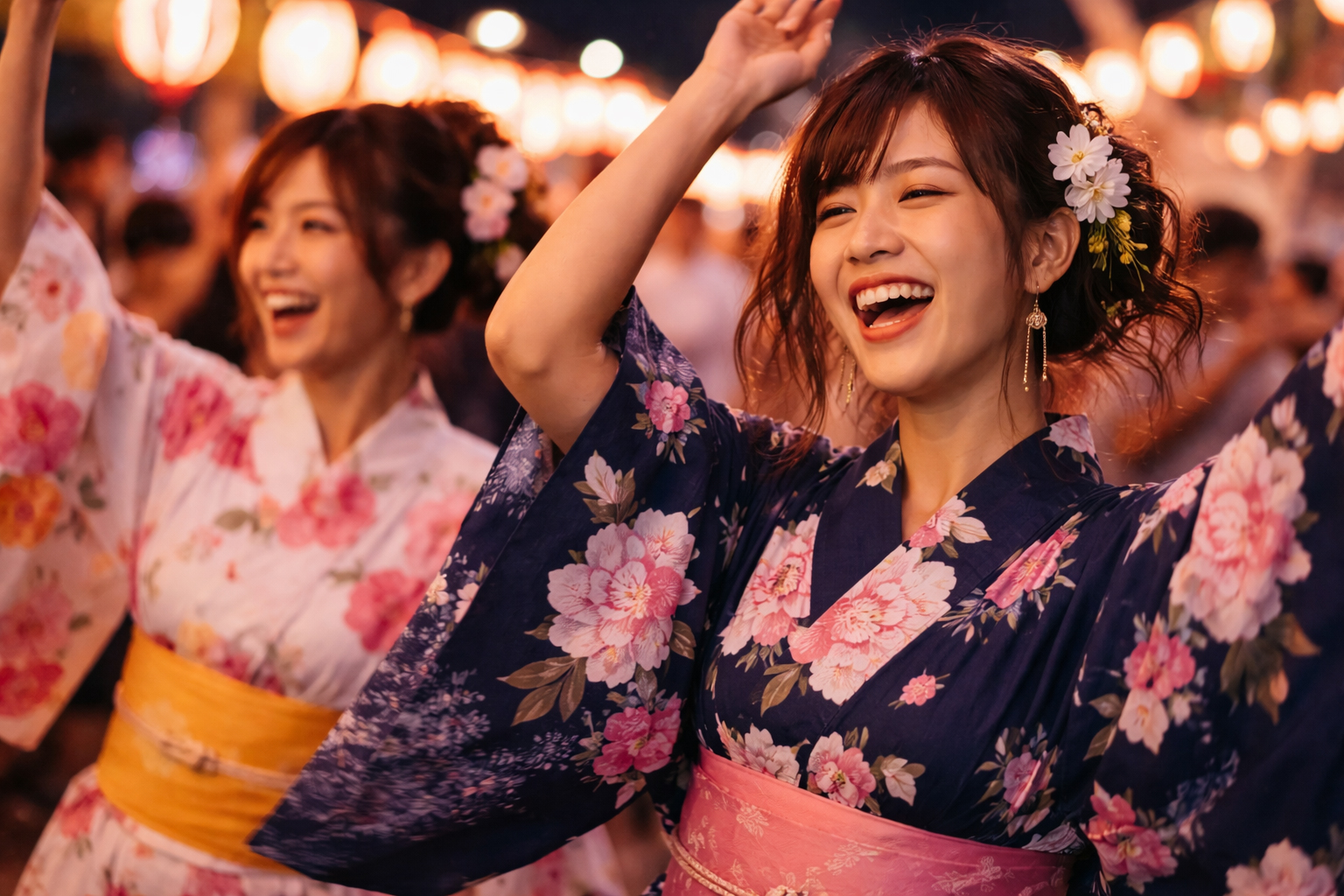
Once you widen the lens to folk dance, Japanese dance traditions become much more varied. Even within Bon Odori there are strong regional differences, and beyond Bon there are many dances tied to fishing, farming, local stories, and ritual practice.
That is why folk dance is best understood not primarily as stage performance, but as embodied local memory. The steps, costumes, rhythms, and occasions often preserve the life of the place itself. :contentReference[oaicite:15]{index=15}
Bon Odori is especially tied to the summer Obon season. :contentReference[oaicite:16]{index=16}
In many folk traditions, participation and continuity matter more than virtuosity.
Movements often preserve traces of labor, place, or belief. :contentReference[oaicite:17]{index=17}
One of the best-known Bon Odori images is the circle of dancers moving around the yagura. That circular form matters because it does not sharply divide performer from spectator. The boundary is soft. Someone watching can often enter the dance. :contentReference[oaicite:18]{index=18}
Later nightlife forms like discos and clubs often emphasize individual style and display. Bon Odori, by contrast, asks the body to enter a shared rhythm. Yet in the deeper sense of people gathering at night around repeated sound and shared floor space, the connection is not as distant as it first appears.
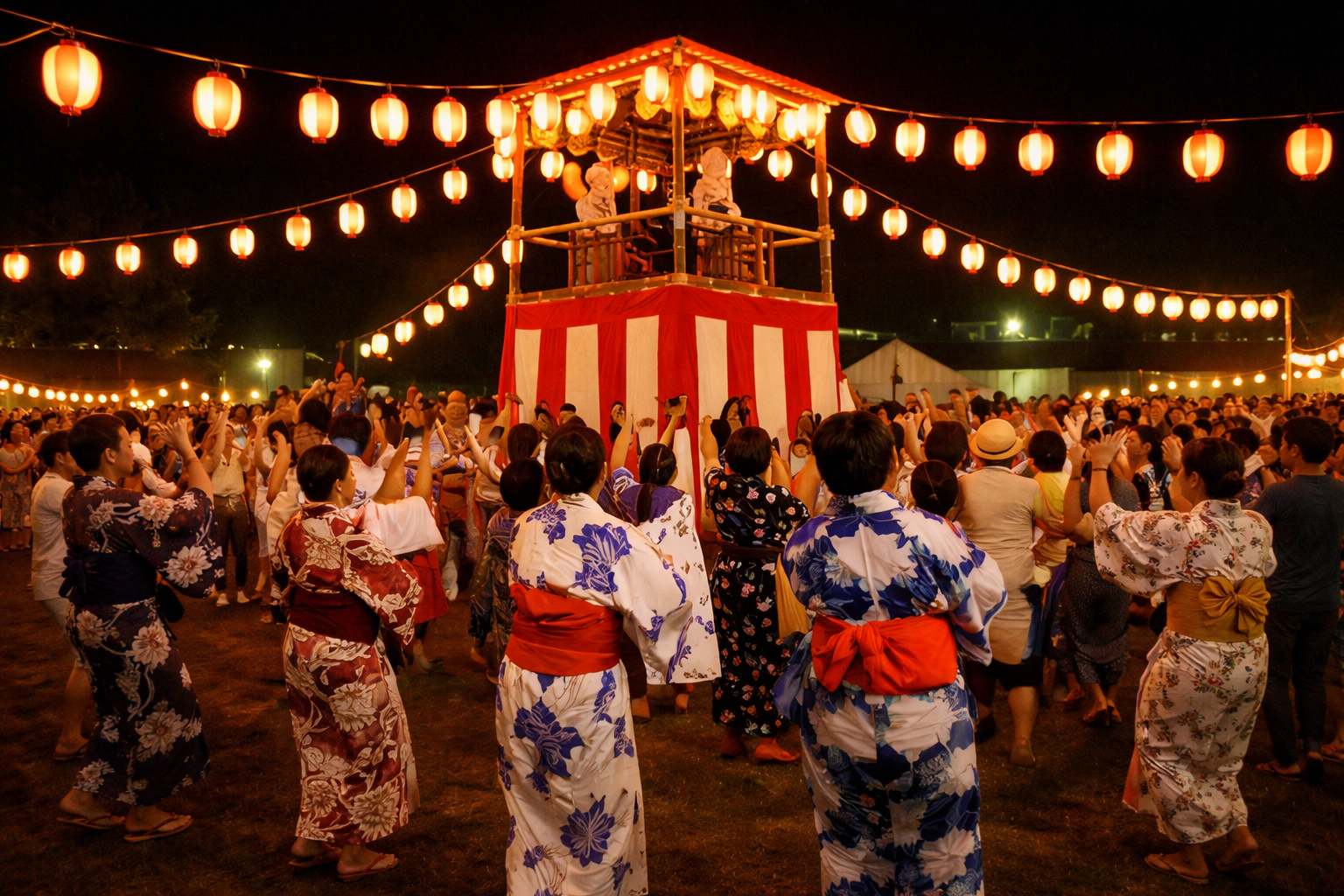
Among the best-known regional traditions are Tokushima’s Awa Odori and Gifu’s Gujo Odori. Awa Odori is a large Obon-season dance event, and Gujo Odori is especially well known for welcoming participation, including from beginners and visitors. :contentReference[oaicite:19]{index=19}
These dances are now major public attractions, but they began as community practices before they became tourism icons. They were “dance together” cultures before they became “watch this” events. :contentReference[oaicite:20]{index=20}
Later nightlife strengthens individual expression.
But at the root of Japanese dance is often the feeling of entering the same circle together.
Bon Odori and clubs are obviously very different. Their music, ritual meaning, clothing, and social purpose are not the same. And yet, at a deeper level, both involve bodies gathering at night, submitting to repeated rhythm, and creating temporary social unity in shared space.
That is one of the interesting ideas behind clubs.co.jp: Japanese nightlife did not appear from nowhere. Much older communal dance sensibilities kept flowing underneath it.
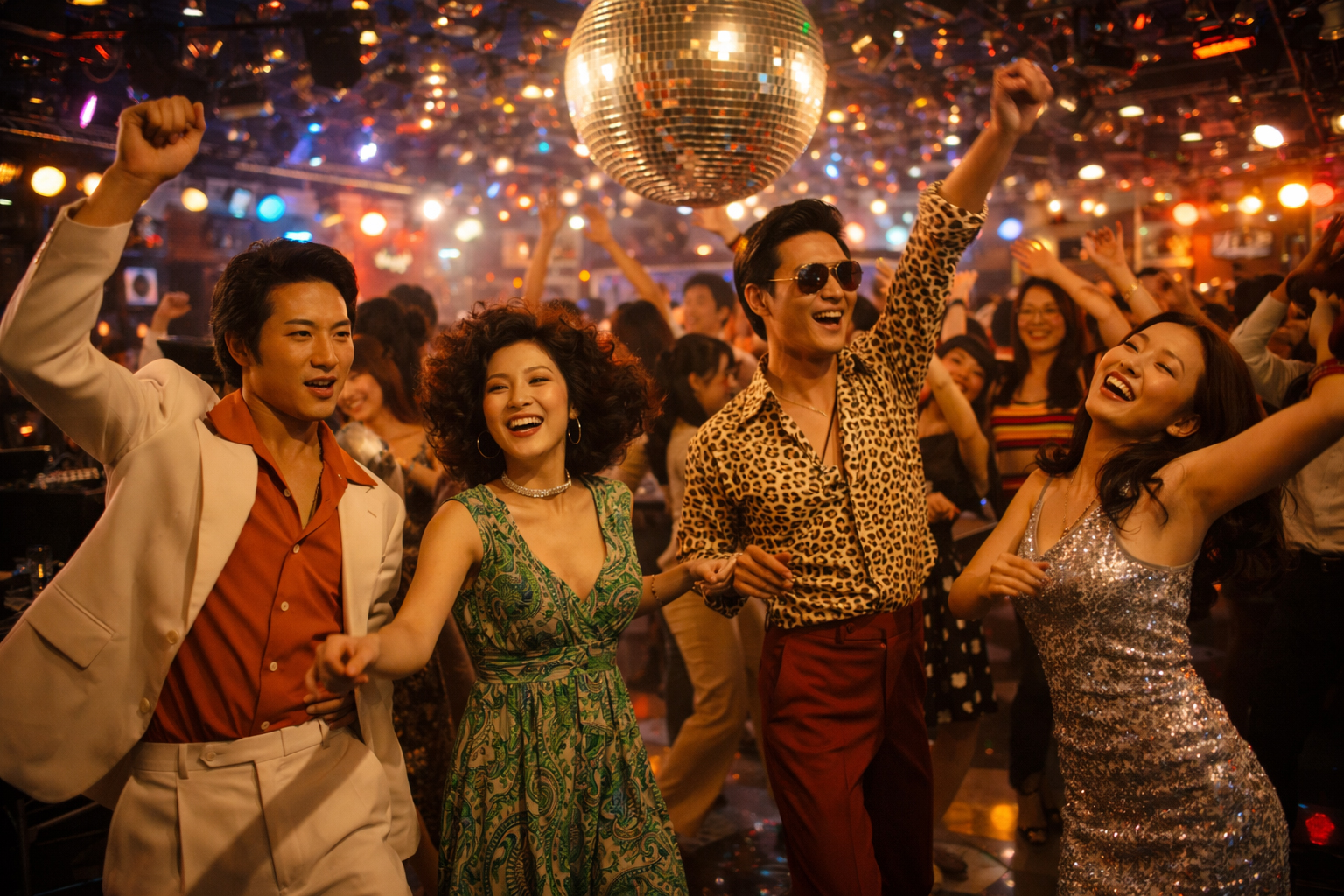
The sense of sharing floor space at night survives in altered form in later nightlife.

Dancing gradually moved from communal circles into urban floors, but did not lose all continuity.
Bon Odori and folk dance are not only beautiful old traditions kept alive for summer. They preserve how people in Japan gathered at night, aligned their bodies, and lived the seasons together.
clubs.co.jp wants to preserve them not as a totally separate world from later nightlife, but as one of the first great circles in the longer history of dancing in Japan.
How communal dance gave way to urban listening rooms and social movement spaces.
How shared-circle dance gradually transformed into brighter floor culture and urban display.
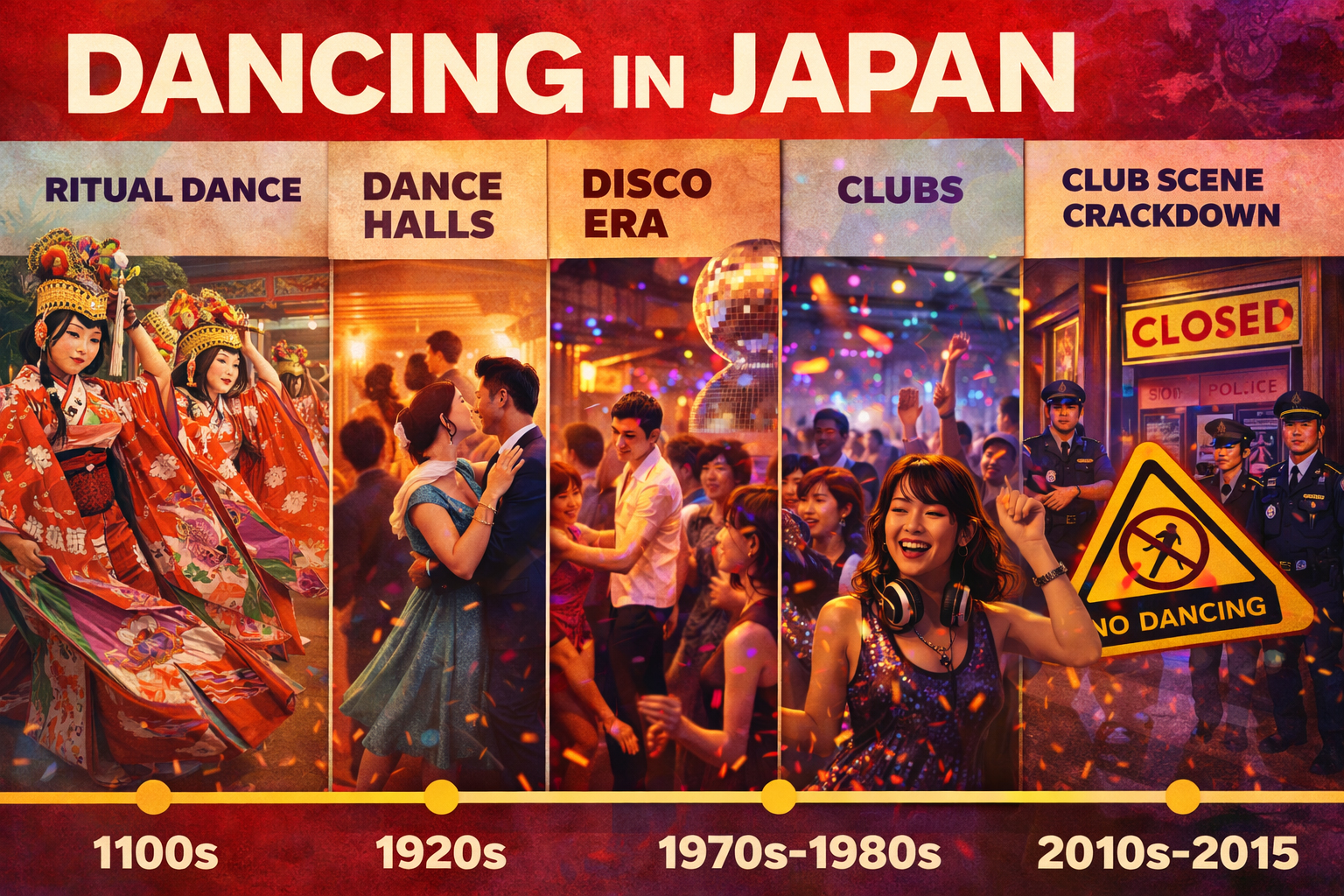
Follow the wider arc from ritual dance to clubs, regulation, and reform in Japan.