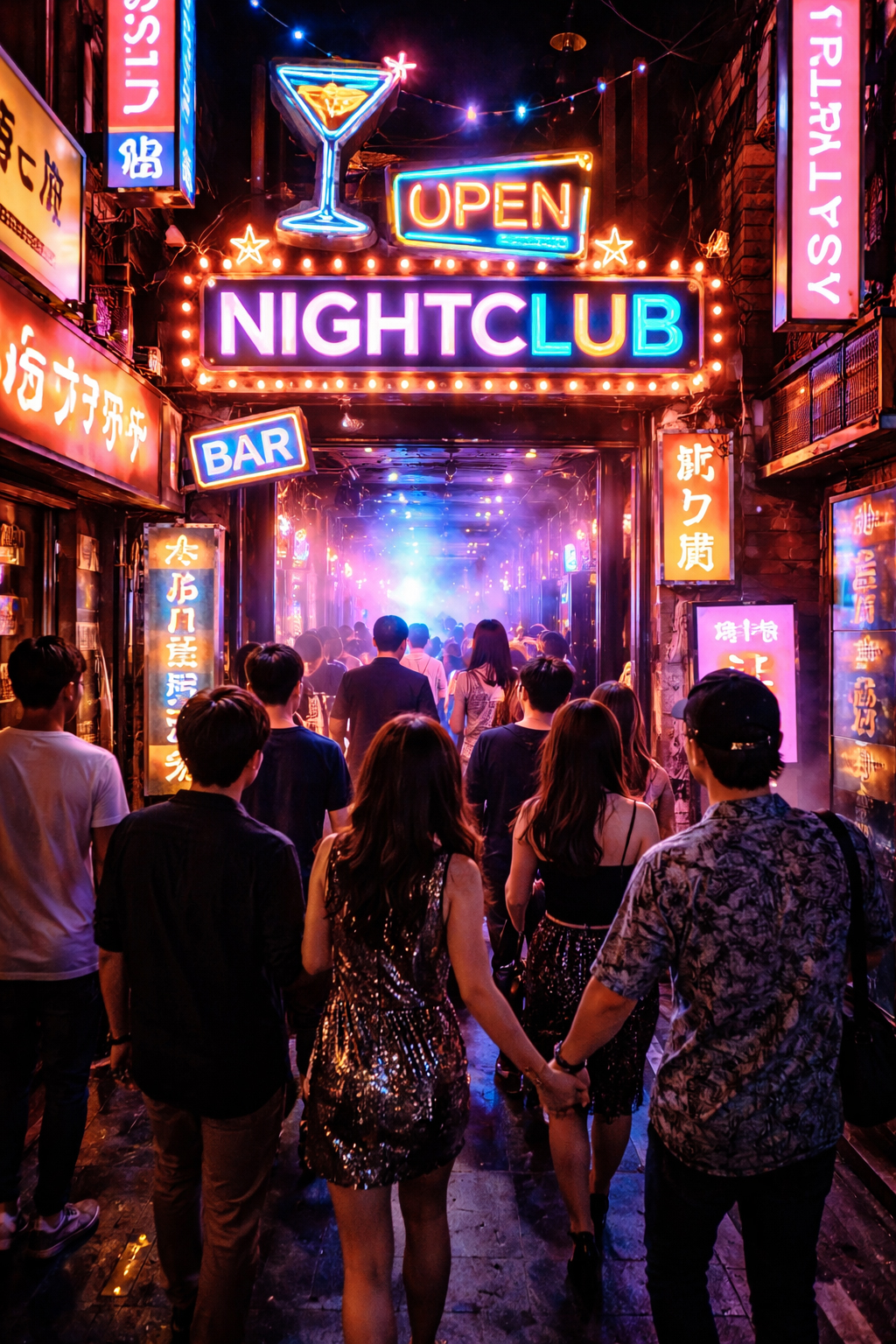
Tokyo
Tokyo Nightlife Beyond Clubs
Thinking about Tokyo nights through bars, live houses, streets, and chance encounters as well as clubs.

Nightlife is not made of music alone. It is also made of clothes, hair, shoes, posture, entrances, light, and the way a city teaches people to carry themselves after dark.
When people talk about nightlife, they often rush toward music, venue names, or law. But when you actually step into a nightlife district, the first thing you feel is often visual and physical. What people are wearing. How they stand outside a doorway. What kind of shoes they chose. How neon changes the surface of cloth, skin, glass, and metal. City energy first appears as appearance.
In Tokyo, and especially in places like Roppongi, that effect is intense. The night does not begin only once you are inside the venue. It has already started on the street. That is why nightlife fashion is not merely clothing. It is part of how a city performs itself.
At night, clothing is never just fabric.
It becomes mood, speed, and the visible shape of confidence.
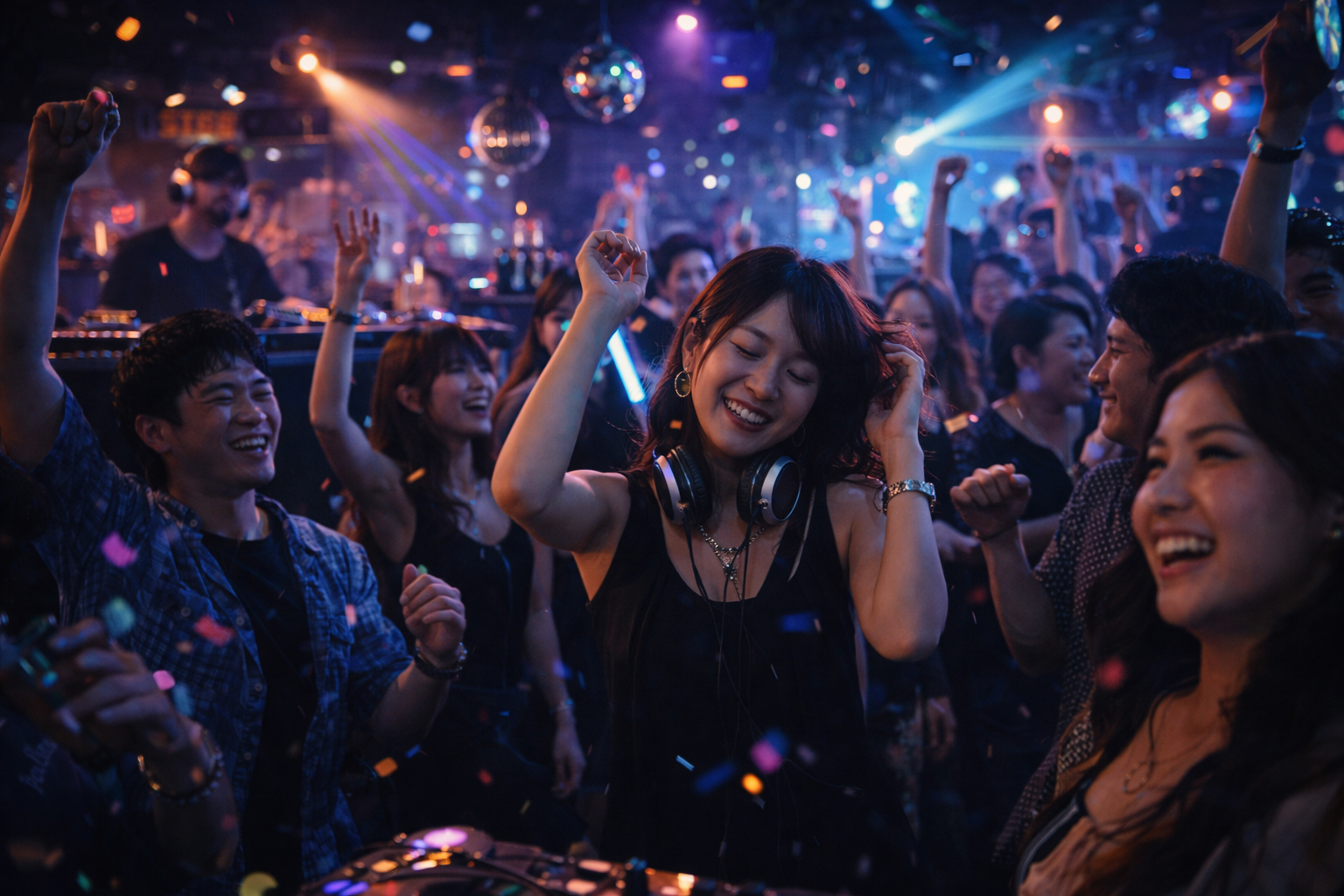
People often describe nightlife style as dressing to stand out. That is true, but incomplete. Nightlife clothing also signals how someone intends to move through the city. Are they going to dance? Are they making an entrance? Are they moving between multiple places? Are they meeting someone specific? Are they leaning toward elegance, danger, control, softness, or release? Those intentions often appear before anyone says a word.
In Tokyo at night, black, gloss, narrow silhouettes, sharp footwear, metallic accents, or carefully chosen understatement all operate as ways of reading and shaping the room. Clothes are not only decoration. They are a way of adjusting one’s relationship to the city.
In nightlife culture, the performance does not start inside. It begins in the approach, the posture, and the threshold.
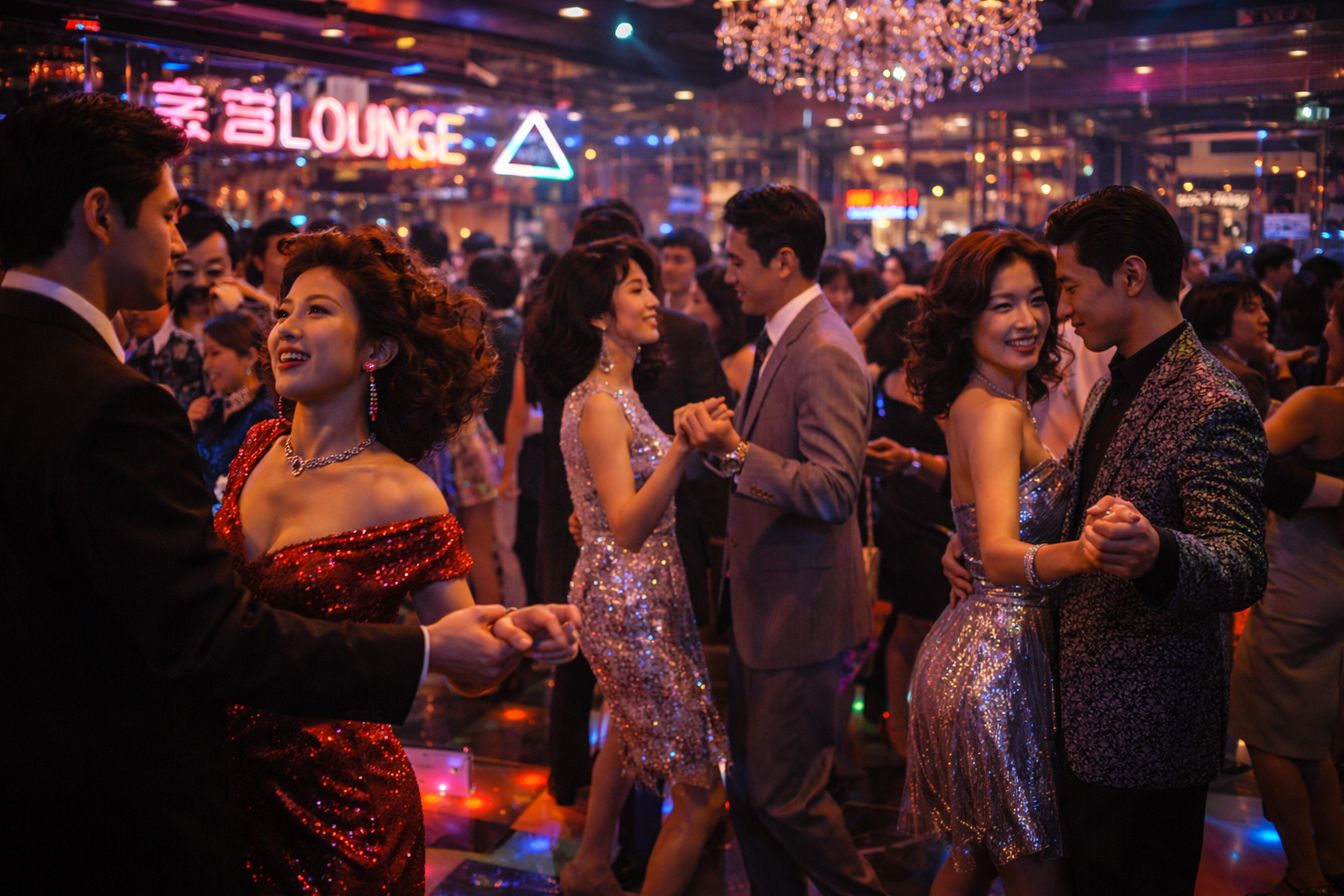
Bubble-era excess and modern sleek restraint look different, but both express urban self-confidence.
A perfectly ordinary outfit in daylight can become something else under nightlife lighting. Black deepens. Skin warms. Glass and mirrors become cinematic. Metallic surfaces flare up. This is why nightlife style is not just daytime fashion extended later into the evening. The light conditions are fundamentally different.
Tokyo magnifies that transformation. Signs, headlights, reflected surfaces, humid air, wet pavement, doorway lighting, colored interior spill, and moving LEDs all change how a person appears. The city is not just a background to nightlife energy. It actively generates it.
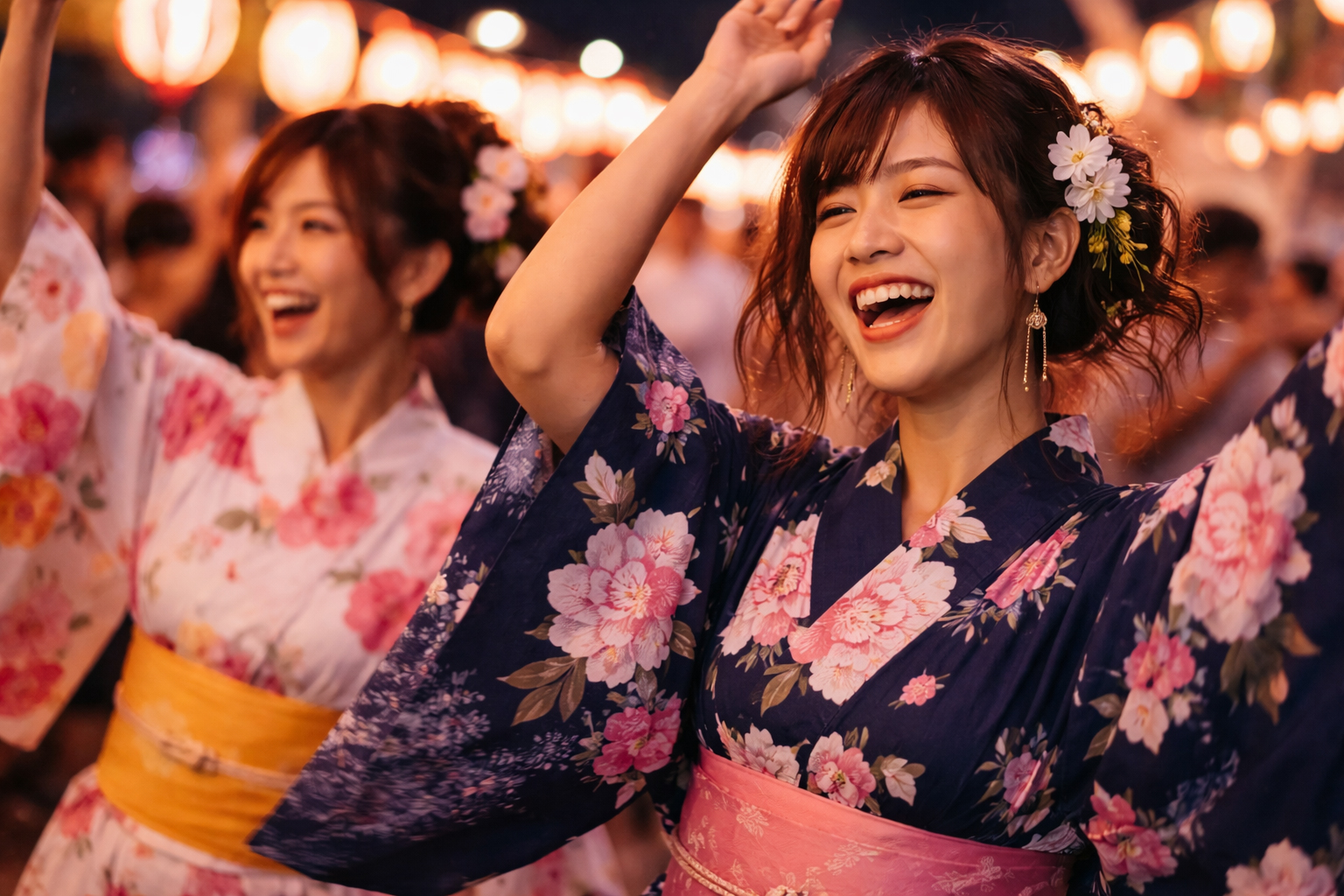
One of the pleasures of Japan is that nightlife style does not belong only to modern clubs. Summer festival yukata has its own kind of evening charge. It is seasonal, social, ceremonial, relaxed, and still deeply visual. It changes how the body moves and how people enter shared night space.
In that sense, there is a real line connecting Bon Odori circles and modern nightlife scenes. They belong to different worlds, but both involve dressing to enter a collective nighttime atmosphere. Japanese nightlife fashion lives across both the traditional and the urban-modern.
Yukata and clubwear are very different, but both are ways of dressing to step into the night.
To talk about nightlife fashion, you also have to talk about movement. A great outfit can still miss the room if the person wearing it is off-tempo. On the other hand, someone dressed simply can become part of the atmosphere through posture, confidence, pace, and intention. Nightlife is read not only through clothes but through how the clothes move.
Different Tokyo districts have different rhythms. Roppongi often invites a slightly larger, more performative way of entering the night. Ebisu allows more softness and ease. Shibuya pushes youth, experimentation, and reaction speed closer to the surface. The bond between fashion and city energy changes from district to district.
The look, the stance, and the arrival all carry a little more scale in Roppongi.
Live houses, bars, and lower-key elegance create a more relaxed form of nighttime style.
Trend sensitivity, speed, and street instincts often shape how the night looks and feels.
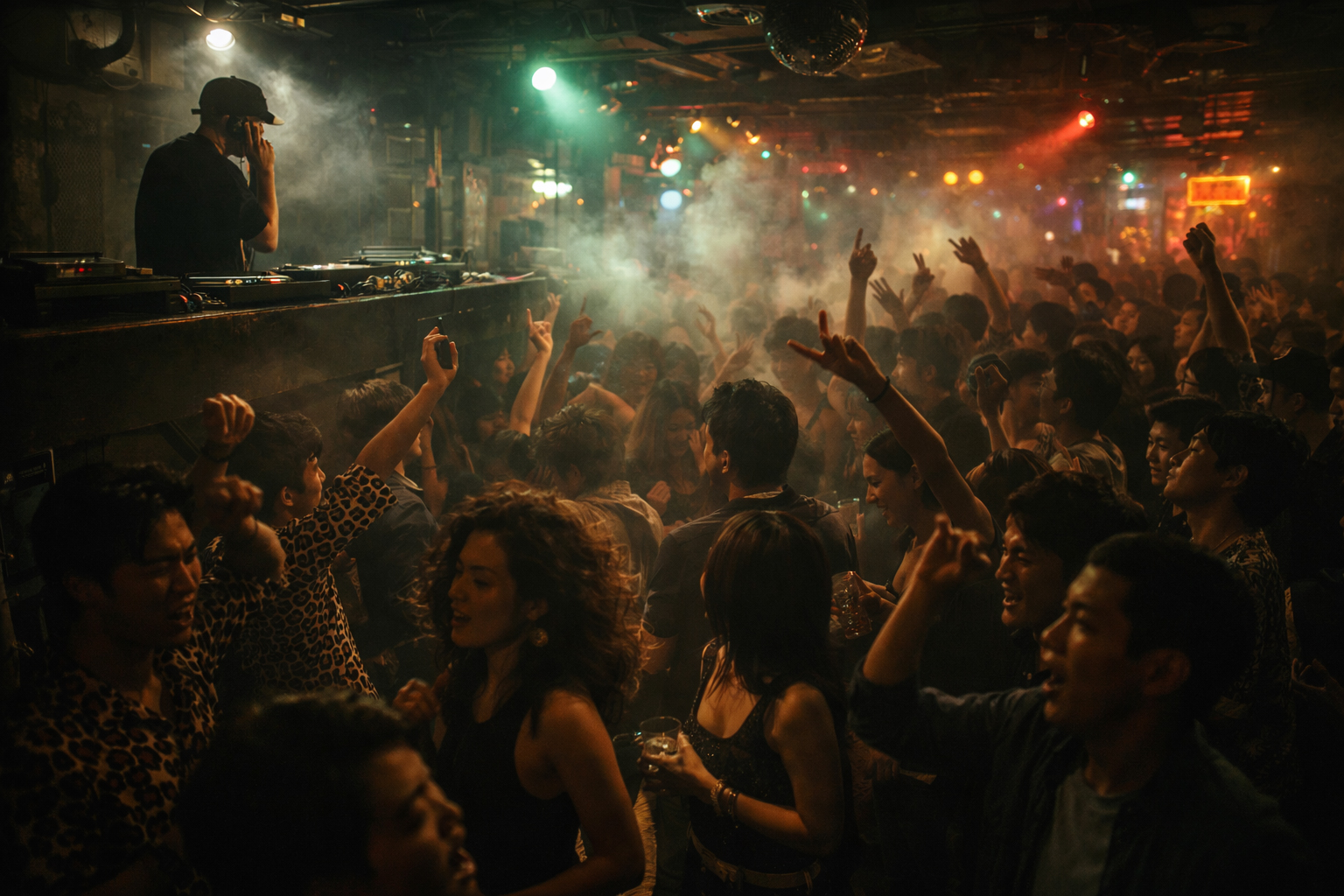
Looking back on 1990s Roppongi, fashion had already moved beyond individual self-styling. Entire buildings and stretches of the district seemed to glow with youth, noise, ambition, flirtation, and social motion. Japanese, foreign, creative, corporate, wild, polished — everyone got swept into overlapping nighttime currents.
In that environment, clothing was not simply about dressing up. It was a way of sharpening one’s outline to match the heat of the city.
In a truly hot nightlife district, people do not merely decorate the city.
The city makes people glow.
Music, alcohol, venues, and law are not enough by themselves. Fashion enters. Light enters. Posture enters. Shared rhythm enters. The district’s own visual logic enters. Only then does a nightlife scene become a real culture.
Tokyo is compelling at night because of that total effect. To get dressed and step outside is already to participate in the city’s nightlife language.
Thinking about Tokyo nights through bars, live houses, streets, and chance encounters as well as clubs.
The beauty of traditional nighttime dress and communal dancing in Japan.
A lived memoir of bubble-era Tokyo nights at the level of sensation, temperature, and urban style.