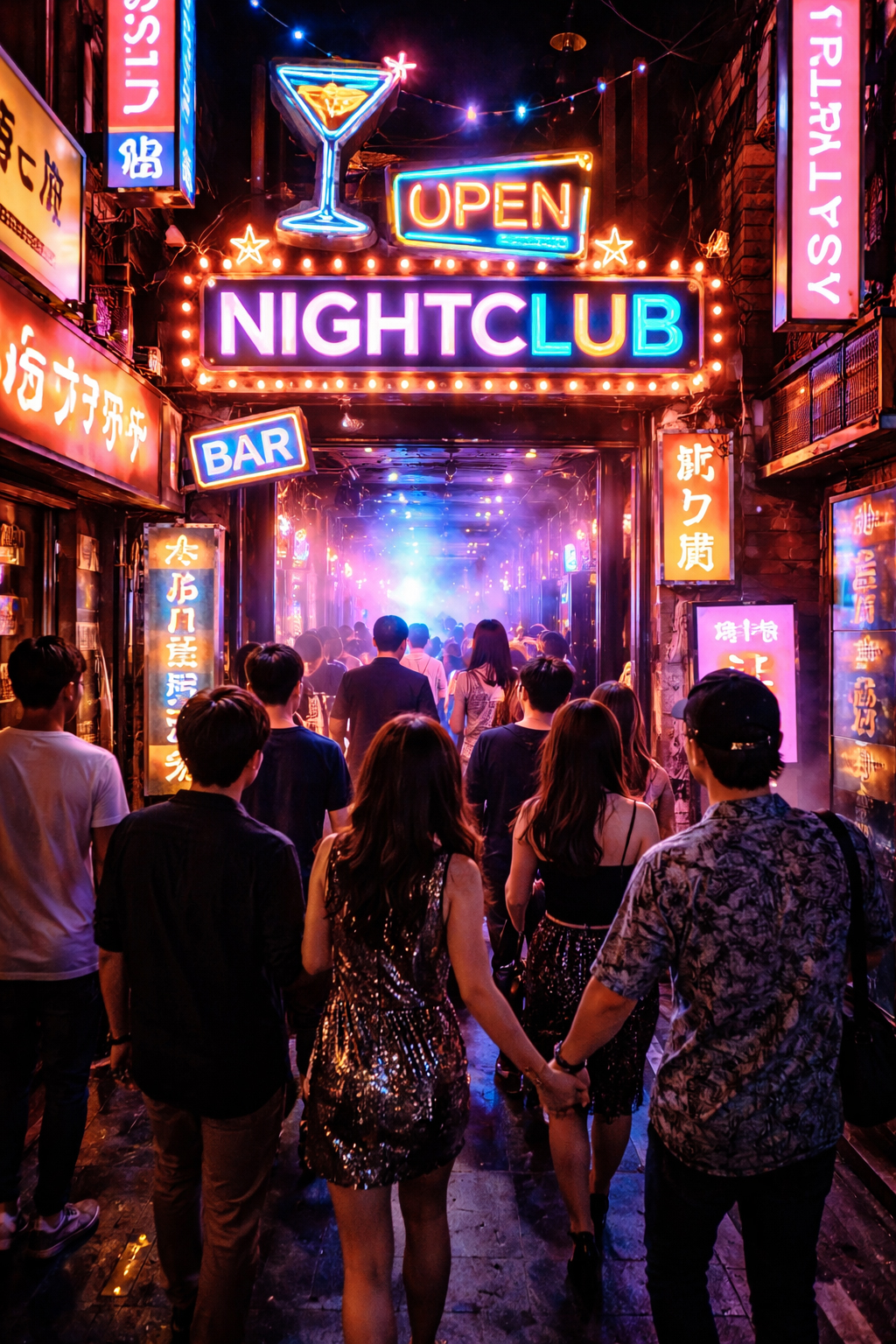
Style
Nightlife Fashion and City Energy
How clothing, posture, neon, and district atmosphere shape the visual life of Tokyo at night.

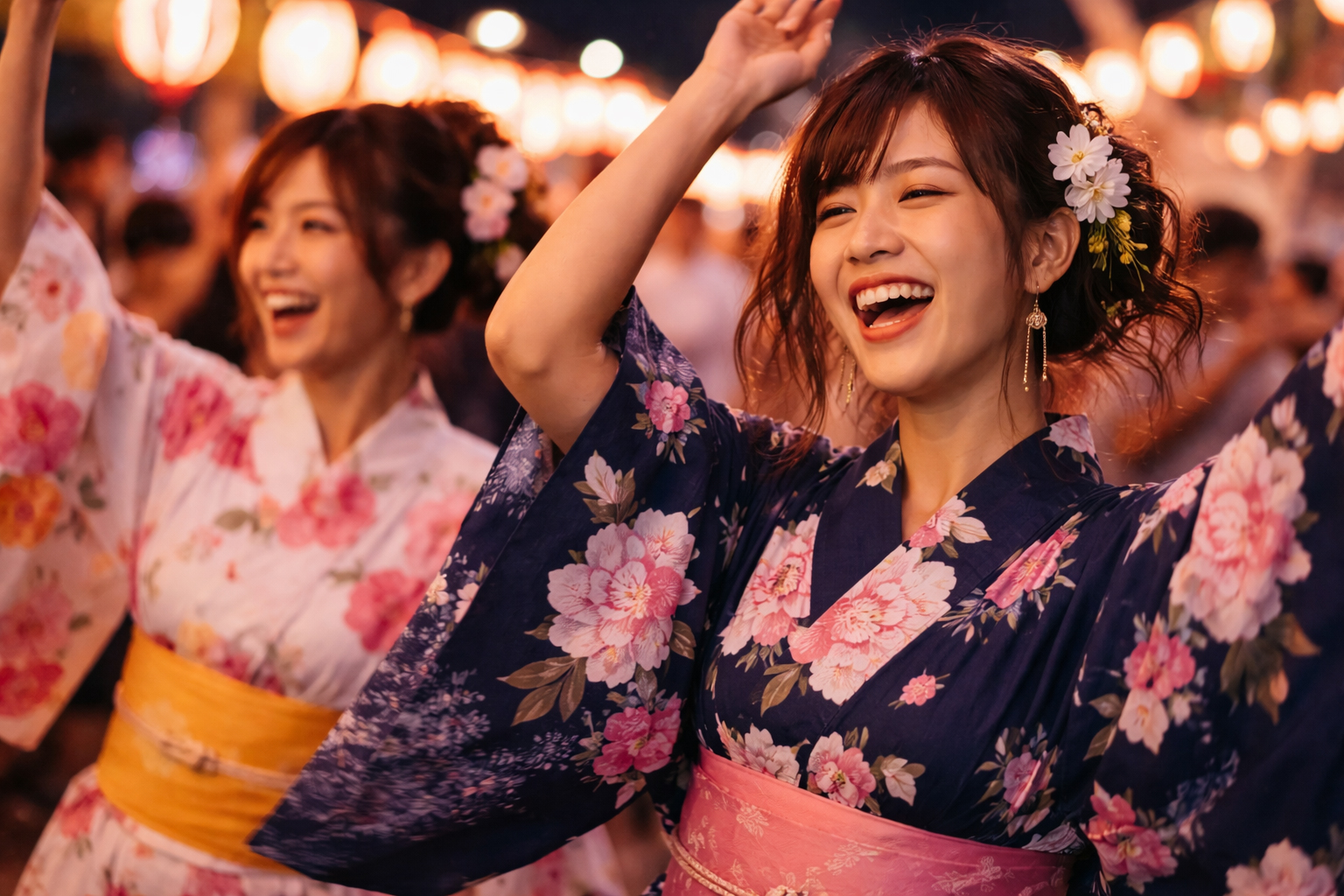
Japanese dance culture is not only clubs, discos, and nightlife districts. It also lives in summer festival circles, lantern light, yukata, Bon Odori, and the shared pleasure of moving together at night.
If you want to understand Japanese dance culture, club history alone is not enough. There is a deeper and older nighttime dance world that continues every summer: Bon Odori at festivals. There the lighting is not strobe but lantern glow, the DJ booth becomes a yagura tower, and the dress code becomes yukata.
And yet this world is not entirely separate from nightlife culture. In both cases, people gather at night, move to sound, and enter a shared atmosphere through the body. What changes is the speed, the texture, and the social meaning of the space.
Bon Odori may be the gentlest dance floor in Japan.
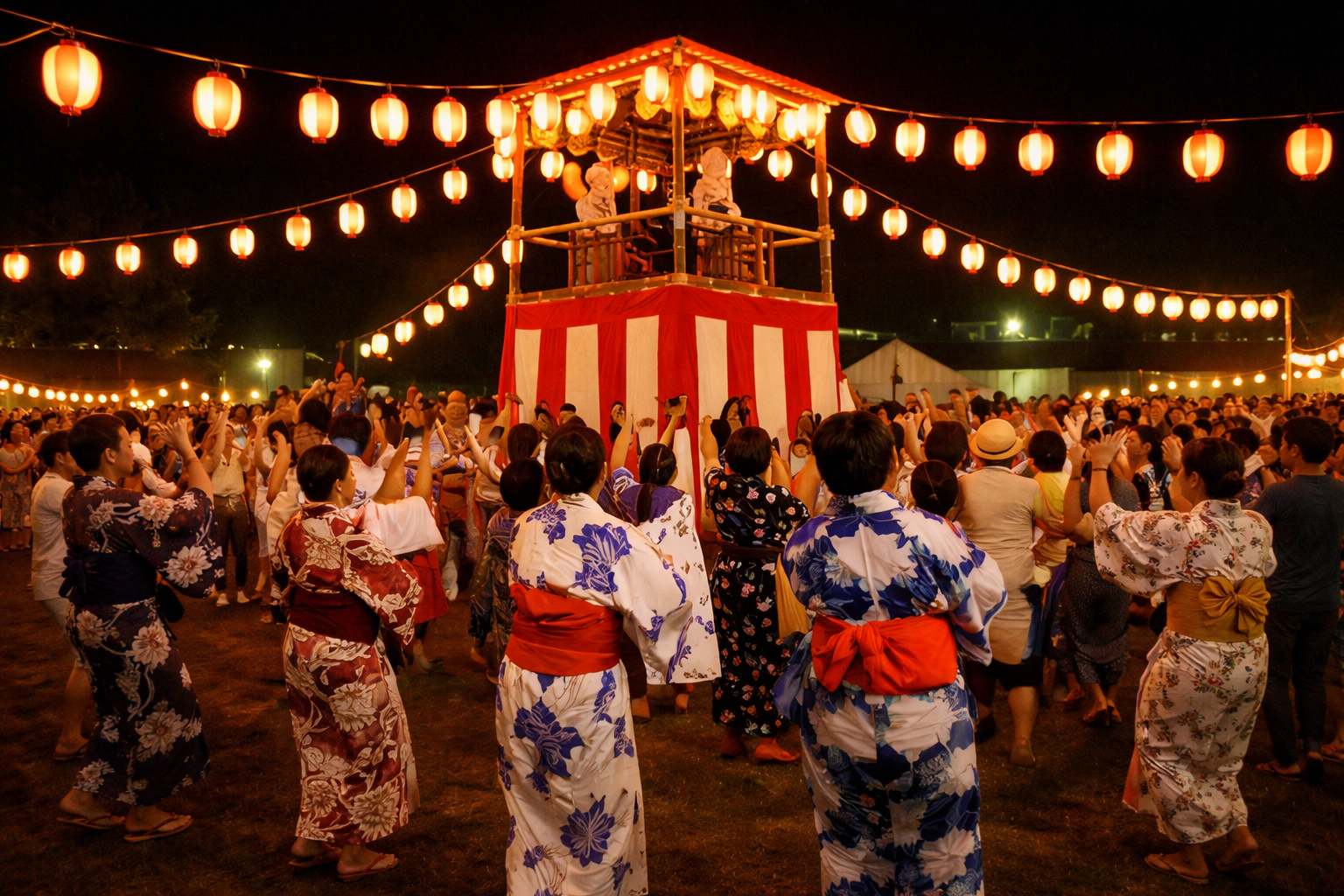
Yukata is not simply a traditional summer garment. It is also a way of crossing into the mood of a Japanese summer evening. To go to a festival in everyday clothes is one thing. To put on yukata is another. It changes how you walk, how you stand, how you carry your hands, how you hear the clack of geta, and how you feel your own presence in the night air.
If clubwear adjusts the body to urban speed, yukata softens the body into the summer night. It does not only look beautiful. It changes behavior, and that is part of its meaning.
Yukata subtly changes movement, posture, and pace, making it easier to enter the shared mood of the festival night.
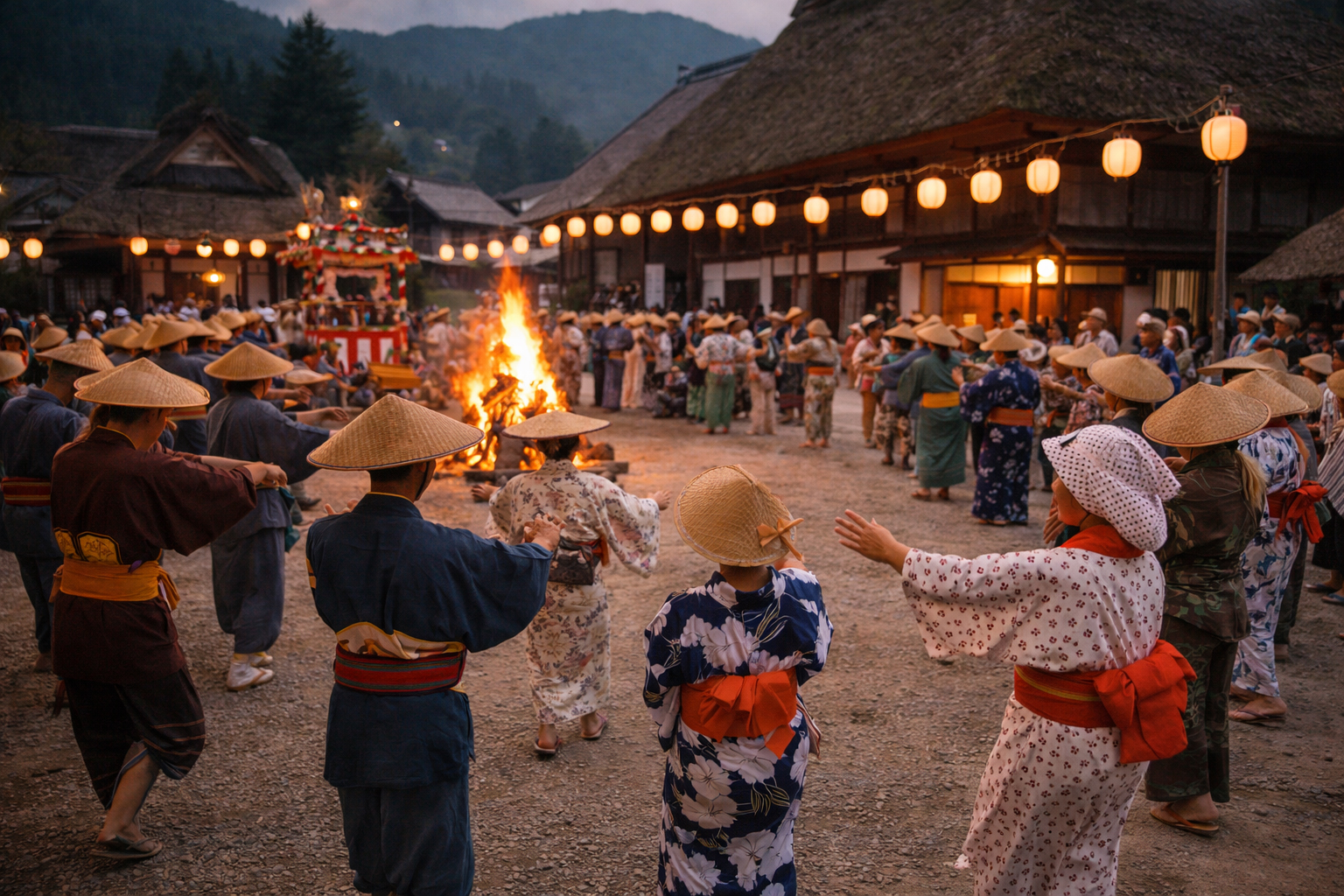
Bon Odori is less about display than participation. Its beauty comes from joining the circle.
Bon Odori does not usually chase the explosive high of a club at its peak. Instead, it uses repetition. The same movements return. The same rhythms cycle. The same circle holds together. That repetition softens time, draws strangers into a common pulse, and turns the festival night into something collective rather than competitive.
This reveals an important aspect of Japanese night culture. No single person needs to dominate the floor. The circle itself becomes the protagonist. Instead of fighting for the center, people discover that they already belong inside the shape.
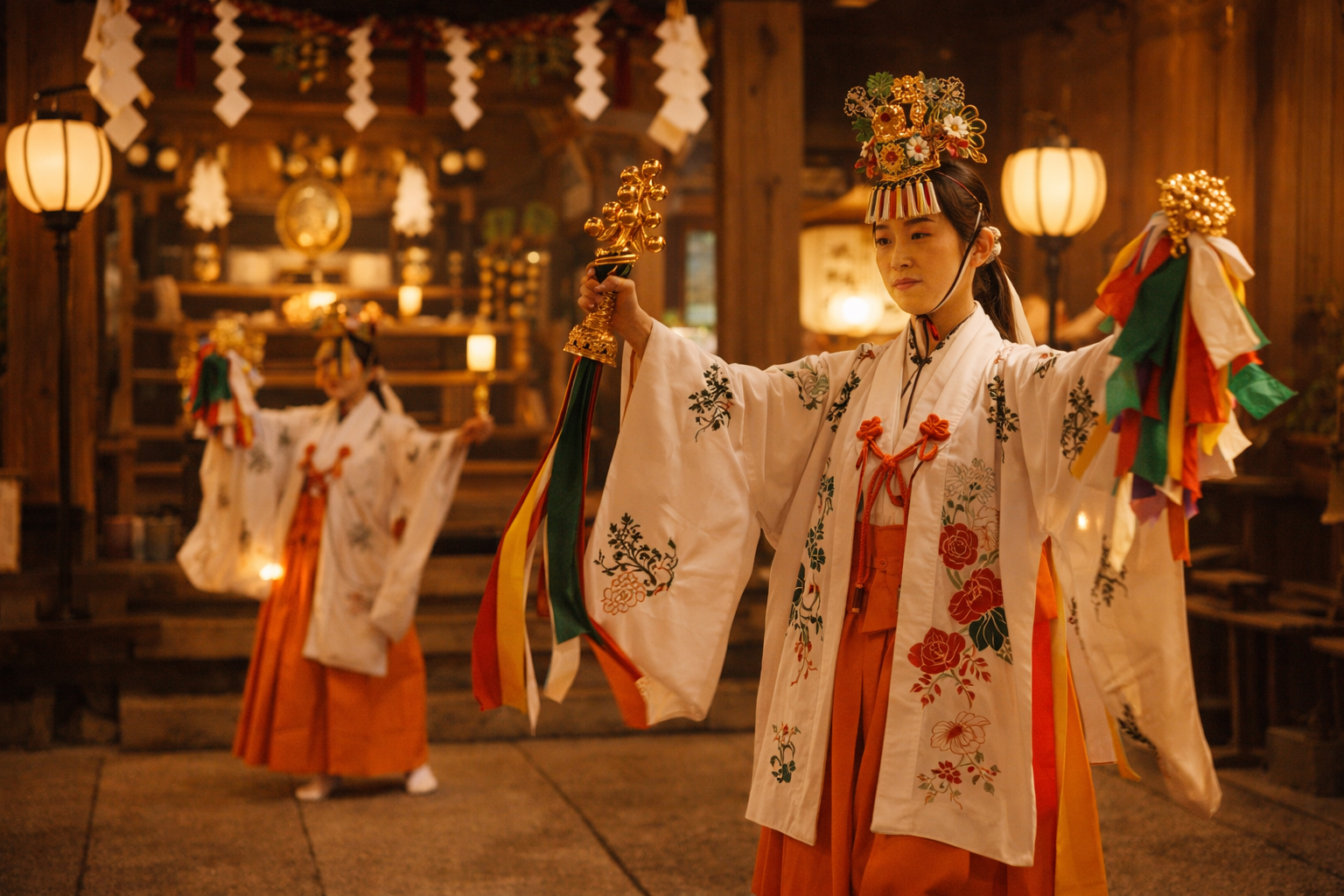
When you watch festival dancing, it becomes clear that Japanese dance culture is not only entertainment. It is also connected to prayer, seasonality, local memory, and communal feeling. Kagura, folk dance, Bon Odori, and other forms all carry the older Japanese idea of gathering at night, moving together, and sharing time through ritualized motion.
That is why it makes sense for clubs.co.jp to include this world. Club history and festival dance may seem far apart, but both belong to the long story of how bodies move together in Japanese night culture.
A festival circle and a club floor are very different, but both begin when people gather at night and let rhythm organize the body.
Club lighting often sharpens intensity. Lantern light does something else. It softens edges, warms faces, and turns public space into something more intimate. Add humid summer air, a little sweat, distant drums, and the familiar repetition of festival songs, and the whole atmosphere becomes welcoming rather than confrontational.
That is one reason yukata and lantern light belong together so naturally. Both make the night rounder, calmer, and more beautiful without removing its excitement.
Festival light tends to invite people into the scene instead of daring them to conquer it.
Repeated movements and songs make summer nights feel longer, calmer, and more communal.
Bon Odori offers one of the most accessible ways to step into a shared Japanese night culture.
Tokyo nightlife cannot be reduced to neon and clubs. In summer, festival time enters the city as well. Office workers, students, families, and visitors all move toward matsuri spaces in yukata. Urban speed loosens a little. Another rhythm comes forward.
This double life is part of what makes Japan so interesting. It is intensely modern, yet older circles of dance continue to survive naturally within the same national night culture. That gives Japanese nightlife unusual depth.
Summer festivals show a quieter, deeper version of Japanese nightlife.
clubs.co.jp is not only about law, Roppongi, or club rooms. It is also about how people in Japan gather at night, move together, and become more beautiful through shared atmosphere. In that sense, yukata, festivals, and summer dancing are essential.
To understand Japanese nights, you have to look at more than neon. You have to look at lanterns. You have to hear more than amplified bass. You have to hear repeated festival song. And you have to see clothing not only as fashion, but as a way of entering the night itself.
How clothing, posture, neon, and district atmosphere shape the visual life of Tokyo at night.
A historical look at communal Japanese dance traditions tied to season, place, and community.
The deeper spiritual and ceremonial roots behind Japanese dance at night.