Style
Nightlife Fashion and City Energy
Reading the night through clothing, neon, posture, and urban mood.

Japanese nightlife is not made of clubs alone. It also lives in live houses, bars, music taverns, lounges, listening rooms, and the smaller spaces where a room unexpectedly turns into somewhere people want to move.
When people think about nightlife, clubs often dominate the picture. But in reality, Japanese nights are built out of many different kinds of rooms. Some nights belong to live music. Some belong to long conversations at a bar. Some begin quietly and then, when the right track comes on, suddenly turn into spaces where everybody wants to move.
That is why “dance space” should not be limited to venues officially labeled as clubs. A room becomes a dance space when people, sound, distance, lighting, alcohol, and mood align. Even a small room can become a real nightlife room in that sense.
A room is not defined only by its business category.
It is defined by what music and people make possible inside it.
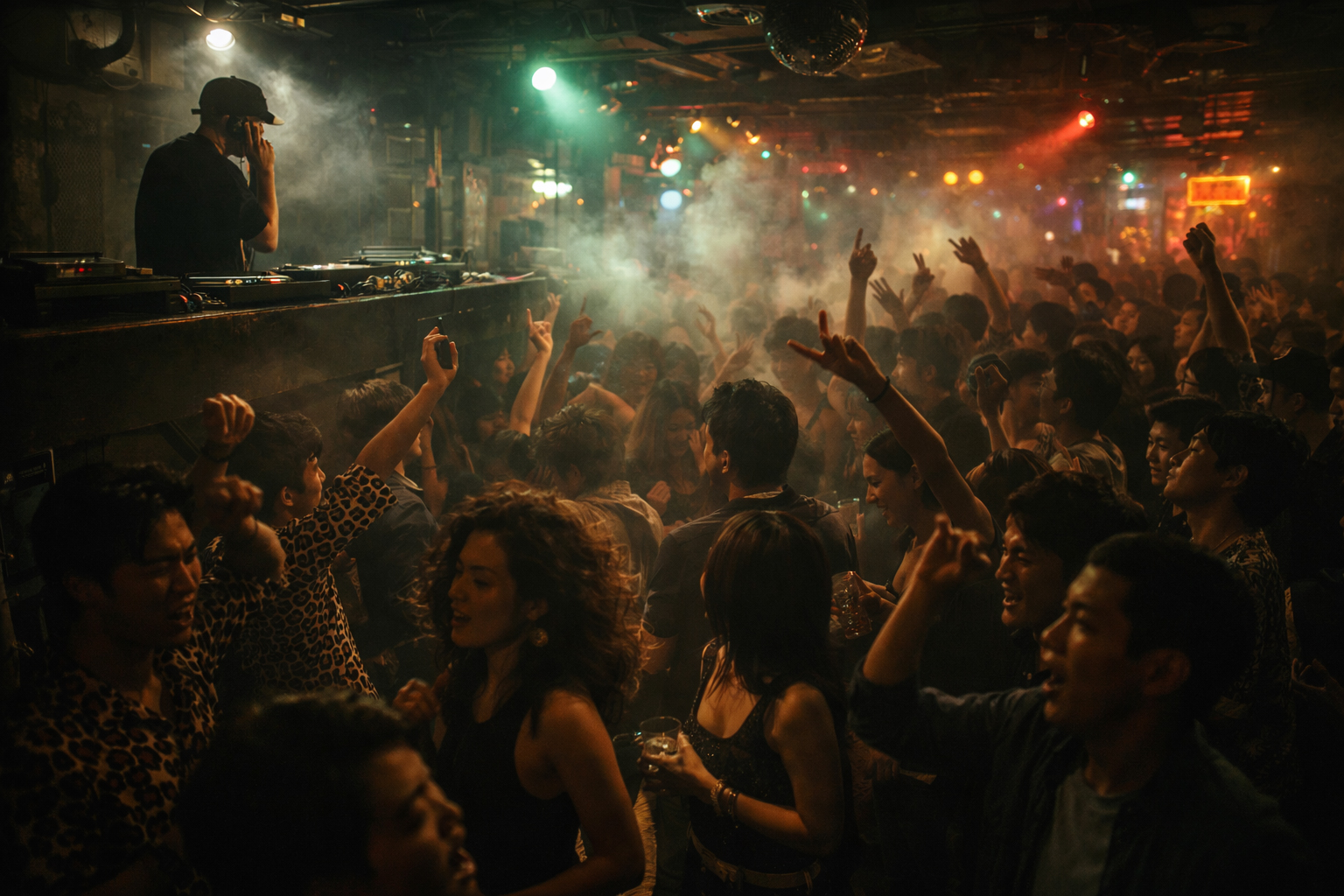
Clubs are central, of course. They are designed around rhythm, light, movement, and bodily response. But some of the strongest memories in Japanese nightlife come from rooms that are not large, formal dance venues at all.
In Japan, live houses, bars, music rooms, and neighborhood spots often hold just as much atmosphere as more explicit dance venues. The room may not begin the night as a dance floor, but with the right music and the right people, it can become one.
Light, sound, and layout are designed from the start to organize the body through rhythm.
But conversation can easily tip into energy, and one song can change the whole social temperature.
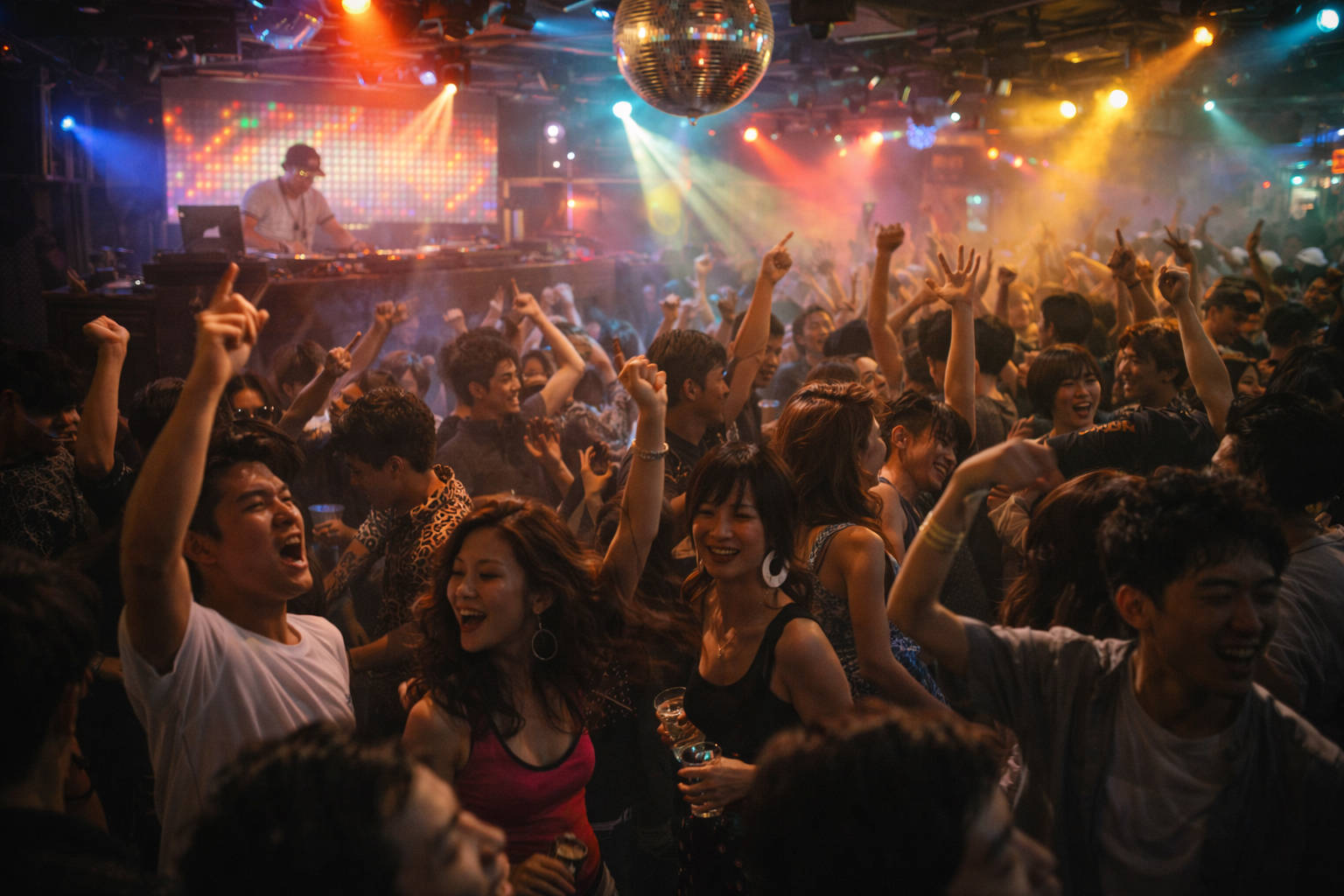
The closeness of performer and audience creates pressure, warmth, and collective physical response.
The power of a live house lies in density. Drums hit differently. Bass feels physical. The singer’s voice moves the air. Audience breath becomes part of the room. Even without using the word “dance,” bodies are already reacting — tapping, swaying, leaning, surging.
That makes live houses important to the story of nightlife culture. They are not always clubs, but they are absolutely rooms of movement. To understand Japanese nights, you have to understand that middle territory.
A bar is usually understood as a place for drinking and conversation. But the best bars always contain possibility. A different track comes on. The lighting settles into the right tone. The right mix of people arrives. What began as a quiet drinking room slowly becomes a room where the body starts to answer the music.
In these spaces, “dancing” is not a simple yes-or-no category. Posture changes. Hands move. Voices rise. Bodies loosen. Once sound begins to reorganize the room, the bar has become a kind of dance space, even if nobody announces it that way.
A good night can begin as a bar and end as a dance room.
Big clubs are spectacular and easy to remember. But the rooms that stay with people most deeply are often smaller: a live house a friend took you to, a bar with the right crowd, a music spot that suddenly felt perfect at the right hour.
The reason is intimacy. In smaller rooms, music and people sit closer together. Laughter happens at short range. Introductions happen naturally. A track chosen by one person can shift the whole room. That closeness is one of the enduring strengths of Japanese nightlife.
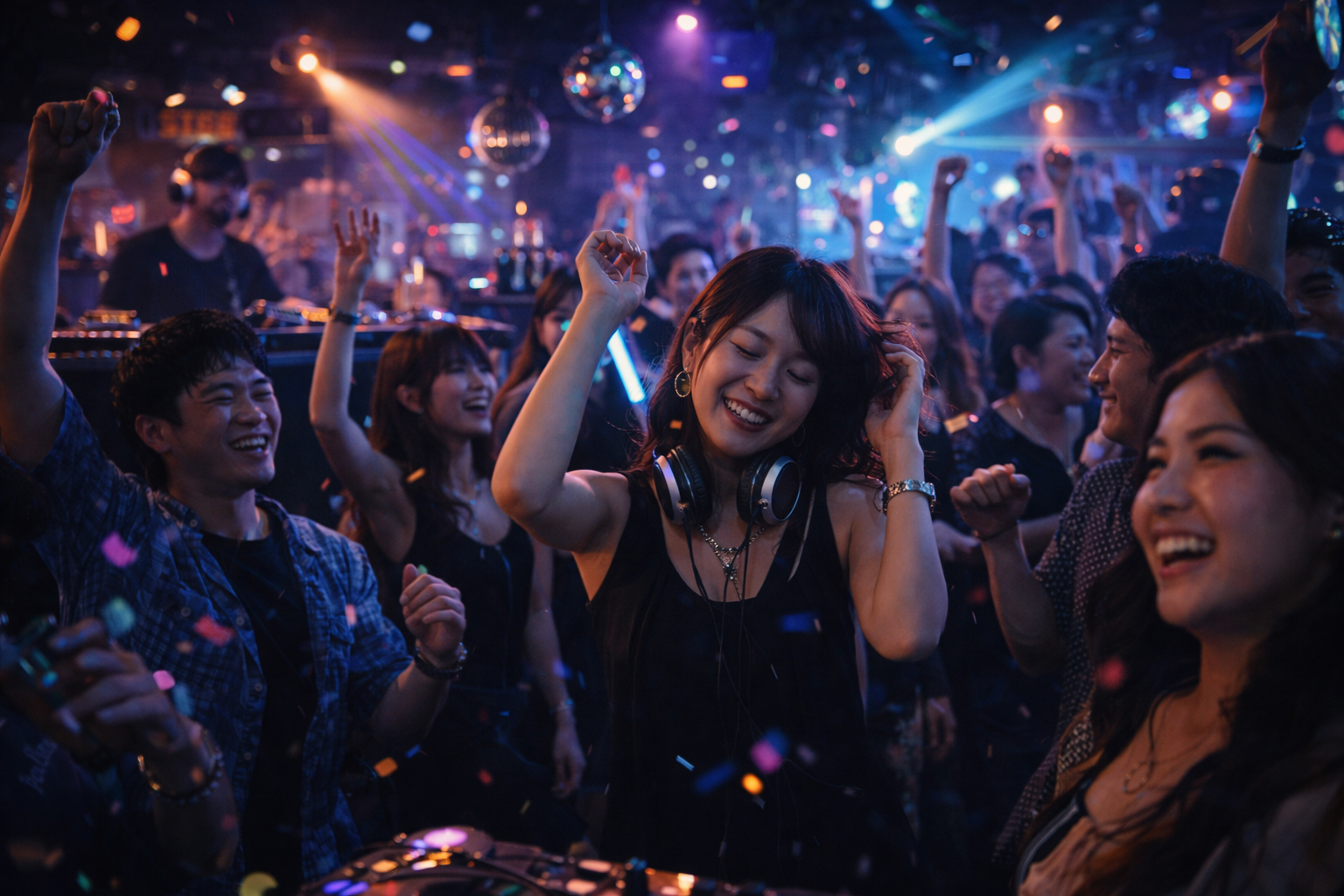
A room with good equipment still fails if the people do not connect. Human chemistry is what makes nightlife real.
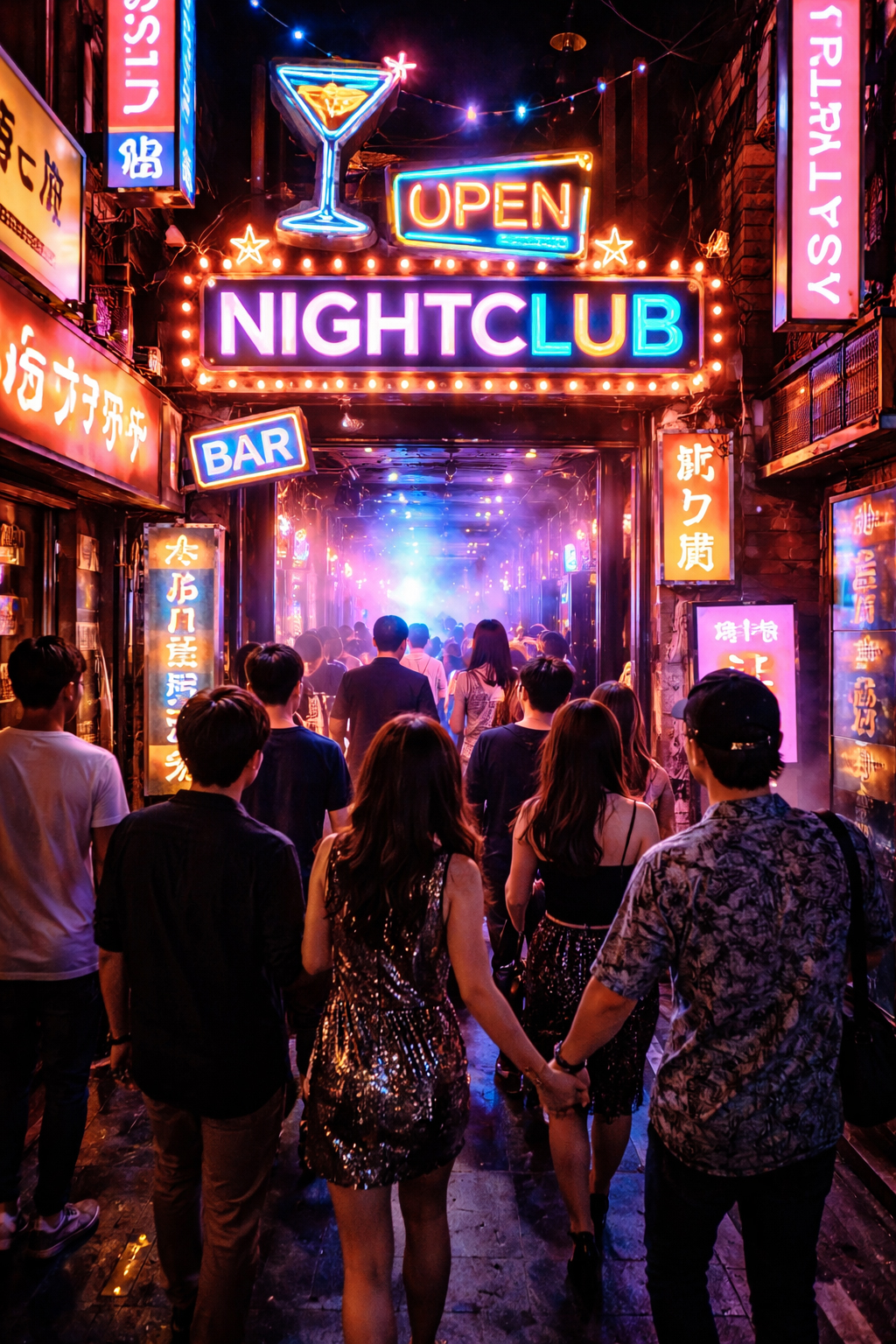
Before entering, you can already read tempo, crowd, mood, and intent from the threshold itself.
A friend-owned live house, a music bar with regulars, a place where the room itself feels welcoming: these venues offer something different from the large commercial club. They are less about display and more about atmosphere. Less about scale and more about quality of feeling.
These places are easy to overlook in broad nightlife history, but they matter deeply. The nights that make people come back are often supported not only by sound and lighting, but by the kindness, warmth, and ease of the people in the room.
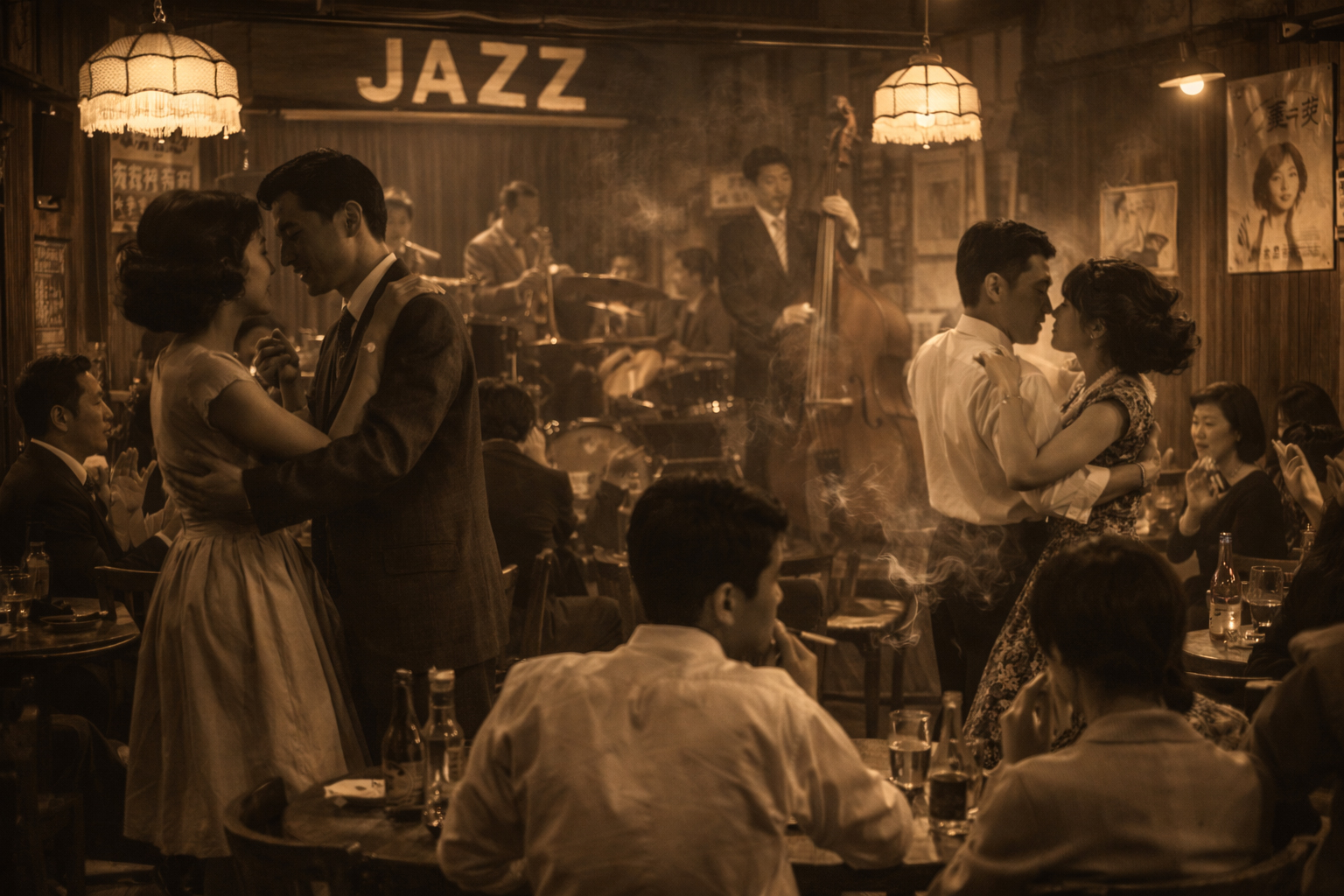
Japanese nightlife includes a parallel tradition of jazz cafes, music bars, listening rooms, live houses, discos, clubs, and standing bars. One of Japan’s distinct qualities is that the line between listening space and movement space has never been completely rigid.
That is why clubs.co.jp should care about these in-between rooms. The thickness of nightlife culture often lives exactly there.
Clubs are one center of the night.
But the night itself is much larger.
What survives is not the category. It is whether the room felt right. Was the music right? Were the people good? Did the conversation open? Did you want another drink? Did one song change the emotional direction of the whole evening? By those standards, live houses and bars can matter as much as clubs — and sometimes more.
To understand Japanese nightlife is also to understand how many kinds of good rooms Japan has created.
Reading the night through clothing, neon, posture, and urban mood.
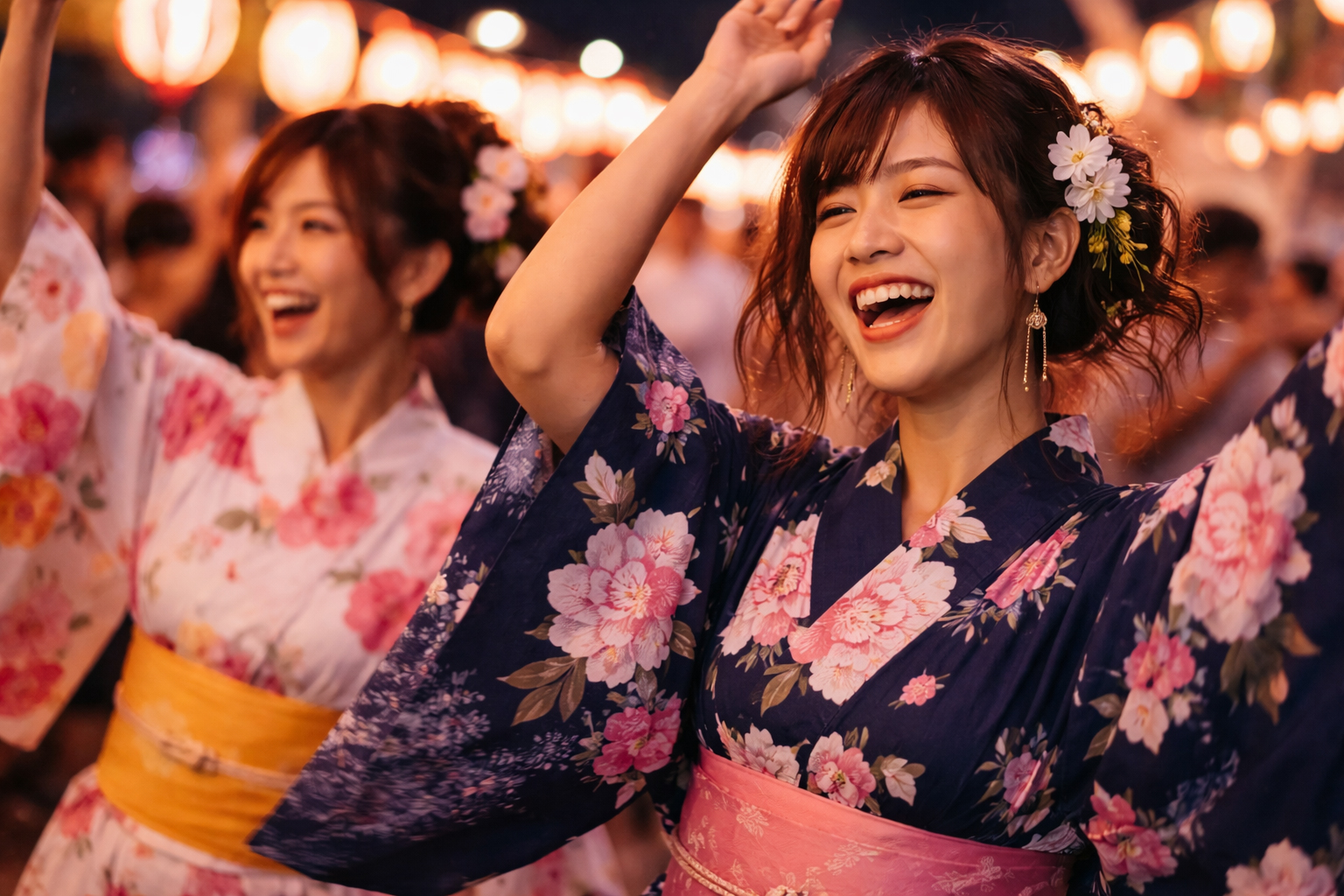
A softer, older, communal side of Japanese night culture beyond bars and clubs.
Nightlife culture is shaped not only by venues, but by the people who animate them.