Rooms
Live Houses, Bars, and Dance Spaces
A closer look at how non-club rooms help create Japanese nightlife culture.

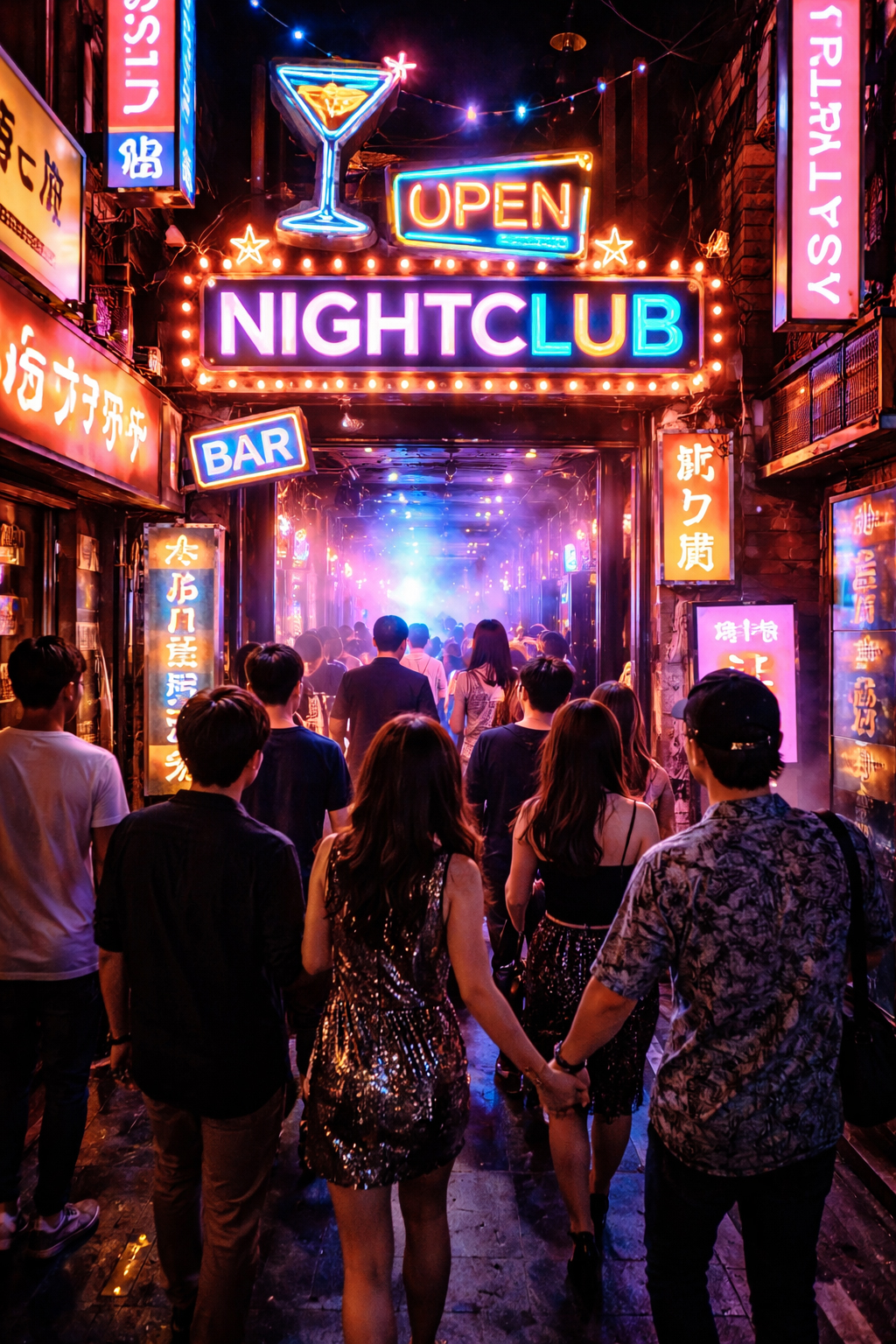
If you explain Tokyo nightlife only through clubs, you miss the most interesting part. The real night also lives in bars, live houses, festival spaces, sidewalks, late-night transitions, and the flow of people moving from room to room across the city.
Tokyo nights do not begin and end inside a single room. In fact, the more “Tokyo” a night feels, the more likely it is to move: from one place to another, from one mood to another, from the inside of a venue back out into the street and then into another venue again. That movement is part of the nightlife itself.
Clubs matter, of course. But the city’s appeal also lives before the club, after the club, and on the nights that never touch a club at all. Taxi lines, convenience store conversations, long bar talks, the afterglow of a live house, lantern-lit festival space, the air of the sidewalk near dawn. All of that belongs to Tokyo nightlife.
Tokyo nightlife does not start and stop at the door.
The city itself becomes the circuit of the night.
In some cities, you go to the place, and the night happens there. In Tokyo, the identity of a night often depends less on where you went than on how the night flowed. The first bar. The stop in between. The room someone else pulled you into. The conversation that made you change course. The late shift after the train stopped running. Those transitions are often where the city becomes itself.
Roppongi is especially strong in this respect. Bars, clubs, lounges, hostess clubs, quick stops, deep stops, and late-night rooms exist close to one another. Tokyo nightlife is built not only on the variety of venues, but on the freedom to move between them.
Meeting points, street atmosphere, and that first look at a doorway are already part of the night.
Tokyo’s nights gain thickness through conversations, detours, and accidental encounters in transit.
The sidewalk, the late snack, the near-dawn air, and the conversation after leaving help complete the memory.
One of the most important spaces in Tokyo nightlife is the bar. Bars do not always move the body as directly as clubs, but they deepen the social field. First meetings, old friends, work contacts, strangers standing nearby — bars often decide what happens next.
Tokyo bars also differ sharply from one another in tone. Some are refined and quiet. Some gather music obsessives. Some become natural mixing spaces between Japanese and foreign guests. Some carry the sense that the night has not really started yet. Bars are connection points inside the larger map of the city.
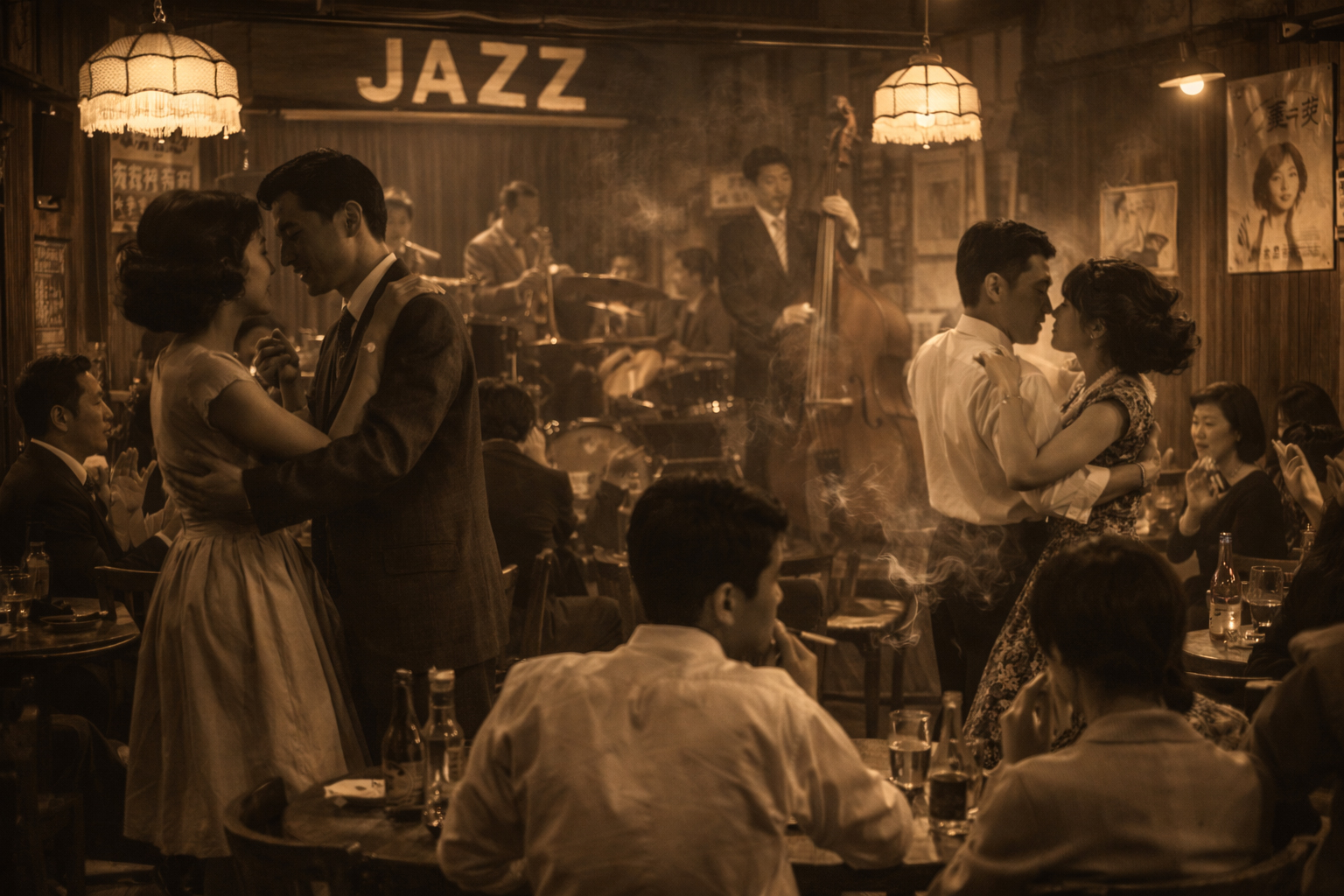
Live houses hold a different kind of heat from clubs. There, people may be listening before they are dancing. The presence of performers, the closeness between audience and stage, applause, shouts, encores, and the physical pressure of live sound all make the night more embodied.
That is why live houses belong inside any serious understanding of Tokyo nightlife. They produce an intimate musical intensity that can stay with people just as strongly as a more obvious dance floor.
Tokyo nights are shaped not only by the rooms you enter,
but by the rooms you pass through on the way.
Tokyo nightlife is not only neon and clubs. It also opens into seasonal night culture: summer festivals, Bon Odori, yukata, and lantern-lit community spaces. These should not be treated as separate from modern nightlife, but as another layer of it.
Office workers, students, families, and visitors all enter different nighttime rhythms through these events. The result is that Tokyo becomes not only a city of consumption, but also a city with seasonal night memory.
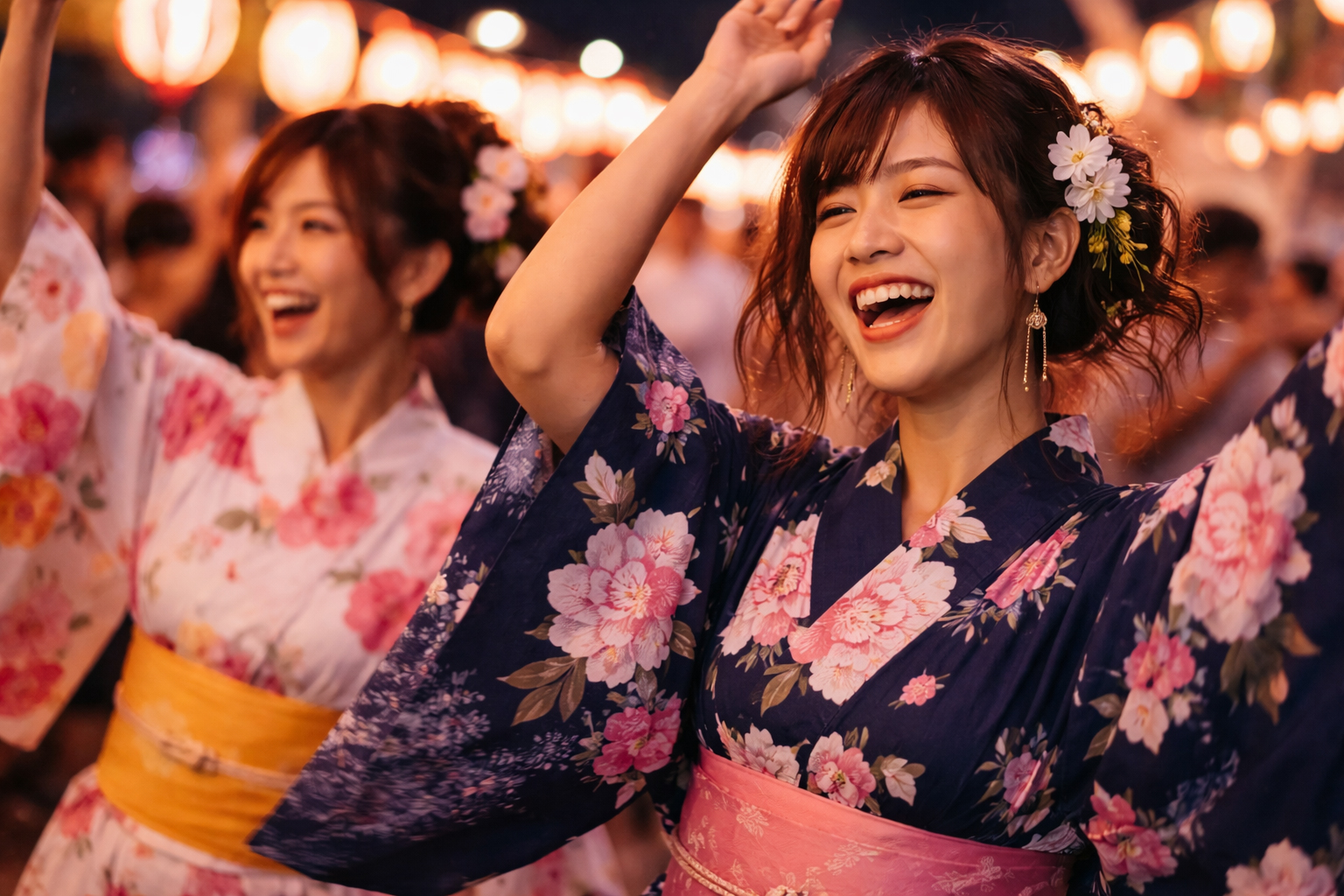
Tokyo’s night is not made only of neon. Softer festival light belongs to the city’s nighttime identity as well.
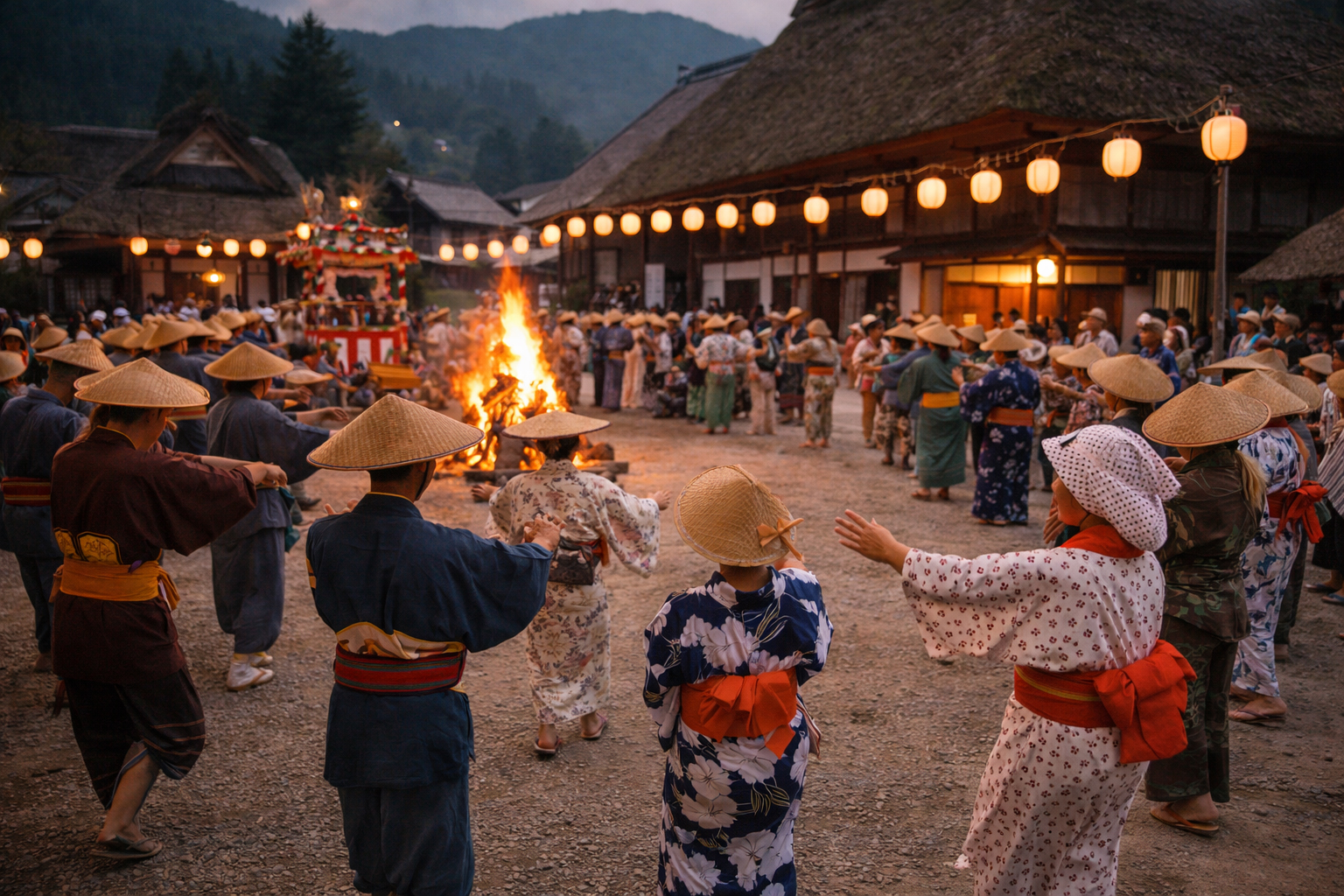
Festival dance brings the feeling of entering a shared circle into the urban night.
What makes Tokyo nights unforgettable is not only what happens inside. It is also the street outside: late-night intersections, lingering crowds, hunger after leaving a venue, the struggle to get a taxi, the friend you keep talking to for another fifteen minutes, the walk toward one more stop. Those fragments connect and become narrative.
Especially in Tokyo, stepping outside rarely means the night is over. The density of the city keeps possibility alive even on the sidewalk.
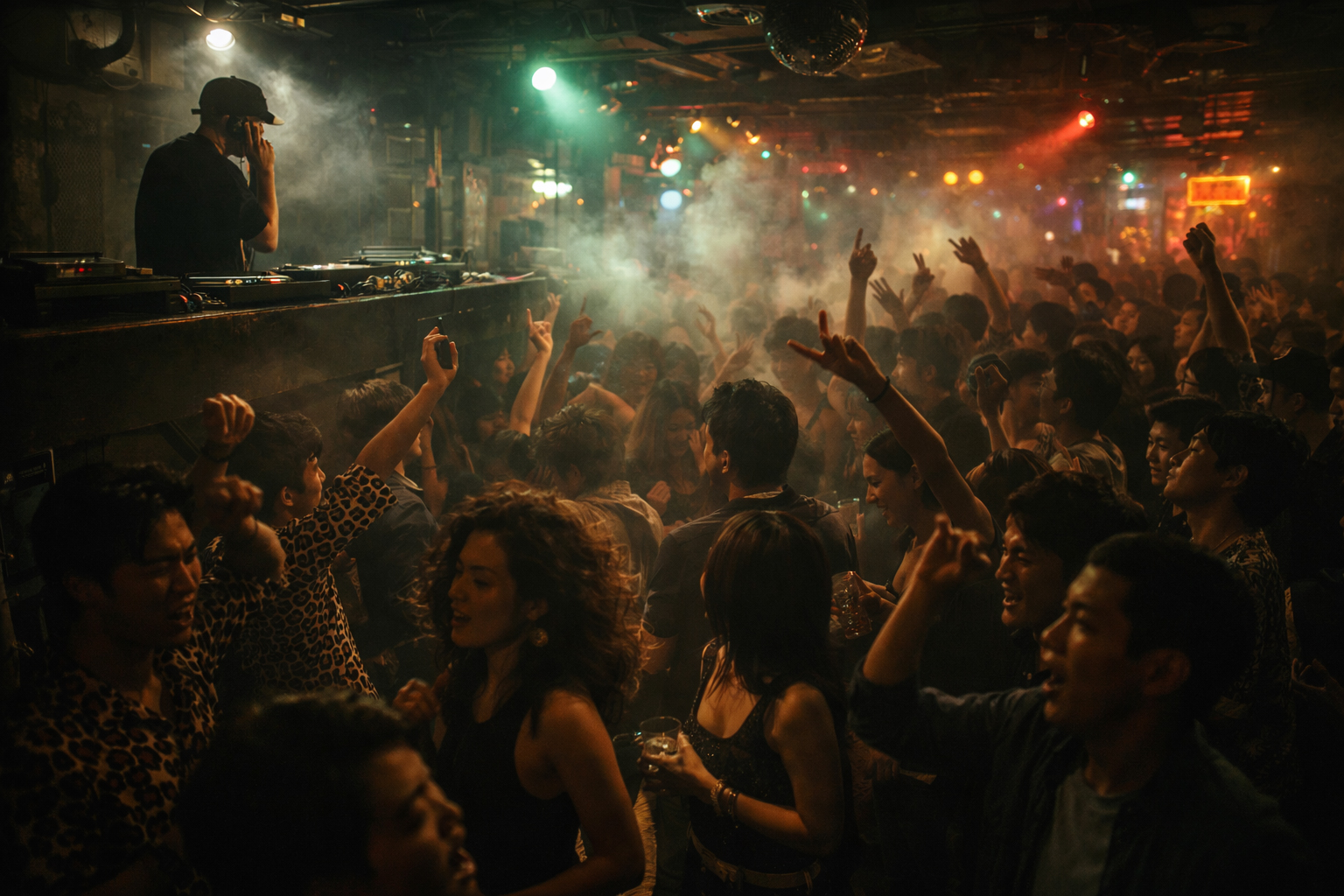
In the end, what makes Tokyo nightlife special is the movement of people. Venue density matters. Music matters. Neon matters. But the deepest signature is the way people circulate, collide, reconnect, and continue through the night.
That happens in Roppongi, Ebisu, Shibuya, Shinjuku, and elsewhere. So Tokyo nightlife is better understood not only as points on a map, but as the lines connecting those points.
Tokyo nightlife is not just a collection of places.
It is a map of how people move through the night.
clubs.co.jp is a site about clubs and dance history, but Tokyo cannot be understood through those alone. Bars, live houses, festivals, streets, entrances, afterglow, and the conversations between venues all matter. Only then do you start to see the real thickness of the city’s night culture.
To understand nightlife is to understand not only what happens inside rooms, but how the night spreads across the whole urban fabric.
A closer look at how non-club rooms help create Japanese nightlife culture.
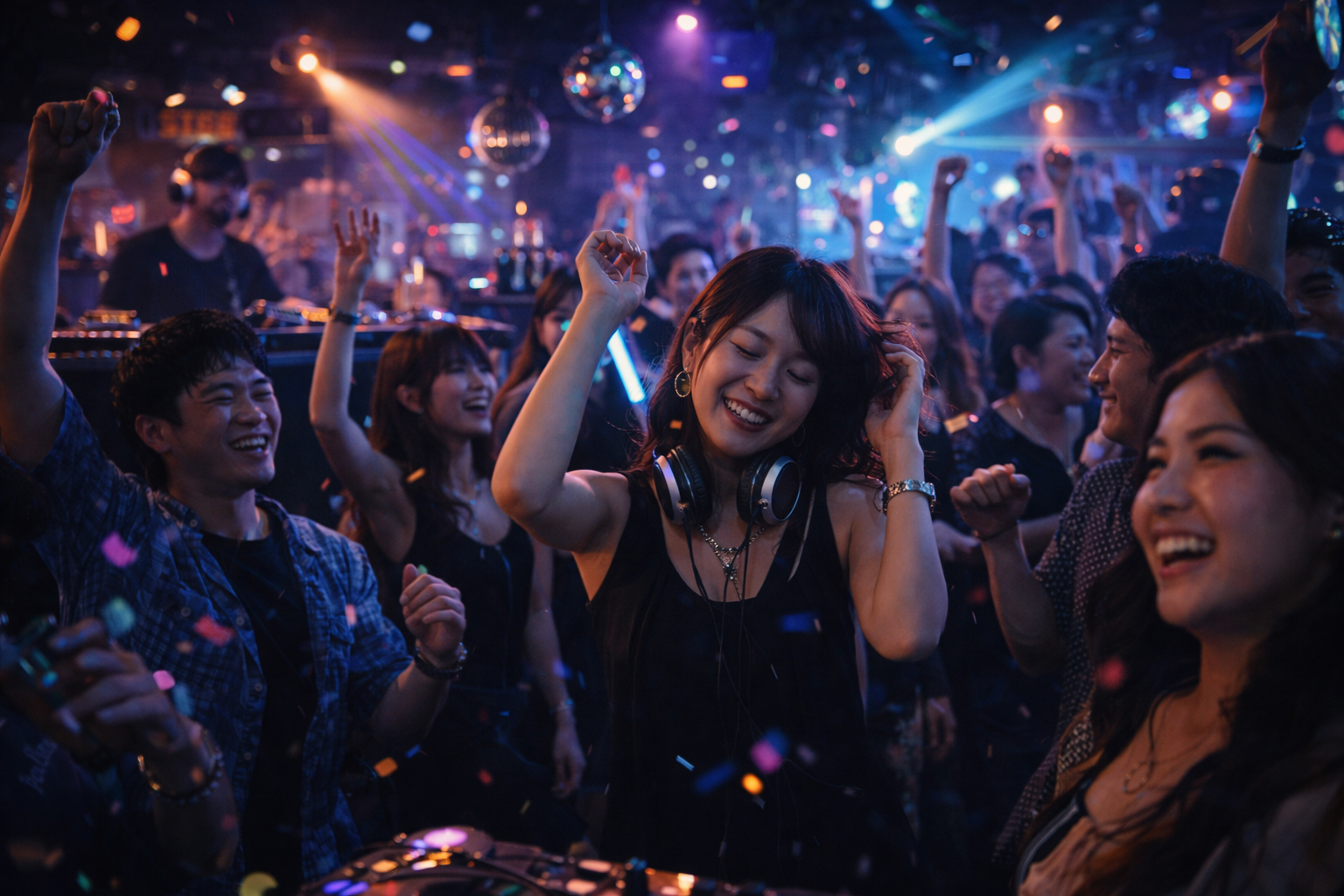
Reading the night through dress, posture, neon, and urban rhythm.
A softer, older, communal side of Japanese nightlife under lantern light.