History
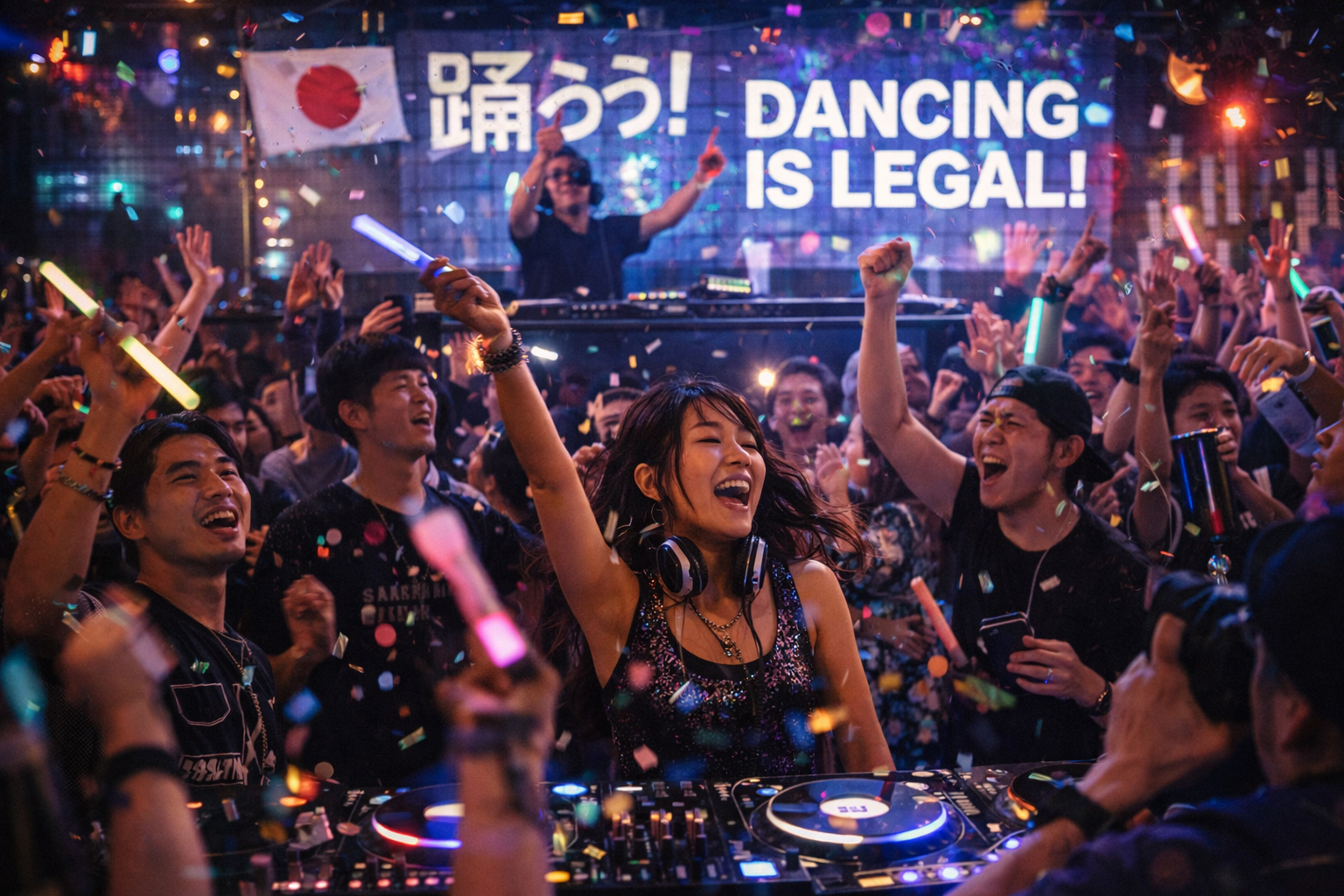
Dance Returns in Japan
How Japanese nightlife changed in the mid-2010s through law, backlash, and a new public atmosphere.

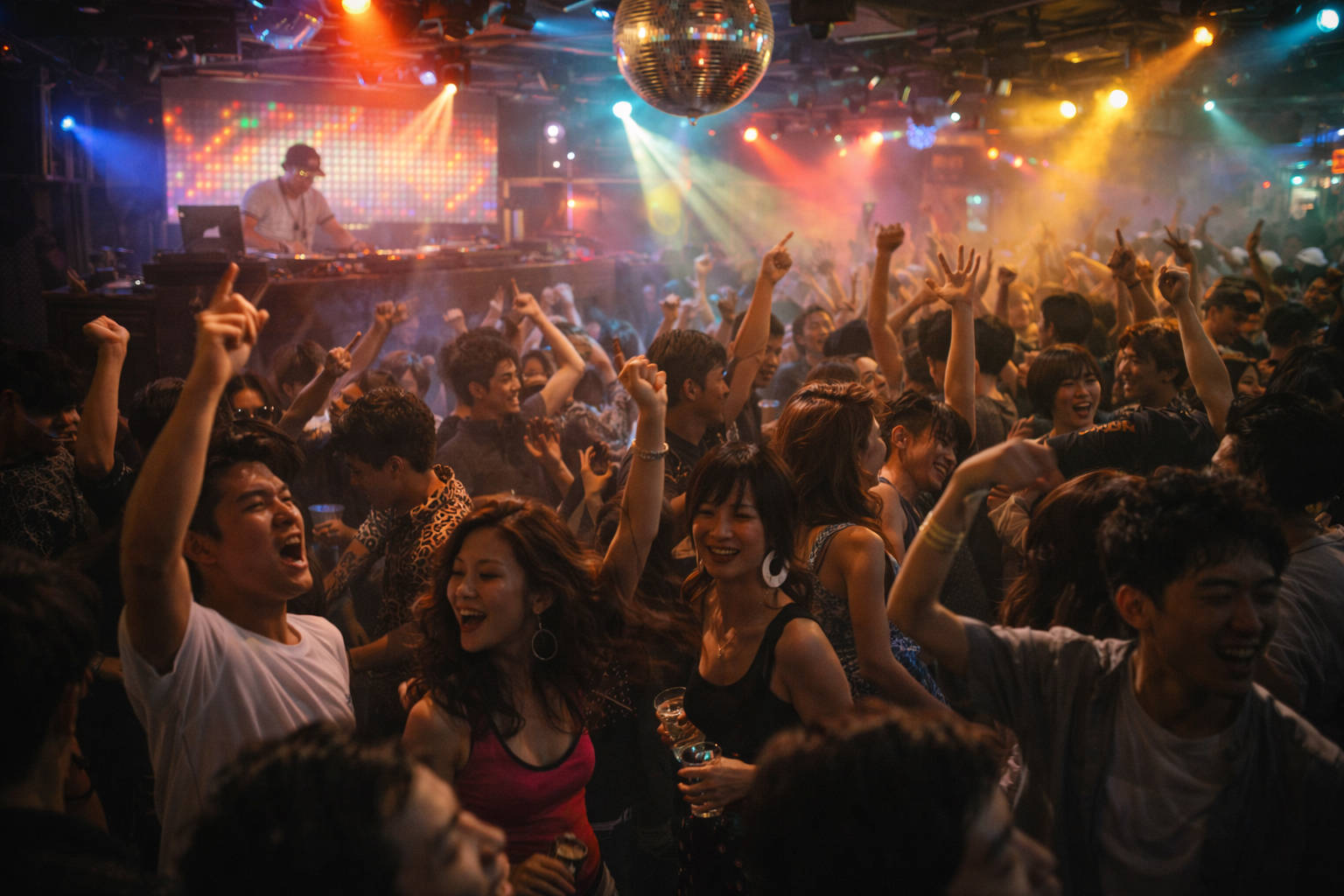
In the 2000s, Osaka had its own kind of electronic heat. It was not simply polished big-city nightlife. It felt more underground, more industrial, more local, and more willing to mix seriousness with play.
When people talk about Japanese club history, Tokyo can too easily become the whole picture. But Osaka in the 2000s built something distinct in electronic music: not an imitation of the capital, but another circuit with its own social temperature.
Osaka house and techno felt built out of record shops, small rooms, local faces, off-center spaces, and a slightly twisted sense of taste. That roughness was part of the beauty.
Osaka electronic music in the 2000s was not Tokyo reduced.
It was nightlife imagined from another urban instinct.
The first thing that feels different about Osaka is temperature. Where Tokyo is often described through polish, scale, or prestige, Osaka feels closer, looser, more human, and more experimental. The room can feel less staged and more lived in.
House and techno in Osaka were not simply imported forms copied with discipline. They were filtered through Kansai social rhythm. That filtering matters. The sound could be deep without becoming stiff, playful without becoming shallow.
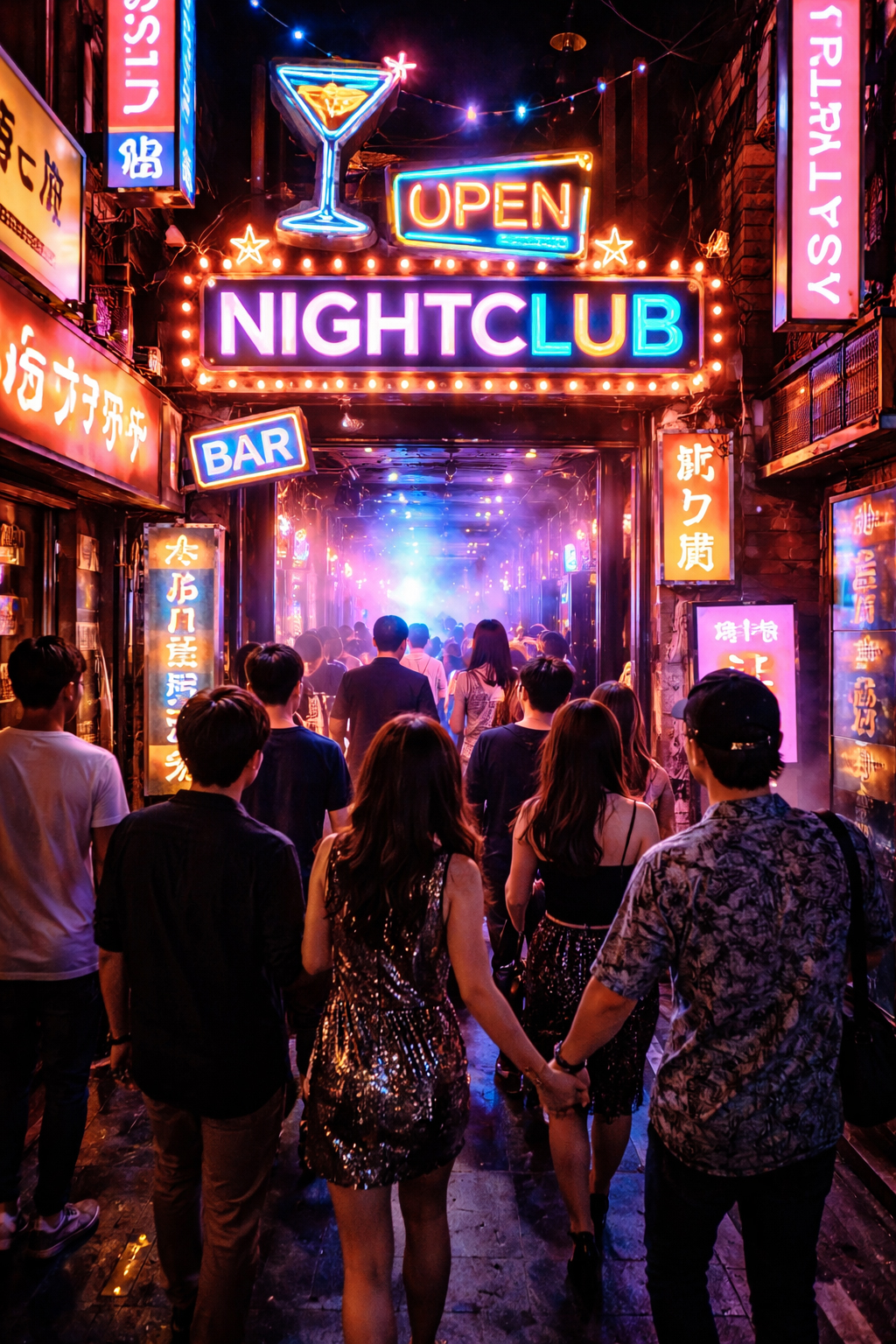
Any story about Osaka in the 2000s has to include record culture. Shops were not just retail spaces. They were information points, social points, taste-forming points, and gateways into the scene itself.
What you dug for, what you played, and where your influences came from all mattered. Osaka’s house and techno life grew strongly in that tactile era before everything could flatten into online discovery.
Selection itself helped shape the city’s sonic identity.
Record stores were places where taste, talk, and nightlife flowed into each other.
Global sounds did not arrive unchanged; Osaka absorbed and bent them through its own sensibility.
Osaka’s electronic scene often feels visually and emotionally matched to industrial space: warehouses, waterfronts, reused large rooms, hard walls, rough floors, and a less over-designed environment.
That is not just an interior-design point. It changes the way electronic music breathes. In Osaka, the feeling that the music belongs not only to the city center but to the city’s edges became part of the appeal.
One of the pleasures of thinking about Osaka in the 2000s is that house and techno do not feel cleanly separated. Depending on the night, the DJ, and the room, the scene could drift from deep to minimal, from blacker groove to colder machine pressure, without treating those borders as sacred.
That movement between genres helped make the scene feel alive. Rather than locking itself down to protect category purity, Osaka often seemed more interested in what happened at the edge of categories.
Osaka house and techno often looked less interested in defending borders
than in dancing right on top of them.
One of Osaka’s special traits is that it can take sound very seriously without abandoning humor. The music can be deep, focused, and technically exacting, yet the social atmosphere often resists becoming overly solemn.
That balance makes the scene feel different from both Tokyo and Berlin. The room can stay intense without losing its humanity. That, too, is part of Osaka’s contribution.
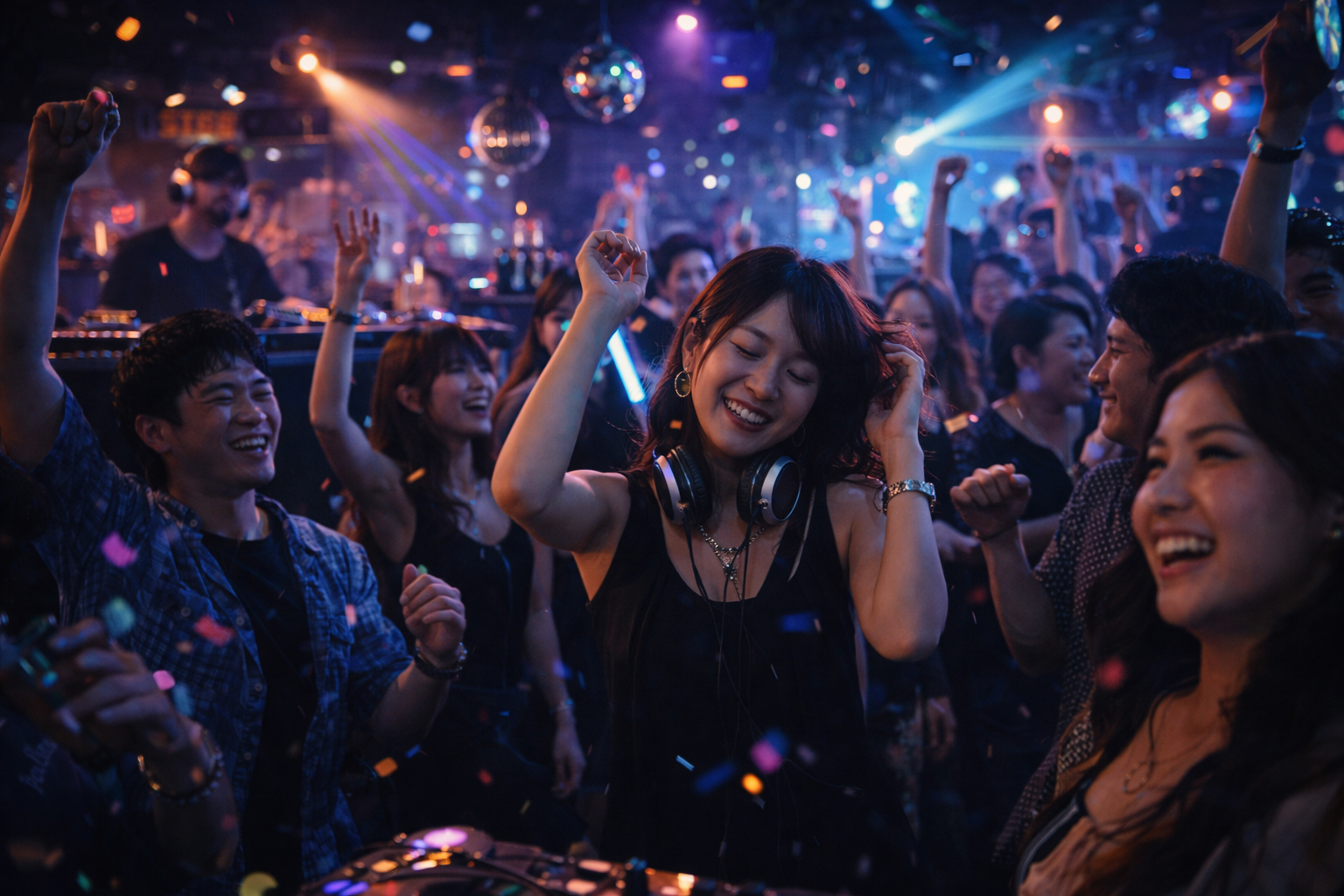
Osaka could chase depth without turning the room emotionally rigid.
The scale of the city did not erase the intimacy of the scene.
Osaka matters because it proves that Japanese electronic music history cannot be read through Tokyo alone. The city cultivated another kind of underground, another kind of record culture, another density of human relation, and another way of making rooms feel alive.
That difference is not just regional color. It is evidence that Japanese house and techno became richer because multiple cities shaped it in different ways. Osaka is one of the clearest examples.
Osaka house and techno in the 2000s should not be treated as a side note. It is part of the larger history of how electronic music in Japan acquired real urban diversity.
clubs.co.jp wants to preserve Osaka as one of the major circuits in that story: record-minded, industrial, underground, and unmistakably human.
How Japanese nightlife changed in the mid-2010s through law, backlash, and a new public atmosphere.
A wider look at DJ culture and the people who shaped the feel of different Japanese cities.
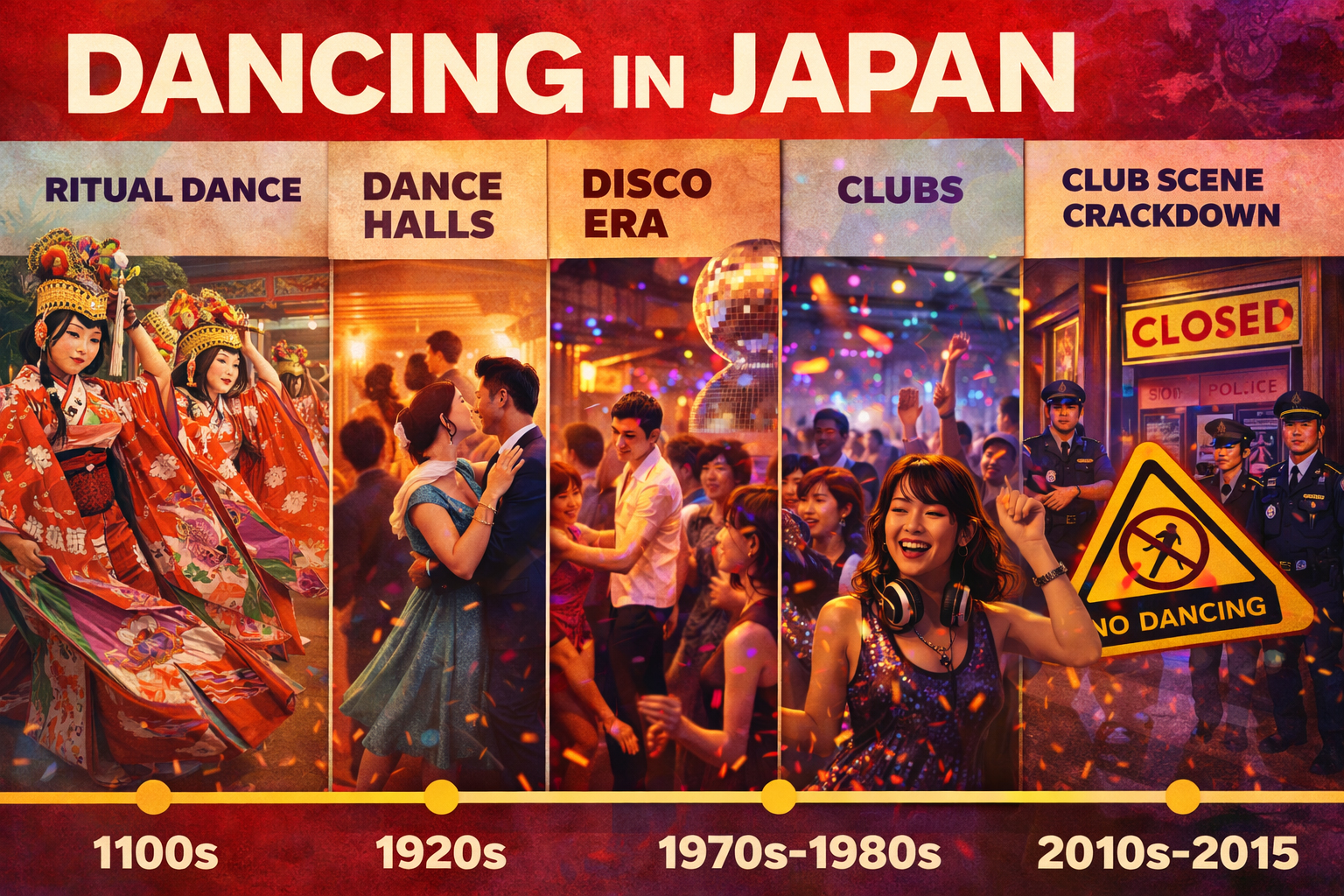
From ritual dance to clubs, regulation, and reform, trace the wider arc of dancing in Japan.