Memoir
The People Who Made Roppongi Move
A memoir of Mike, DJ Joey Slick, and the people who gave the district its living energy.


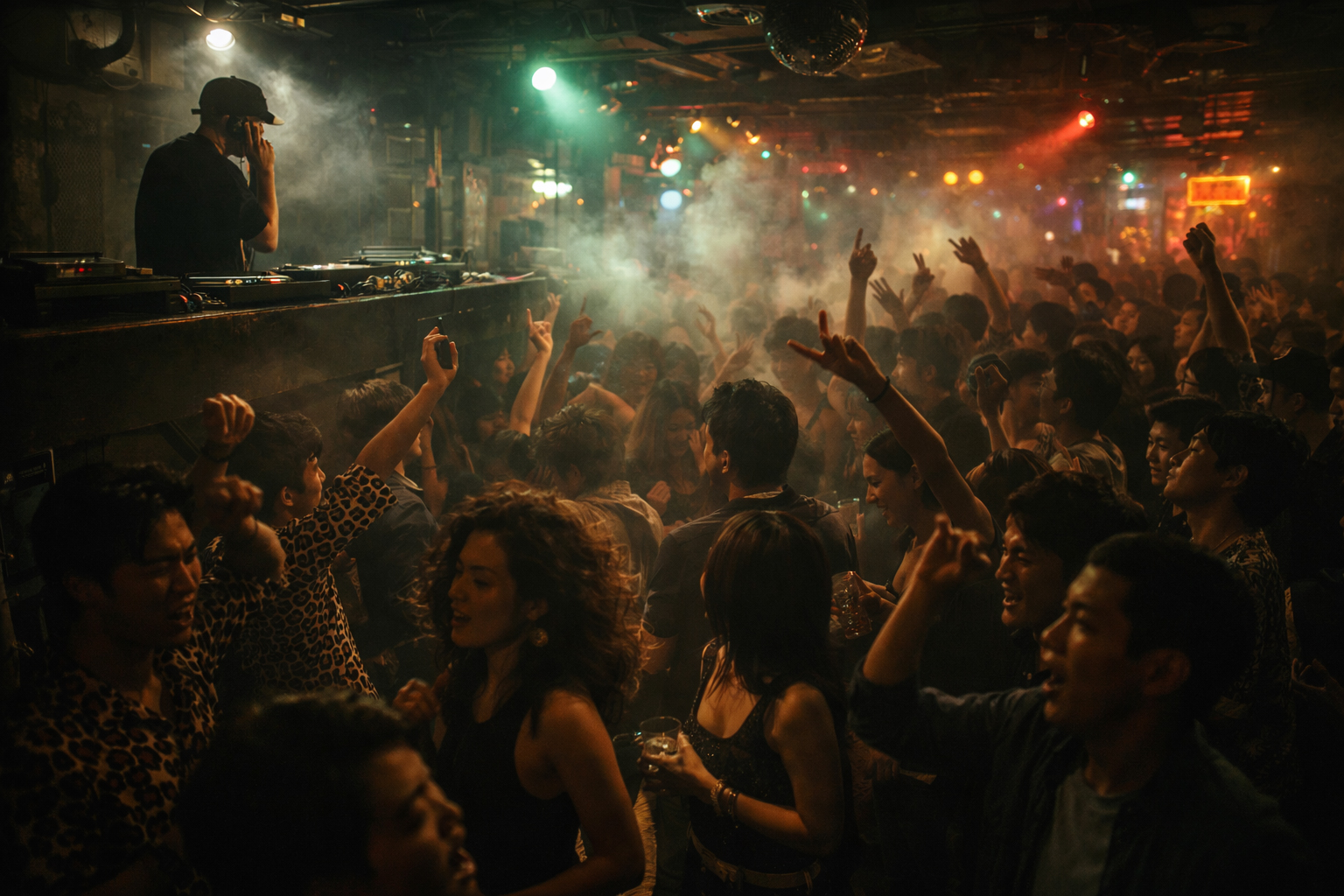
The real force behind a great club night is often not the sign above the door or the lighting rig, but the DJ who knows how to read the room, shape the flow, and move the emotional center of gravity.
Nightlife history becomes strangely flat if it is told only through venue names. People may remember where they went, but that alone rarely explains why a night became unforgettable. One of the decisive missing pieces is the DJ.
A great DJ does not simply line up tracks. A great DJ reads a room and senses what is needed next: heat, pressure, relief, nostalgia, lift, swagger, tension, release. The DJ determines whether the floor wants to rise, breathe, reset, or explode. In that sense, the DJ is one of the true editors of the night.
A DJ is not just someone who plays songs.
A DJ moves the center of gravity of the night.
Before touching the mixer, a truly strong DJ is already reading the room. Who is talking. Who is listening. Who is ready to move. Where the tension is. Whether people are waiting for permission or already half inside the groove. In that sense, the DJ’s first instrument is not the equipment. It is spatial awareness.
A floor that has not warmed up cannot handle a peak-time weapon too early. A room that is already alive can go flat if the DJ becomes too safe. The job is not simply knowing good songs. It is knowing sequence, timing, and consequence.
Who is listening, who is ready, and what temperature the room is already carrying.
The skill is not in one song alone, but in the emotional architecture of an hour.
At the right moment, the DJ makes people stop thinking and surrender to motion.
People do not remember every detail of a night. But they do remember when one track changed the room. They remember the moment a floor suddenly became one organism. That is memory being edited in real time, and the DJ is doing the editing.
One correctly placed track does not stay isolated. It pulls in the people you were with, what you were drinking, how the room looked, what you were wearing, and what conversation was happening beside you. DJs shape not only sound, but the frame through which a night will later be remembered.

To understand nightlife, sometimes you need to ask not only what venue mattered, but who was in charge of the atmosphere. For me, DJ Joey Slick belongs in that category. A great friend of mine, and one of the people who made the room feel alive in a way that goes beyond simply “playing music.”
When a DJ like that is present, the venue stops being just a room. It becomes a story. The audience stops being passive. It becomes part of the movement of the night. That is the difference between background sound and true nightlife energy.
Nights do not last in memory because we remember the sign above the door.
They last because we remember who was steering the room.
Of course genre matters. Motown, disco, house, techno, hip-hop, jazz, city pop, Eurobeat — each carries its own body logic and social mood. But the deeper skill is what the DJ does with genre inside a sequence. The same track means something different depending on what comes before it and what comes after.
That is why the best DJs are not merely genre loyalists. They are architects of emotional flow. They know how to give shape to a feeling before the room itself has language for it. Their talent is not measured by how many tracks they know, but by how well they can move people through time.
Sometimes the most important skill is knowing where to let the room breathe before lifting it again.
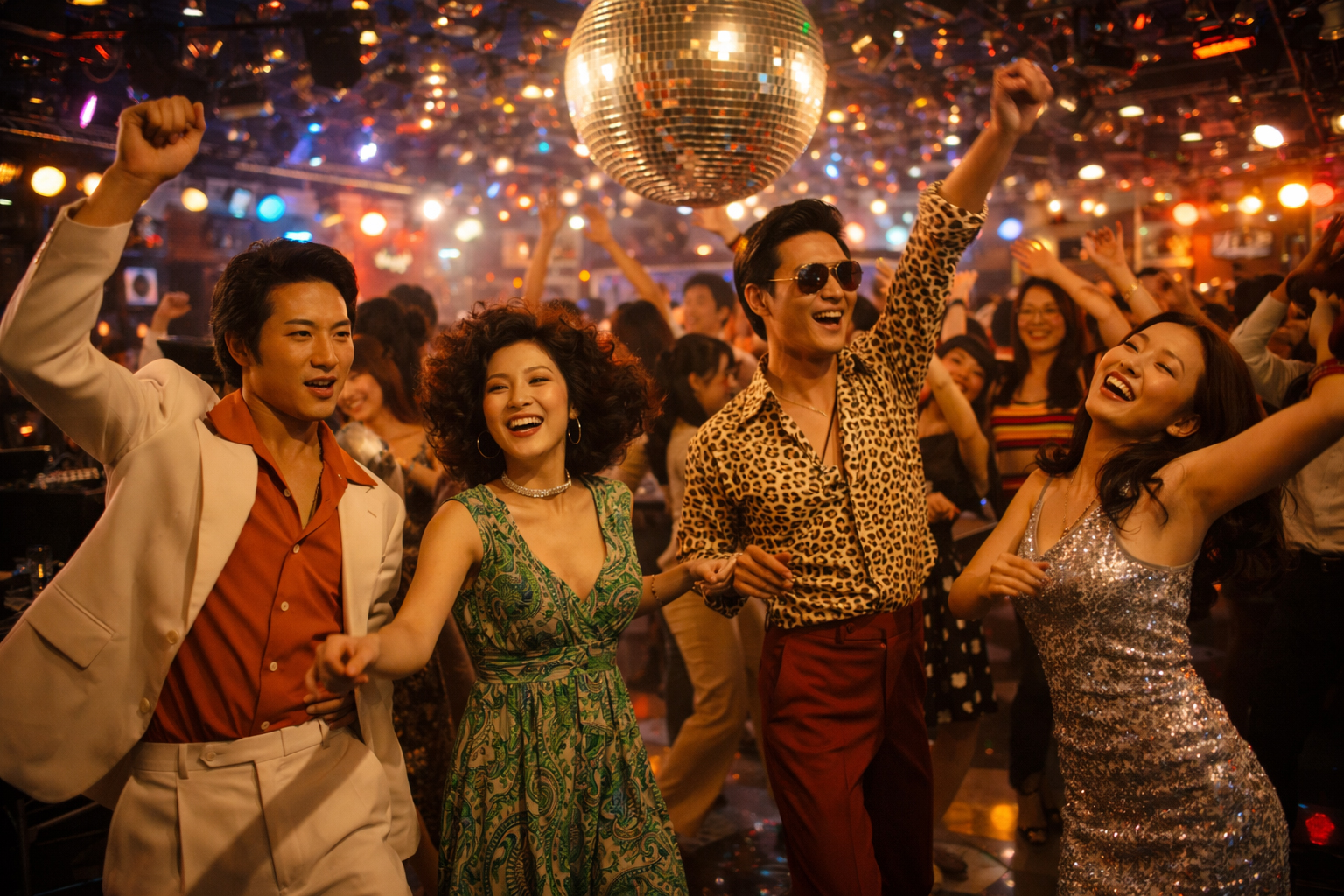
At the right moment, a single song can move not only a room, but a decade of memory.
A floor has its own etiquette. A DJ should not abandon newcomers, but should not flatten the room into predictability either. A DJ must know how to invite, how to challenge, how to open the door without pandering, and how to keep the room from collapsing into ego.
That means a DJ is not only a technician of sound. A DJ is also a host of release, a reader of crowds, and a subtle manager of human permission. DJ culture deserves a more central place in nightlife history for exactly that reason.

Tokyo nightlife is full of small miracles inside a giant city: chance encounters, introductions, migrations from one place to another, sudden unity on a floor. DJs support more of that than most people realize. If the sound had been wrong, the conversation, the movement, the flirtation, and the emotional tone would all have shifted.
So saying that DJs “defined the night” is not exaggeration. In many cases, they truly did.
When a night stays alive for years, there is usually a DJ somewhere inside the memory.
clubs.co.jp should preserve not only the history of venues and laws, but the people who gave those spaces temperature. DJs belong in that story. They help rooms rise, move bodies, and determine how an era is later felt in memory.
The night was never shaped only by the visible signage. It was also shaped by the people in the booth deciding what the room needed next.
A memoir of Mike, DJ Joey Slick, and the people who gave the district its living energy.
A wider look at the kinds of rooms that make nightlife culture, beyond just large clubs.
How clothing, posture, neon, and urban confidence contribute to the feeling of the night.